




Wokism, a post-Protestantism according to historian Olivier Moos
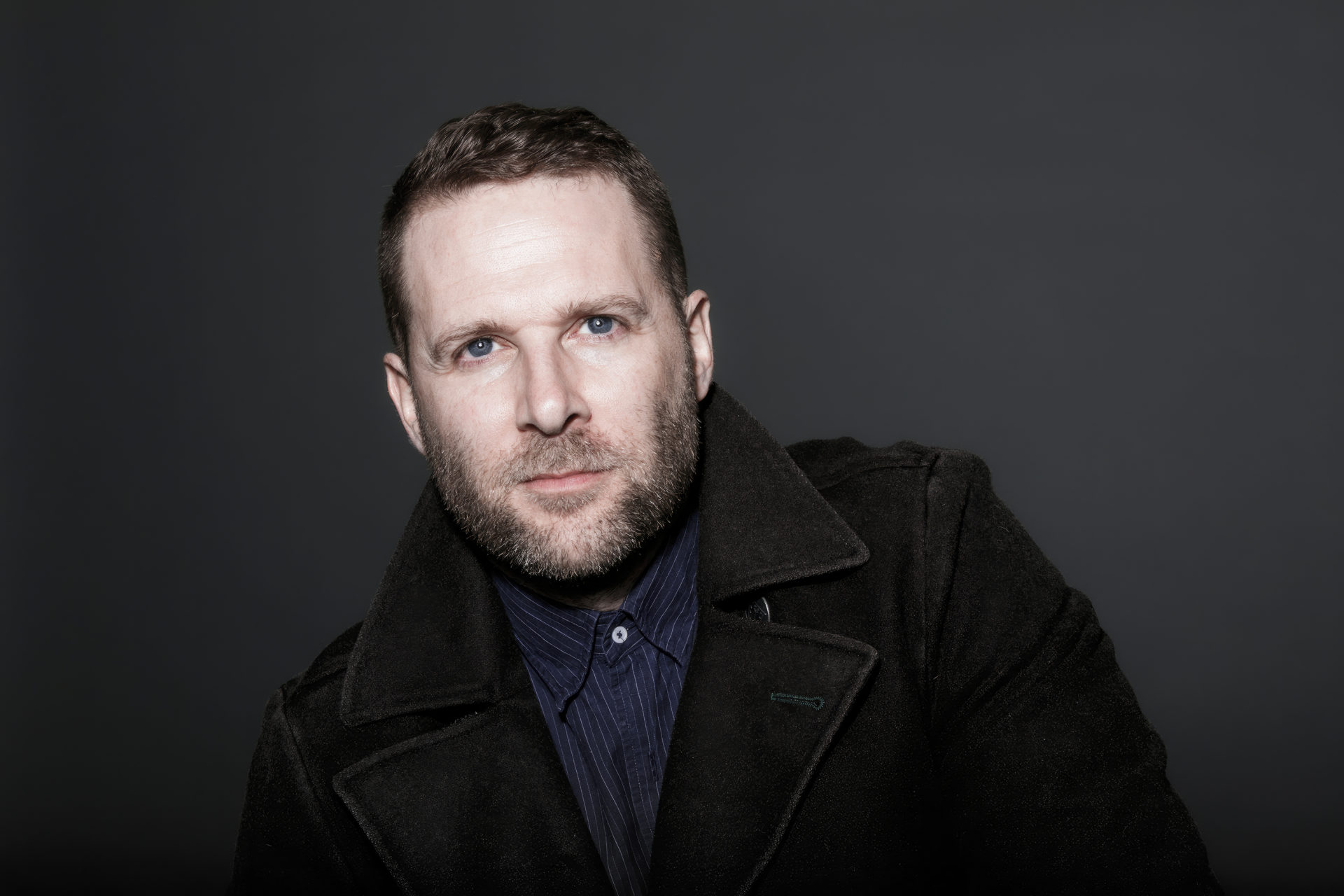
Historian Olivier Moos @ Nicolas Brodard for Le Regard Libre
The woke movement may not be a religion in the strict sense of the term, but it does bear striking similarities to religion, particularly to the American Protestant revivals. This, at least, is the opinion of historian Olivier Moos, author of an essay on the phenomenon.
Titulaire d’un doctorat en histoire contemporaine de l’Université de Fribourg et de l’Ecole des hautes études en sciences sociales (EHESS) de Paris, Olivier Moos a le verbe fleuri et rapide. Mais si ses idées fusent, elles prennent aussi le temps de s’exprimer dans leur totalité. En témoigne cet entretien au sujet de son rapport « »The Grate awokening »: réveil militant, justice sociale et religion» published in late 2020 on www.religion.info. An examination of the ideological and sociological roots of wokism to answer the question: does this movement have a religious dimension?
Le Regard LibreIn your study, you describe wokism as a movement with an ideology and militant actions. Could you summarize what this ideology and these actions consist of?
Olivier Moos: In the field of ideas, wokism represents an ideological synthesis drawing its resources from various theoretical traditions developed during the second half of the 20th century, including postmodernism, postcolonialism and critical race theory. It is an interpretative system of past and present «systemic» causes of inequality, providing both an explanation of how society works as a whole, and political strategies for transforming it. This synthesis is still evolving, with internal contradictions and variations, but it is nevertheless based on four widely accepted premises.
Which ones?
Firstly, all human groups are perfectly equal in terms of desirable social traits, aptitudes and potentialities. Secondly, inequalities of outcome between groups always derive from systemic discrimination. Third, individual freedoms must be curtailed for the comfort of «oppressed» groups (people of color, indigenous people, LGBTQIA+, women). Fourth, the state has a duty to adopt these three premises, i.e. to implement social engineering programs and legislative reforms aimed at achieving equality of both outcome and representation. In short, to politically achieve «social justice».
So much for the ideological dimension of Wokism. And what about militant action?
In its sociological dimension, wokism describes a militant attitude deployed by various groups and individuals mobilized around a number of societal issues: gender disparities, inequalities between identity groups, capitalist oppression, «white» domination, the arbitrariness of heteronormativity or the state of coloniality. In its socially manifest form, it was first adopted by young urban elites and graduates in the USA from the early 2010s, before being imported with varying degrees of success by various militant vehicles in other Western countries.
Are we dealing with an elite movement?
In many ways, yes. Largely incomprehensible to the working classes, it enjoys rhetorical hegemony among large segments of the producers of ideas and opinions, most notably in prestige institutions (Ivy League universities, reference journals). The field in which this movement is most visible and vocal is that of left-wing activism, intersectional feminism, anti-racist organizations, LGBTQIA+ lobbies and indigenism. However, we are not dealing with a grand cultural five-year plan managed from above; it is energized by high and low intensity activisms that intersect, contradict or converge according to the opportunity effects and positioning strategies of the players. It is the shared adoption of the above premises that gives shape and direction to the phenomenon.
However, for the past year or two, supporters of this movement have been rejecting the concept of «woke», believing it to be an invention of their ideological adversaries.
It's true that it's not uncommon, especially in academic circles, to hear that wokism is nothing more than a scarecrow fabricated by a right-wing restive to social progress and indifferent to injustice. My feeling is that this denial of existence is primarily due to the fact that the term has become pejorative. It conjures up images of hysterics harassing lecturers, iconoclasts vandalizing statues and incomprehensible theoretical eccentricities. This label does not signal the same revolutionary panache associated, for example, with the titles «Marxist-Leninist» or «Maoist» that many intellectuals affected in the 1960s and 1970s. Too puritanical to be «cool», there's no «woke» equivalent of Che Guevara T-shirts.
Is it only for this reason, in your opinion, that wokes have gradually abandoned this term, which was initially a self-declaration?
No, there are other factors. For example, the diversity of ideas and political sensibilities among academics who analyze «societal issues» has narrowed considerably in recent decades. It is not uncommon to find sociology faculties or gender studies departments composed exclusively of researchers oscillating between the left and the far left - in other words, endogamous environments where the premises listed above have become totems. In many ways, when these circles assert that «wokism is an illusion», it's a bit like goldfish arguing in their aquarium that water doesn't exist.
Isn't wokism also too incoherent, too disparate, to present itself in a unified way?
Indeed, this denial undoubtedly also stems from the diluted and decentralized nature of the phenomenon, which makes it difficult to conceptualize. Critics of this movement are to be found across the spectrum of political sensibilities, including among left-wing intellectuals and Marxists, and it has to be admitted that the term is too often misused. Less polemical alternatives are available, such as «cultural socialism», «radical progressivism» or «fundamentalist modernist left», but these are less catchy. On the other hand, these alternatives have the virtue of better reframing wokism within an intellectual genealogy and as a recent salience of a longer-term phenomenon.
Aren't the critics of wokism creating an artificial object by bringing together heterogeneous elements under the same label?
It's a legitimate criticism. To borrow a metaphor from Canadian political scientist Eric Kaufmann, wokism behaves in the manner of bird swarms, i.e. a phenomenon whose order emerges from the uncoordinated activities of individuals and groups guided by the premises listed above. Critics attach this label to the general movement of the swarm, without always distinguishing the nuances of its various components, while the starlings that populate it calibrate their flight on this or that object of struggle, without necessarily caring about the general direction of the swarm. So there is some truth in the criticism of the concept of wokism: there is neither a coherent woke ideology accepted by all its adherents, nor a distinct, structured movement. Instead, the players see themselves as people mobilizing for moral reasons against «systemic injustice».
As far as they're concerned, wokism doesn't exist because nobody claims to be a wokist.
That's it. This is the argument of a sociologist like Alain Policar: it's an empty word, an overly vague concept, used to mask these injustices and justify retrograde policies. A weakness in the image, one would be tempted to retort, of the majority of the concepts we use. This argument smacks of a trial of intent. What's more, it's hard to see how the term «wokism» is any more vague than «postcoloniality», "patriarchy" or "whiteness", all of which thrive in sociological literature.
In any case, refusing to use the term "wokism" is a handy way of preventing debate on the subject.
Not to mention that the very notion of debate is suspect in the eyes of many activists. Probably because such an exercise would require demonstrating the predictive and analytical value of often unfalsifiable concepts, in short accepting that facts sometimes contradict values. Besides, don't forget that there's a strong ethical dimension associated with the critique of wokism. To dispute the validity of these assertions is not only to commit an error of analysis, it is also to signal a moral bankruptcy. It would be a smokescreen behind which sleepwalking white cisgender males hide, whose very identity participates in the system of reproducing oppression. Half a century ago, these unfortunates would simply have been labelled reactionary bourgeois.
A new cultural Marxism, in short, with a quest for militant purity...
To a certain extent, yes. Social classes have been replaced by identity groups, and the struggle enhanced by a very puritanical, quasi-religious dimension. Indeed, it's this dynamic of moral crusade that explains why the most vicious attacks by progressive activists seem to be reserved for left-wing intellectuals who criticize their theories. The outrageous way in which feminist authors such as Kathleen Stock, Christina Hoff Sommers and Holly Lawford-Smith have been treated for declaring that sex is not an app you download, or for questioning the existence of «male privilege», is an eloquent illustration. Heresy is always punished more severely than unbelief.
One of the theses defended in your study is that «both the behavior of activisms and part of the corpus of Social Justice easily lend themselves to a religious analogy». What does wokism lack to be a truly religious movement?
It lacks a properly metaphysical dimension. Wokism functions as a belief system, but is not a religion. The temptation of the religious analogy, apart from its obvious polemical value, stems from the fact that some of the ideas and attitudes adopted by progressive militancy reproduce beliefs and behaviours more commonly found in certain fundamentalist religious groups: the obsession with purity and sin, the certainty of moral infallibility, the condemnation of heresy and the indisputable authority of scripture. It's true, then, that Wokism, like all religious systems, offers its followers a cosmography and postulates a number of immaterial forces at work in society. However, from a substantive point of view, the intellectuals of this movement claim to produce knowledge and expertise, not to intercede with the divine. The abstractions they use are supposed to describe concrete, measurable realities, not supernatural entities.
But there's something irrational about saying that gender identity, for example, is a matter of personal feeling and has nothing to do with sex, which is itself a social construct...
Except that the reasoning you quote is not, strictly speaking, representative of the contemporary «woke» phenomenon. It's the result of half a century's development of gender theories based on all-encompassing social determinism, reappropriated more recently by progressive activists. Even the notion of liberation from the constraints of reality that characterizes trans-identity theory is not specifically or exclusively «woke», but primarily the product of trans-inclusive feminist philosophy. Hence the importance of resituating the phenomenon within and in relation to its longer-term intellectual genealogies. As for this irrational - or perhaps rather metaphysical - dimension of the «woke» narrative, I think it's accidental. It results, in my opinion, from an effort to reduce the cognitive dissonance caused by the incongruence between, on the one hand, the actors' convictions and, on the other, what scientific investigation tells us. It's no coincidence that empirical testing of assertions is rarely on the menu.
Should we attribute the religious tones of Wokism to the influence of American Protestantism?
In some respects, yes. While the profound cultural influence of Protestantism in Anglo-Saxon countries has been considerably diluted and reduced to the norm by secularization, it has not disappeared. It remains an acquired cultural speed. Catholic intellectual Joseph Bottum, for example, sees wokism as a post-Protestantism stripped of its metaphysics and heir to the social gospel of the late 19th century.th century, around figures such as Baptist theologian Walter Rauschenbusch (1861-1918) and pastor Josiah Strong (1847-1916). So it's not surprising that not only do actors unconsciously draw their discursive and symbolic resources from this heritage, but also that a number of Protestant churches and theologians integrate part of this theoretical corpus into their pastoral practice.
What do you mean?
For example, by developing a hybrid reading superimposing New Testament narrative and the intersectionality of struggles, or by fusing the Christian penitential tradition with the confessional practice encouraged by the theorist of the White fragility Robin DiAngelo or by «anti-racism specialist» Ibram X. Kendi. These superimpositions are motivated by the resonance between «social justice» and Christian values, as well as, probably, the hope of retaining some relevance in public debate, of capitalizing on the apostolic fervor woke. This mix of registers can also be observed in certain Protestant communities in Switzerland, albeit with an emphasis on «gender» rather than «racial» identities. Inevitably, the appropriation of «social justice» theories in churches also meets with strong resistance. Unlike universities, this is a milieu where conservative sensibilities are still very much in evidence.
In your study, you cite the incidents at Evergreen University in the USA as an exemplary case of wokism. What does this case tell us about this phenomenon?
The case of Evergreen, located in Washington state, is quite fascinating. At the end of May 2017, a large group of students took control of part of the campus and established something akin to a woke political regime. One of the triggers for this mobilization was biology professor Bret Weinstein's principled objection to changing an institutional tradition called the «Day of Absence». Dating back to the 1970s, this tradition invites people of color to be voluntarily absent from campus for a day to emphasize the importance of their role within the university. The modification proposed by the Council for Equality was to create a day during which white individuals would be required to remain off campus. The logic of this modification is similar to the so-called «chosen mix» spaces seen in Switzerland. This objection, incidentally voiced by a firmly left-wing professor, scandalized a number of students who called for its suspension and, in the days that followed, initiated a mobilization that was joined by members of the teaching staff and administration.
The mobilized students quickly put in place an alternative social order based on the values and hierarchies found in many progressive militancies. Collective activities were accompanied by strict behavioral norms and a statutory hierarchy defined according to the ethnicity and race of participants, all accompanied by a panoply of surveillance and sanctions. Perhaps the most astonishing scene was a ceremony in which administrators and teachers, seated in a symbolic canoe, pledged allegiance to the principles of «social justice» and promised to all paddle in the same direction. Proportionately, this kind of ceremony is reminiscent of scenes from China's Cultural Revolution, when radicalized students punished their Communist forebears for their lack of revolutionary fervor.
To what extent is this event more than just an anomaly? How is it representative?
More than representative, it is above all revealing. Here we have the closest thing to a laboratory test of wokism: the materialization of «social justice» ideas and practices, abundantly filmed and documented, in an ideologically quasi-uniform environment, freed from the political constraints and compromises characteristic of a city or state. There was clearly nothing festive or improvised about this temporary takeover of part of the campus. The students created a social order that logically follows from the principles of this movement, with its norms and control mechanisms. It's worth pointing out that this puritanical, authoritarian character is not the by-product of stiff-feathered young consciences, but the inevitable property of the system.
What does it look like?
In particular, the linguistic, symbolic, attitudinal and ideological homology between, on the one hand, the Evergreen uprising and, on the other, broader mobilization phenomena, such as the internationalization of the movement. Black Lives Matter in the summer of 2020. From Minneapolis to Tokyo, via Lausanne, the same slogans, the same narrative, the same certainties. Social mimicry and fashion effects help to explain it, but if there's no such thing as wokism, we still need to explain this singular consistency of values and behaviours on different scales and in very different environments. There's no doubt that there's an identifiable social phenomenon, whatever you call it.
And what about Switzerland?
Nothing so dramatic has ever taken place at a Swiss university. The cultural and political context is very different from the USA. For example, considering «races» as essences conferring status and knowledge inherent to each population group remains inaudible outside small academic grocery stores. This does not mean that the premises of the progressive left have not made their nest among a large part of our cognitive elites and opinion producers. Unlike in the USA, I'm not aware of any statistical studies of ideological sensitivities in our institutions, but you only have to read the proceedings of a symposium of the Swiss Society for Gender Studies, the «decolonial» program of a museum or the «Society» section of a major newspaper to get an idea.
What makes the reception of wokism in Switzerland different from that in the USA?
In Switzerland, the «woke» phenomenon is more moderate and less noisy. It is also likely to meet with more resistance. The political culture is consensual, there are different cantonal environments, and the social or professional costs that may accompany the objection are more modest than in the USA, Canada or the UK. If wokism is visible at all, it's mainly at the margins, in activist groups, associative circles and university boutiques, where knowledge tends to be diluted by activism. Institutionally, it exerts a more discreet influence via, for example, «diversity, equity and inclusion» consultants or in certain bureaucratic niches, notably those whose funding depends on the perpetuation of the problems they are supposed to correct. Incentives to embrace certain ideas are not necessarily ideological.
You describe this phenomenon as being in the minority. Does that mean it has very little influence?
This depends on the context, the definition of the phenomenon and the way in which this influence is assessed. In the political arena, its impact is de facto limited by the compromises and constraints inherent in this environment. In knowledge-producing institutions, the premises on which wokism is based are probably dominant, particularly in certain faculties where methodological rigor is visibly variable. However, the fact that this phenomenon mainly concerns demographically minority groups does not mean that their influence is insignificant overall. Admittedly, the majority of the population shares neither the puritanism nor the most radical political solutions of these militants, but a society is nonetheless a complex system in which the mobilization of a small intransigent minority is sometimes enough to force the majority to submit to the preferences of this minority.
The famous «tyranny of minorities»?
The latter is not necessarily imposed from above, but also through trickle-down effects, the positioning strategies of players or institutional practices. The population is often passive, ignorant or indifferent to the issues that drive activists, while the latter, politically highly mobilized, are ready to exert all kinds of pressure and disruption in the service of their agenda. On a smaller scale, the leadership of an institution or political party will be tempted to preserve a certain internal harmony by giving in to a set of demands from its more radical members. This is one of the main factors explaining, for example, the considerable ideological stiffening of a once benchmark newspaper like the New York Times. You can't measure a movement's influence simply by counting the number of its members or evaluating the coherence of its ideology.
To hear you tell it, wokes are ultimately driven by a thirst for power and recognition. Does that mean you share their view of reality as being made up of hidden power structures that define individual identities?
On the contrary. I share neither their catastrophist vision of the state of Western societies nor the premises that structure their analyses. There are two questions that are never asked in these circles: «at what cost?» and «compared to what?». Western societies are exceptionally racist and oppressive, we are told, but compared to what real society and by what yardstick? A mystery. Not to mention that the race to hyperbole that characterizes contemporary progressive discourse brings statutory rewards to elites, but can also unfortunately entail costs for vulnerable segments of the population. It helps to conceal the magnitude and diversity of the causes of social problems and inequalities in favor of a grand narrative articulated around the single dynamic of oppressors versus the oppressed.
Do you have an example?
The media hysteria that accompanied the phenomenon Black Lives Matter in 2020 and its slogan «let's take funding away from the police». As a number of African-American intellectuals, such as Professor Glenn Loury, political scientist Wilfred Reilly and economist Thomas Sowell, have pointed out, the denunciation of a supposed «white supremacism» was at its zenith at a time when racism had never been so low in US history and minorities had never been so well represented among the elites. Very few newspapers ventured to compare the number of Blacks unarmed killed annually by a police officer (an average of around 20 individuals) with that of black homicide victims (over 9,700 in 2020). Incidentally, the vast majority of these victims were killed by a member of their own community. Not only is it essentially the local population that pays the price for this violence, but the persistence of high rates of delinquent behavior in urban African-American communities also has negative long-term economic effects: lower real estate investment, a local decline in retail and services, and a rising cost of living. It seems that only politically profitable black lives retain their value on the outrage market.
How much do you think wokes shares cost the company?
It can be observed at several levels, and varies according to the institutional context. For example, the corruption of scientific discourse - including in the field of medicine - by moral, ideological or political considerations has a whole series of negative consequences for society: subversion of knowledge, weakening of scientific authority, self-censorship on the part of researchers, loss of public confidence in institutions. The obsession with representation at the expense of merit, and the preferential programs and quota policies encouraged by their postulates, certainly bring benefits to various classes of beneficiaries, but are also accompanied by a number of negative effects. As a general rule, preferential policies, even when explicitly defined as temporary, tend not only to persist over time, but also to extend their scope. They disproportionately benefit the already most privileged members of the beneficiary groups, and political or social polarization tends to increase in their wake. In our liberal societies, prejudice is free, but discrimination, whether negative or positive, always has a cost.
Write to the author: [email protected]
You have just read an interview from our SACRED folder,published in our print edition (Le Regard Libre N°106).

You'll also like





 French
  German
  English
Leave a comment