




Timon Zimmermann: «I want to live intentionally».»
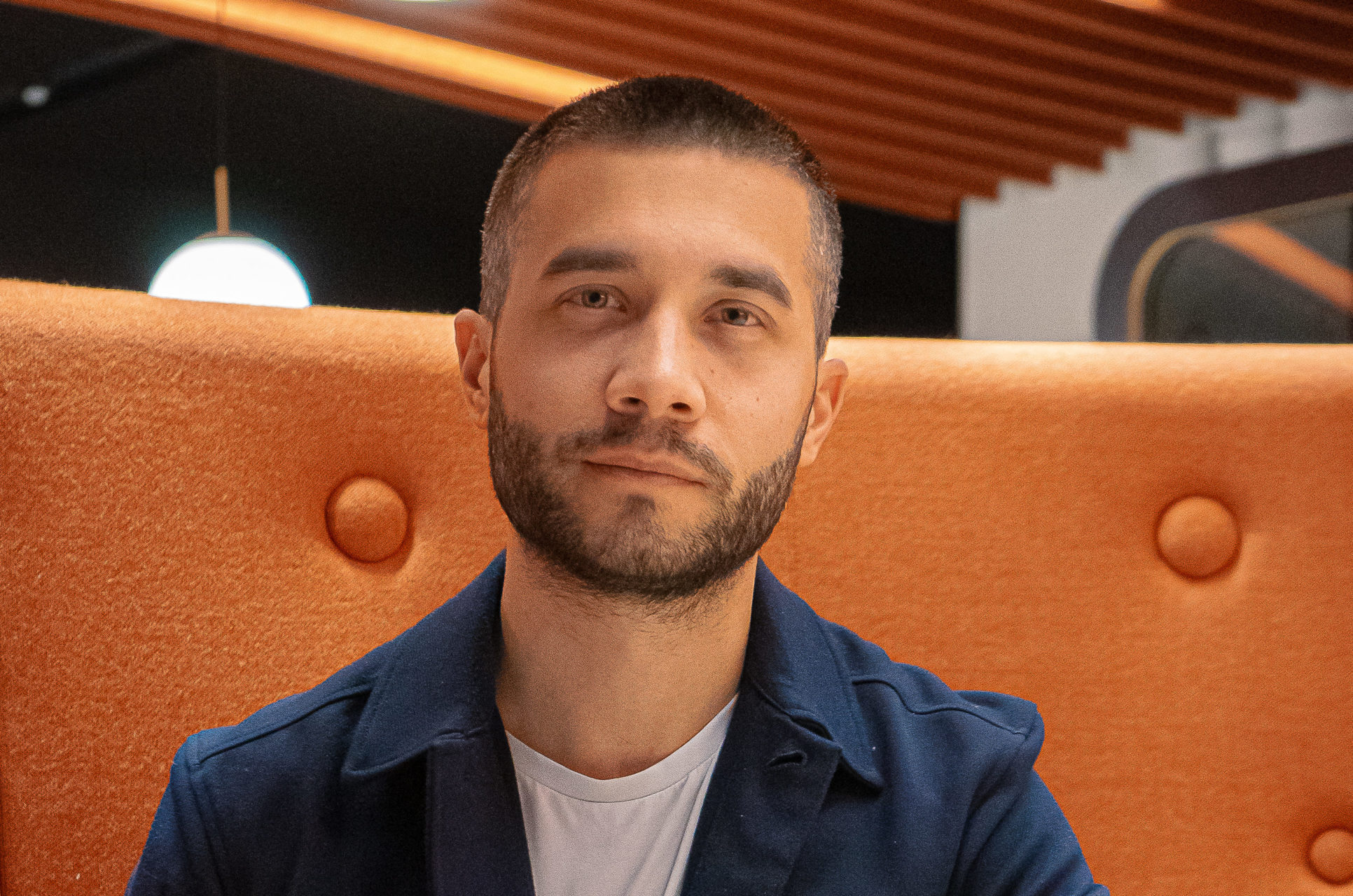
Timon Zimmermann, co-founder of Visium: «Entrepreneurship offers me a sense of freedom and control difficult to achieve as an employee.» Photo: Daniel Wittmer for Le Regard Libre
At 32, the native of La Béroche (NE) embodies a new generation of entrepreneurs at ease with new technologies. The co-founder of one of Europe's fastest-growing startups talks about his career and shares his tips for success.
While still a student, Timon Zimmermann chose to go into artificial intelligence (AI), a sector dominated by tech giants such as Google and Microsoft. In just a few years, he transformed Visium, his first company, into a flourishing SME with 60 employees, before selling it. With MageMetrics, he is now developing a platform to transform the way companies manage their data thanks to AI.
His vision: the absence of competition is a bad sign if you want to start your own business. The key is to adapt the good products or services you've found elsewhere to sectors where they weren't specifically targeted. And one of the keys to success is recruiting other creative people.
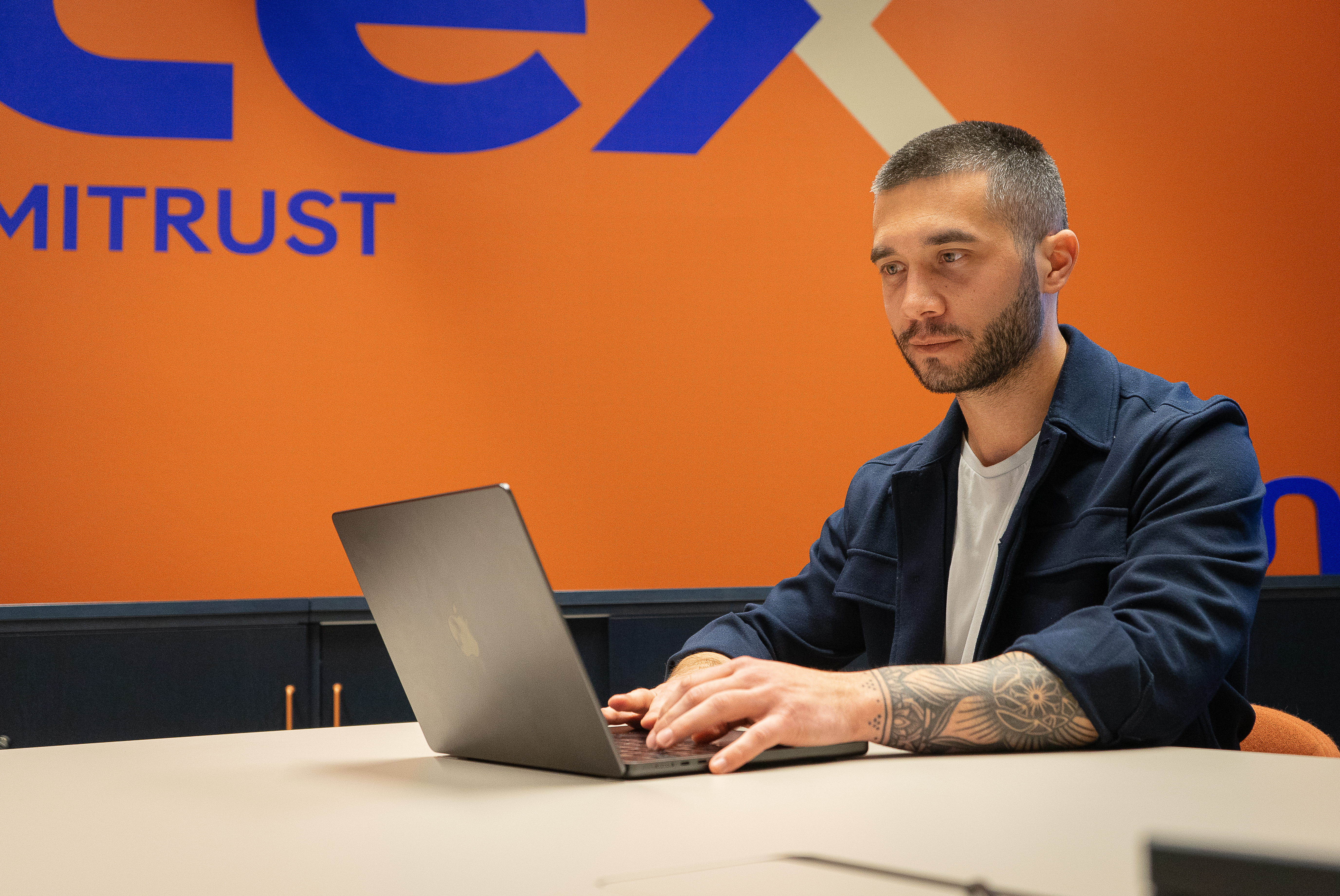
Enthusiastic about sharing his vision of the entrepreneurial spirit, Timon gave the Regard Libre at the Unlimitrust campus, the innovation center recently set up in Prilly, in the canton of Vaud, by the world's leading ink supplier, SICPA.
Le Regard LibreOnly 38% of Swiss people consider entrepreneurship a good career choice, compared to an average of 65% in comparable economies. This is often due to high salaries, which make entrepreneurship less attractive. After a Master's degree in data science at the Ecole Polytechnique Fédérale de Lausanne (EPFL), you could have opted for a well-paid job. What motivated you to take the entrepreneurial route?
Timon Zimmermann: Above all, it's the desire to live intentionally, in other words, a life where my choices are aligned with my personal goals. Entrepreneurship allows me to retain a great deal of control over my trajectory, and offers me a sense of freedom and control that is difficult to achieve as an employee. I also believe that the years between 20 and 40 are crucial in shaping what comes next. During this period, it's essential to seize opportunities, get out of your comfort zone and actively influence your destiny. Living intentionally means consciously choosing what you do and why, while accepting the challenges and risks involved.
Before joining EPFL, you started out as an apprentice banker, then computer scientist. How did these experiences influence your career path?
Very much so. At the age of 15, I didn't want to pursue a conventional education. The apprenticeship system enabled me to work in the field and acquire concrete skills. Once I'd had a taste of the professional world, I realized the importance of a theoretical grounding in mathematics and science. This motivated me to take a "passerelle" to enter EPFL. These steps gave me a unique perspective and great motivation for my higher education.
Together with Alen Arslanagic and Matteo Togninalli, you founded your first company, Visium, while you were still a student in 2018. Tell us about it.
Visium was born of the observation that artificial intelligence was still very little used in industry, despite its effervescence in the academic world. I had a network of highly competent friends at EPFL, and companies were already looking to recruit in this field. I started by connecting these two worlds: talented students on the one hand, and companies on the other. What started out as a simple service quickly became a structured business. We subsequently built up expertise and developed reusable modular components, which increased our efficiency and set us apart from the competition.
Last year, you founded a new company, MageMetrics. What's it all about?
Unlike Visium, MageMetrics is a purely product-oriented company, not a service provider. It's a platform that helps mid-sized companies better manage their data. Our SaaS («software as a service») replaces chaotic Excel files with efficient, model-based AI organization. My experience with Visium enabled me to identify recurring problems in different sectors and create this tailored solution.
What gives you the confidence to enter an industry dominated by tech giants like OpenAI, Google, Apple or Microsoft?
Going up against these heavyweights can seem daunting, and there's always the risk that one of their new features will render an entire product obsolete. The key, in my view, lies in specialization. The solutions offered by these big companies are horizontal, meaning that they are not tailored to a specific domain or industry. A startup like MageMetrcs differentiates itself by creating vertical solutions, i.e. adapting these technologies to meet the specific needs of a particular sector. This vertical positioning enables them to stand out from the crowd and seize niches that large companies, with their generalist approach, cannot necessarily fill.
What do you see as the next big developments in AI?
In my opinion, the future of these technologies, particularly in Switzerland, lies in increased verticalization, especially in sectors such as healthcare and legal. Although they are still highly regulated and sometimes reluctant to change, these sectors offer huge opportunities for those who manage to overcome these obstacles. In the USA, for example, startups are already using AI to make up for the shortage of GPs, helping them to manage their workload more efficiently. Adapting this model to the Swiss market, with its regulatory peculiarities, could be extremely promising.
What do you mean by that?
Swiss regulations, however complex, can work in favor of local companies, as they discourage the big international players from entering the market. I think our entrepreneurs should take inspiration from what works abroad and adapt it to the Swiss context. Contrary to what many people think, seeing several companies working on the same idea is not a hindrance, but rather a sign that a viable market exists.
You could have launched MageMetrics elsewhere, for example in the USA. Why stay in Switzerland?
Firstly, because it's here that I've built up my network. Between EPFL, my professional experiences and the contacts I've developed over the years, I benefit from an ecosystem that I know well and which offers me a certain stability. Access to top-level talent is also a huge issue, and the engineers trained here are among the best in the world.
What's more, Switzerland has a very dynamic fabric of small and medium-sized enterprises (SMEs). Many of them have innovation budgets and are open to collaborating with startups, which is by far not the case in all countries.
Last but not least, although certain regulations hamper innovation in certain sectors, Switzerland remains a country where it's relatively easy to set up and develop a business. I also like the Swiss quality of life. Setting up a company is a lot of work and stress, so being based in a place where I feel comfortable also weighs in the balance.
What are the biggest challenges facing entrepreneurs in Switzerland?
Administrative processes are sometimes a bit slow. I think it's a pity that we treat all companies in the same way, in terms of taxes or administrative obligations, for example, regardless of their type. Some countries have introduced segmentation by type of business, to make things easier for startups and encourage innovation. I think this is a good idea.
Visium has also opened an office in Zurich. Have you noticed any significant differences between German-speaking and French-speaking Switzerland?
No, not really. What struck me most in my interactions with the administration was how much the experience can vary depending on who you talk to. A motivated, benevolent person can make things easier, while a less involved one can make the process frustrating. This is typical of a system that relies too much on individuals. I see this as a weakness in the system that needs to be corrected.
Another problem we often talk about is the shortage of venture capital. Has this been an obstacle for you?
It's true that Switzerland is characterized by a greater aversion to risk, especially for companies in their infancy. Investors in this country generally prefer to wait until a business model has been proven, as from a Series A or B, where the capital available is then substantial, sometimes even higher than in other countries. This makes the market less speculative, which can be seen as both a strength and a weakness. Indeed, this situation generates stability, but makes it harder to finance startups in their early stages.
Should the state play a role in this?
I have mixed feelings about government intervention in innovation, particularly as regards the
distribution of grants and start-up competitions. These initiatives, while useful in some cases, sometimes keep «zombie» companies alive, without them really developing. The state certainly has a role to play in terms of framework conditions, but handing out money in the form of subsidies doesn't always seem to me to be the best approach. I believe that the change should mainly take place at the level of mentalities: private investors need to develop a greater appetite for risk and adopt a more speculative attitude. It's at their level that a real evolution could take place.
Not to mention the pension funds...
Exactly. Swiss pension funds invest very little in start-ups or venture capital, especially when compared with other countries. This is an excellent example of the risk aversion I was talking about.
Read also | Venture Capital: It's Not a Lack of Money, but a Lack of Will
At the political level, many movements are wary of innovation, and sometimes even want to curb it for ecological or ethical reasons, for example. What's your opinion?
Trying to block the development of AI, for example, is like trying to stop a tidal wave with your hands. The economy will continue to exploit these technologies as long as they bring value. Excessive regulation risks causing a flight of talent and capital, especially in a globalized market.
That said, a total absence of regulation is not desirable. The challenge is to adopt appropriate standards, but the slowness of current processes is a real problem. It sometimes takes several years to introduce regulations, while technology is evolving at lightning speed. This time lag renders frameworks obsolete as soon as they come into force. I also believe that one of the major problems is the lack of expertise in political discussions. All too often, these are internal debates between politicians or administrations, which do not involve experts or entrepreneurs. Including these voices would make decisions more pragmatic and adapted to technological reality.
What do you think is the most interesting thing about being an entrepreneur?
Building a team. Bringing the right people together, especially at the very beginning of an adventure, is like solving a puzzle: finding the talents that fit together perfectly, discovering what each person brings, and creating a dynamic where one plus one makes much more than two. This human experience, recruiting, and making a team work together is what I'm most passionate about. Of course, I love AI and data science, but basically, I could undertake almost any field if this human adventure remains at the heart of the experience. That's what makes each project unique and stimulating.
What skills do you look for in the people you recruit?
Entrepreneurial spirit. It may scare some managers to hire people who dream of setting up their own business one day, but I see this as a quality. These people are often resourceful, learn on the job, and don't need strict guidelines to get ahead. They're comfortable with uncertainty, find solutions on their own and don't expect me to give them all the answers. That's exactly the kind of profile you need in a start-up, especially in the early days when everything is still unclear.
What's the most important skill you've developed to succeed in this field?
The ability to sell. Being able to convince a customer to buy a product, an investor to finance the company, or a team to believe in a vision, is crucial. It's all about building trust. This includes technical skills, of course, but also the ability to popularize, present ideas clearly, and develop solid relationships. I believe that these so-called «soft» skills are becoming increasingly important, even for technical profiles. Knowing how to code or develop an application is useful, but these skills are likely to become commodities over time, especially with the emergence of AI tools capable of programming. On the other hand, an engineer who knows how to popularize complex concepts, present ideas to customers, or work effectively in a team really stands out. This is something I encourage in everyone who joins me.
Looking back, what advice would you give young Timon Zimmermann?
I'd tell her not to focus on the idea that you absolutely have to build a network by attending events or multiplying networking opportunities. This kind of approach is often overrated and can become dispersive. So I'd pass on this advice from American writer Naval Ravikant: focus on the quality of your work and the value you bring to others. A good network is the natural result of a job well done.
When I launched Visium, I threw myself into my work for five years. Without actively seeking to build up my address book, by the end of that period I found myself with a solid network of people with whom I'd really created something. People who add value are often too busy working on their own projects to spend time at networking events. networking. You'll meet them in a business setting, not in a boardroom. So I'd say to him: focus on the substance, on a job well done, and good meetings will naturally follow.
Economist and president of the Association Café-philo, Yann Costa is an editor at Regard Libre.
You have just read an open-access interview from our operation «Entrepreneurial spirit» and contained in our supplement «Vive l'esprit d'entreprise» (Le Regard Libre special issue N°5).
You'll also like





 French
  German
  English
Leave a comment