



In Switzerland, movies aren't made for the general public
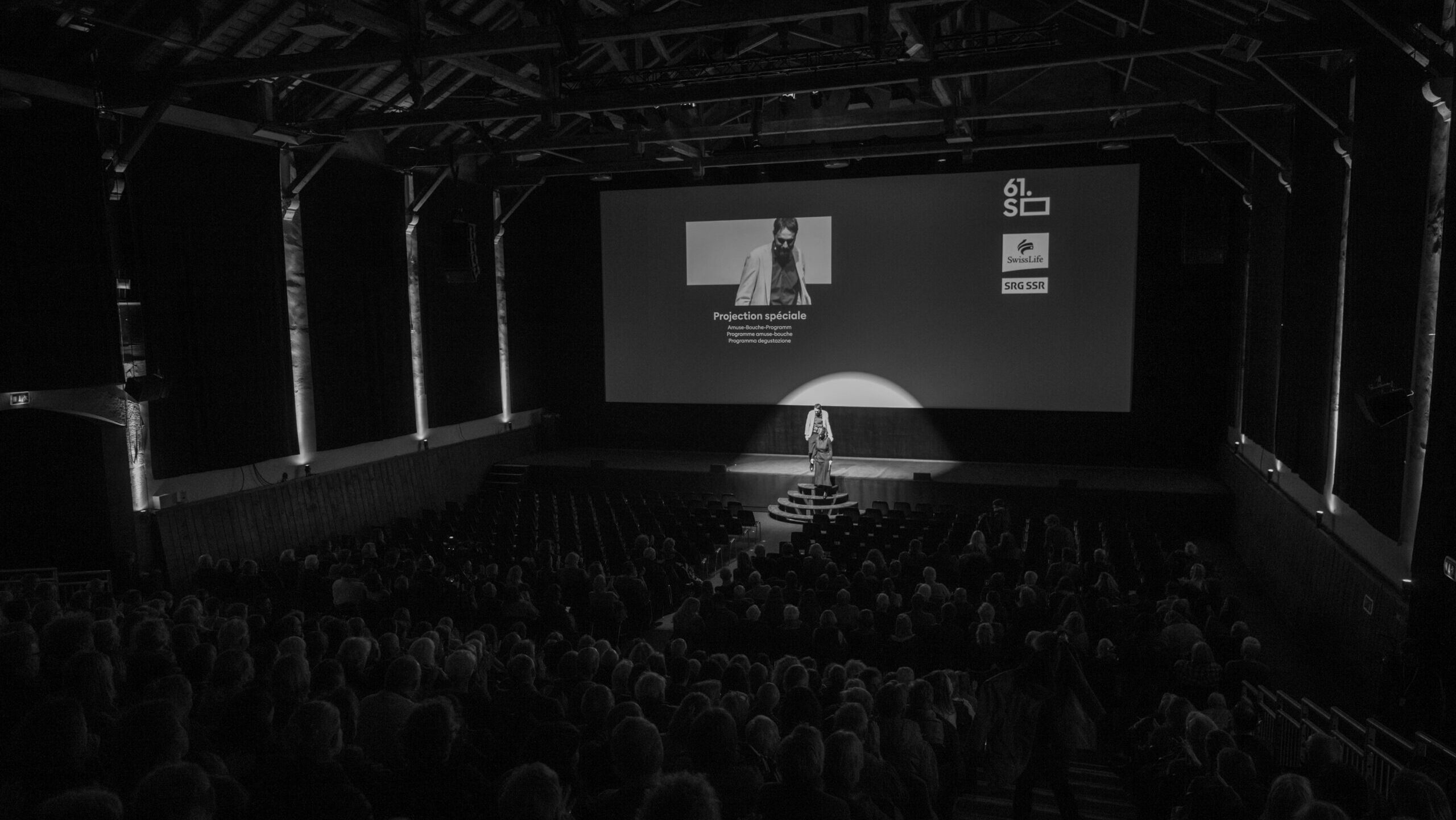
The Solothurn Film Festival showcases Swiss cinema that is firmly aimed at a niche audience. Photo: module+
Swiss cinema would not exist without public subsidies. It is therefore reasonable to question the criteria used to select projects and the actual impact of those that are chosen.
«I’ll never win the audience award, because the audience hates my movies. Which isn’t surprising, since I don’t make movies for them.» With his thick Swiss German accent, his snobby, tramp-like appearance, and his squinty eyes, Tommy Küng regularly has the editorial staff of «52 Minutes»—the comedy show hosted by the two Vincents on public television—in stitches. This character, Vincent Kucholl, is a distillation of all the clichés of an arthouse filmmaker: pedantic, wallowing in the insularity of a cultural elite that prides itself on not making «entertainment,» but «art.» Navel-gazing art bordering on intellectual onanism, as Tommy Küng would no doubt put it. In plain English, that’s called intellectual masturbation.
The caricature is ruthless, but does that mean it’s false? The 2026 Solothurn Prize was awarded to Nicolas Wadimoff for a documentary marked by minimalist restraint: survivors from Gaza speak about the hell they have endured and the loss of so many loved ones, against a black background, while drawing a map of the Gaza Strip with white paint. Regarding his decision not to show any images of the war, the director explains: «There is, after all, something beyond words that is unique to cinema: the experience of communication through a person who speaks to us, who lets us hear both their voice and their silence. We cannot read these silences, but we can film them.»
Read also | People no longer watch series, they listen to them
The movie lover in me wholeheartedly agrees and readily recognizes the power of this heart-wrenching film. But is it any wonder that such an artistic choice wouldn’t be a box-office smash?
What does this mean for Swiss cinema?
Generally speaking, the synopses of the films selected for the Solothurn Film Festival seem to be written to appeal to jurors at major festivals and to subscribers of the Cinémas du Grütli or the Swiss Film Archive: «the fragility of human relationships against the backdrop of the climate crisis,» «a cinematic experience crafted from online reviews and comments,» «Where does the line between nature and artifice lie?»…
Niccolò Castelli, artistic director of the Solothurn Film Festival, sees the festival’s high attendance as proof of the relevance of Swiss cinema. However, beyond the enthusiasm for film festivals—which I’ve already discussed in a previous column—it’s clear that the relevance of Swiss films ends there: their market share of domestic movie theaters is only 9%, one of the lowest figures in Europe: German-language films account for 20% of the market share in Germany, while French films account for 44.4%. Switzerland is also far behind Denmark, where domestic films accounted for 40% of tickets sold in 2025.
However, the amount of government subsidies in Switzerland is roughly equivalent to that granted in Denmark—around 30 million euros in purchasing power parity.
Danish cinema also targets the general public
There are certainly structural differences that partly explain this result: Switzerland is divided into distinct linguistic regions—and thus into separate markets—where Swiss productions face competition from French, German, and Italian works, whereas Denmark is much less exposed to competition from other Scandinavian countries.
However, these figures also reveal a difference in strategy: Denmark places a strong emphasis on promoting cinema among its own population, while the goal of international distribution carries significant weight in Switzerland’s selection criteria. By “international,” we mean: at festivals frequented by the Tommy Küngs of this world.
Denmark has a specific funding program for mainstream films, «which captivate audiences because they tell a popular story or fall within a familiar genre.» In contrast, under the Federal Office of Culture’s evaluation criteria, the «ability to reach Swiss and international audiences» accounts for only 20% of a film project’s final score. In other words, the federal government agrees with Tommy Küng: in Switzerland, films aren’t made for the general public.
Every month, our film review Jocelyn Daloz explores the seventh art in its socio-historical context.
You have just read an open-access column from our print edition (Le Regard Libre N°127). Debates, analyses, cultural news: subscribe to support us and access all our content.
You'll also like




 French
  German
  English
Leave a comment