



«Night in the Heart,» a voice for three silences

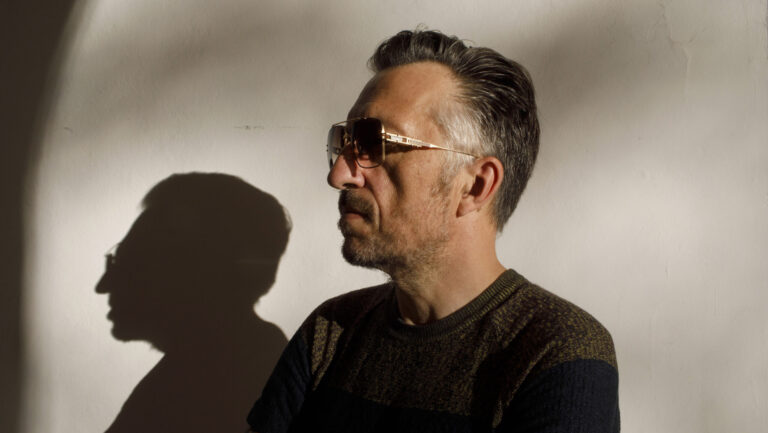
Through her story, Nathacha Appanah examines not so much the violence itself as what survives it. Photo: Francesca Mantovani
By weaving her own experiences of violence and survival into the stories of Emma and Chahinez Daoud, Nathacha Appanah tells the story of three women trapped in an abusive relationship, two of whom were unable to escape it.
In Night in the Heart, Nathacha Appanah weaves together the fates of three women: her cousin Emma, Chahinez Daoud, and herself. What they have in common is a frantic race to escape the clutches of their partners. The author will be the only one to succeed. Years after leaving that relationship, she decides to trace the paths of these women to bring their respective stories to life.
Three different stories, yet all centered on the same question: What remains after violence? What becomes of us when love is turned against us? The book doesn’t just recount personal tragedies; it reveals how certain forms of violence take root, are silenced, and then continue to exist long after the events have passed.
Charm Before the Trap
For all three women, their encounter with the man who would become their tormentor begins under seemingly ideal circumstances. He represents a place of freedom, of emancipation, but above all, of love. Violence does not immediately emerge as a threat. It creeps into a story that, at first, seems to hold promise.
The portrait of HC, the man who shared Nathacha Appanah’s life during those years of suffering, begins in this captivating way. A man of great literary erudition, he introduces her to the beauty of words and the energy of passion, presenting their story as an inevitable romance, an almost magical encounter. This love story, however, omits what, in retrospect, becomes central: the considerable age gap—she was 17 when they met and he was 32 years her senior—as well as the intellectual, emotional, and symbolic influence he exerted over her.
This is where the book subtly examines the most insidious forms of control. Sometimes, the trap is set through charm and the feeling of being chosen. Passion, as described by the one who dominates, can become a smokescreen masking the inequality and violence that gradually take hold.
Telling Others' Stories to Better Reveal Ourselves
The narrative shifts between these three women are not always explicit, as if to convey a shared voice. Of the three women, the narrator is the sole survivor of a dangerous partner. The power of her writing lies in her ability to move from one story to another, as if each woman’s fate shed light on the other two. She openly poses the questions the reader is asking, while questioning the very possibility of survival: her own, but also that of two women whom fate—or perhaps just a few circumstances—might have spared.
By deciding to investigate the final hours of the other victims, Nathacha Appanah also reflects on her own last days before her final departure. And as she retraces the years that gradually led Emma and Chahinez to their murders, she searches for the tipping point: the moment when escape is no longer possible.
One question keeps coming up in public debates that question the veracity of victims’ testimonies: Why wait decades to speak out? This book alone offers several possible answers. It offers a poignant reflection on the difficulty victims face in recognizing themselves as such, on the impossibility of delving into the pain of memories, and also on the strength sometimes drawn from the suffering of other victims, which reawakens the need to speak out.
«Memory is a choice; memory is a patient ghost. In the months that followed, I thought about Emma, I thought about her horrible death […], but I touched her memory only with the utmost care, as one might gently pry open a box of memories, and I closed it again very quickly, my hands trembling. I didn’t want to go back there. There: that hole that has become both a well from which I come to drink and an abyss into which I don’t want to fall.»
Through her testimony, Nathacha Appanah examines not so much the violence itself as what survives it. It is not simply a matter of deciding to speak out; it must first become possible to do so. The weight of the years does not erase the violence, but sometimes merely makes it possible to speak about it.
The Will to Live
La mort plane sur tout le récit. Pourtant, ce qui intéresse surtout Nathacha Appanah est moins la disparition que l’élan vital qui pousse encore à fuir, à résister, à vivre.
«I’m here, lying down, my eyes open, and there’s another me standing beside me—a substitute for myself made up of fragments of this night that I’ve cut out and swallowed. Neither version is intact. Both bear the shame, the grief, the sense of degradation, the desire to live. To live, yes. Again. How is it possible, this madness of wanting to keep on living through more days and nights?» Nathacha Appanah articulates this central paradox: violence can shatter without extinguishing all desire to carry on. Living, here, is no triumph. It is an almost incomprehensible madness, a fragile yet persistent impulse.
Is redemption still possible, despite everything?
In recounting her story, Nathacha Appanah also describes what comes next: what begins once one manages to escape violence. The book explores the vague sense of guilt that sometimes accompanies survival. She puts into words what has long remained at a distance—not to free herself from it completely, but perhaps to stop being alone with this story.
At the end of the book, words don’t heal everything. They give shape to the pain, perhaps providing witnesses to it, but they don’t make it go away. By telling Emma and Chahinez’s stories, Nathacha Appanah rescues them from silence, without fully alleviating their fate or her own pain. The book, therefore, does not transform speech into complete healing. Rather, it leaves us with a more uncomfortable idea: that of a life saved, but not restored to its former state—a life that continues with what violence has permanently taken from it.
Host of a poetry account on Instagram, Aurelia Fellous is a writer for the French cultural media Zone critique.
You have just read an open-access article. Debates, analyses, cultural news: subscribe to support us and access all our content.
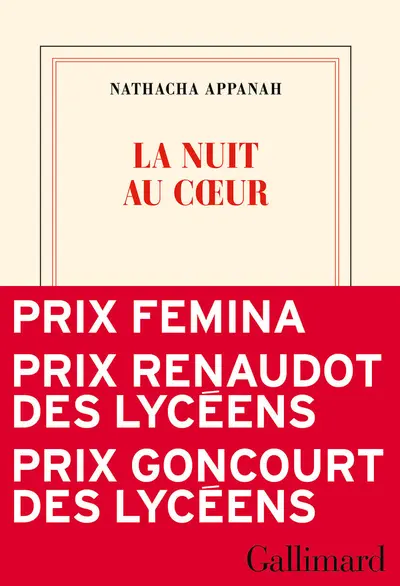
Nathacha Appanah
Night in the Heart
Gallimard
August 2025
288 pages

You'll also like


 French
  German
  English
Leave a comment