




Basic income: après moi le déluge!
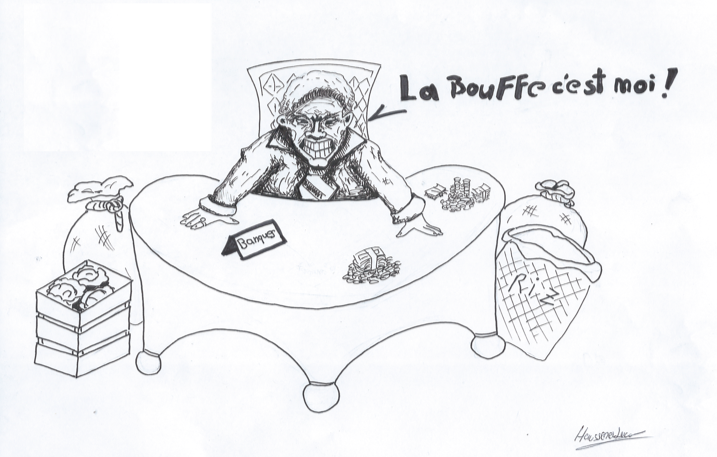
Le Regard Libre N° 14 - Nicolas Jutzet
Unconditional basic income (UBI) is a monthly payment made by a public fund to every individual, in an amount sufficient to cover basic needs and enable participation in social life, similar to a lifetime annuity. It is the realization of a fundamental human right.
The topic is gaining momentum, and newspaper articles and TV programs are pouring in. The formulations are diverse: unconditional basic income (UBI) in Switzerland, the French form known as LIBER (promoted by the Génération Libre think-tank), or the terms universal allowance, universal basic income, or even negative income tax. What do they have in common? They herald a radical change in our society. And just as well, Swiss citizens will have their say on the matter in June. But before tackling the Swiss version, a little background is in order.
The genesis of the idea comes from the English philosopher Thomas More, who described, in his political essay Utopia published in the 16th centuryth century, its model of an ideal society. It met the criterion that «the national wealth is so equally distributed that everyone enjoys in abundance all the comforts of life» - the beginnings of a universal basic income, or at least a promise of redistribution that we see today. He was trying to respond to the first signs of what would become the agricultural revolution of the 18th century.th century (rationalization of harvests, enclosures and the end of fallow land).
This revolution left part of the rural population out in the cold. Thomas More saw a basic income as a way of meeting their needs. Since then, the project has been the subject of debate the world over. So much so, in fact, that Milton Friedmann, an eminent economist of the twentieth century, has taken an interest in the idea.th century, who ended up defending the concept. For him, a minimum income gives people the ability to take risks, because it authorizes failure. From this point of view, it represents less a right than a mechanism for liberation.
How then can we explain the fact that this project, so positive on the face of it, has never, or hardly ever, been implemented? To answer this question, let's take the forthcoming vote as an example.
The Swiss version of the UBI
The project : The popular initiative «For an unconditional basic income», submitted on October 4, 2013, with 126,408 valid signatures, by a group independent of political parties and neutral in denominational terms, calls for the introduction of an unconditional basic income that should enable all people living in Switzerland to lead ’a dignified existence«: thanks to it, it should be possible to live modestly, but with dignity, and to participate in social life by being freed from the need to engage in gainful employment. No amount is specified in the text of the initiative, but the authors put forward for discussion the idea of an income of CHF 2,500 per month for adults. Children and adolescents up to the age of 18 would receive a lower amount, e.g. a quarter of the income for adults, or CHF 625.
The facts: If this UBI were to replace all other social insurance schemes, it would have the merit of putting an end to the bureaucracy and «cops» that the current system engenders. Nevertheless, it goes without saying that it is impossible to live on CHF 2,500 a month in most of the country. As a result, apart from the AHV (with the UBI exceeding the maximum premium), the rest of the insurance system should remain in place. And since the AVS is undoubtedly the least bureaucratic (yes, we're not going to dispute the fact that someone has reached retirement age, or check whether they're still of pensionable age), this doesn't help. We must also denounce the lack of federalism in this approach. How can we believe that the amount needed to live a «dignified existence» is the same in the Jura mountains as in downtown Zurich?
And why now?
Many people see the UBI as a solution to what is often incomprehensibly feared as the fourth industrial revolution. According to a study by Oxford University, based on an analysis of over 700 trades, the latter could lead to the automation of 47 % of trades within the next twenty years. This in itself is not a problem, on the contrary, but it does make these same people fear the arrival of mass unemployment. We need to prepare for this shock now, by introducing a universal allowance. Given that, in any case, a large proportion of humanity will no longer be able to work, let's prepare the social model for this. What fatalism!
«My freedom, I want to get it by the sweat of my brow, the activity of my neurons and not in a gift bag delivered by the state.»
I'd like to dwell only briefly on the vacuity of the analysis that structural unemployment awaits Switzerland, and indeed the world, and that no solution exists. As if man and robot were not made to collaborate, but to fight and ultimately destroy each other. As if new professions weren't going to emerge. As if humans couldn't reorient themselves, learn a new job. Joseph Alois Schumpeter, famous for his theory of creative destruction, must be turning in his grave. Where would we be if our ancestors had decided to set up a system of rentiers when the first machine appeared?
But let's not stop there. With the introduction of this UBI, anyone earning less than CHF 2,500 a month would have absolutely no reason to work. And what benefit would it bring to those who earn more? Nothing. Absolutely nothing. On the contrary, their income would be overtaxed, and their purchasing power eroded. All in all, this solution may seem a good idea for some students, who would be able to devote their time to studying, rather than working weekends or evenings. But is this really desirable? And what about the fringe of young people who don't go to high school but go on to university? Having experienced it first-hand, I can tell you right now that if we accept this initiative, we'll be burying one of our country's greatest success stories: apprenticeship. Already undervalued, it would lose its appeal. Why bother training for a salary well below CHF 2,500? On the other hand, the initiative claims to generate and encourage innovation. It therefore assumes that every citizen is a potential «start-upper». I regret to inform them that the real creators of the de-main world already find their happiness, provided they have a convincing idea, with Venture Capital (venture capital funds), start-up incubators and other private funds.
To bring myself face-to-face with the reality on the ground, and to avoid being locked into a disconnected vision derived from reading the various documentations, I took the trouble to attend a conference on the subject («Mieux comprendre les enjeux du RBI»). It was a long evening. Here I was, stuck in the middle of degrowth enthusiasts and other Sunday revolutionaries apparently disillusioned with the vision currently dominant in our country. It's with a certain sadness that I note that the liberating principle of the UBI is in fact a mere pretext for attacking the state of society. This «horrible» society that encourages work, productivity, competition and personal profit. In other words, the very ingredients that have enabled progress throughout history. To remedy this, we need to redistribute this wealth to everyone. And naively believe that the source is inexhaustible.
Based on the various examples above, I'm convinced that this proposal is fundamentally negative. It inverts our vision of community. It would take us from : «What can I do to help society through my personal action?» à : « Society owes me something, just because I'm part of it. No quid pro quo required.» It claims to be liberal and emancipatory. On the contrary, I find it harmful, turning us into «automatic» recipients of assistance. I want my freedom to come from the sweat of my brow, from the activity of my neurons, and not from a state-issued gift bag. I don't want your Pays de Cocagne.
Write to the author : [email protected]
Photo credit: © Lucas Haussener for Le Regard Libre

You'll also like


 French
  German
  English
Leave a comment