



A free look at the Valais
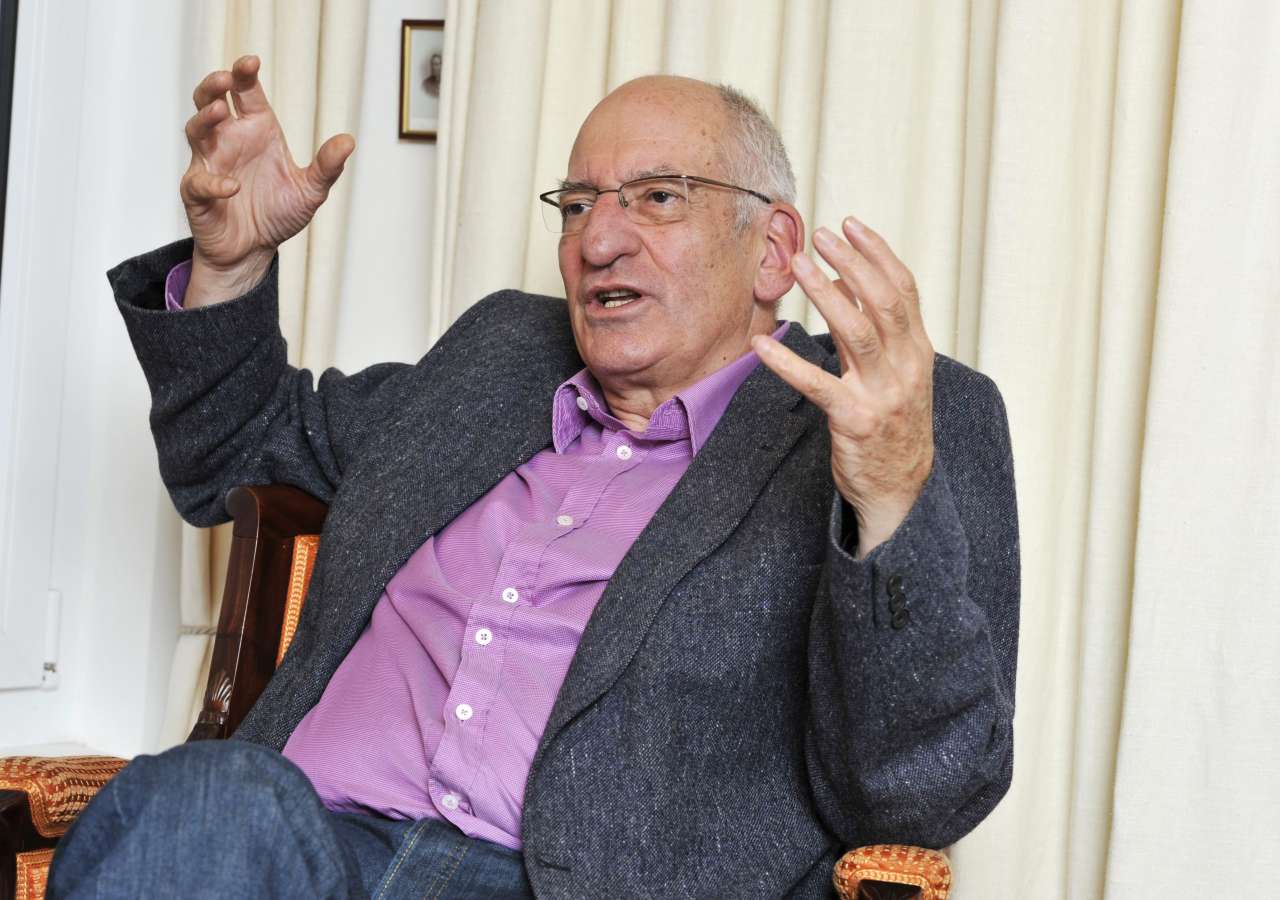
Le Regard Libre N° 5 - Sébastien Oreiller and Jonas Follonier
Le Regard Libre: It's been five years now since you were a Federal Councillor. Are you still as passionate about politics as ever, or has your outlook changed?
Pascal Couchepin: The outlook has relaxed. It's perhaps more critical, for objective reasons no doubt, the very fact that I'm no longer at the heart of politics, for example. In any case, today's problems are harder to solve. The electorate reacts in waves of emotion.
If we look back at our canton’s history, it is clear that the radical and liberal movements of modern Switzerland—which quickly gained prominence in Lower Valais—sparked a wave of modernization, industrialization, and social progress in the “Old Country.” In your opinion, what were the major milestones that shaped modern Valais?
The Valais was conquered by the Romans around 50 A.D. Later, the Savoyard period had a strong influence on Lower Valais. It is worth noting that the Prince-Bishop was appointed Count of Valais; Lower Valais was a vassal state. If we look at the architectural heritage of Lower Valais, it is more modest than that of Leuk, Raron, or even the Conches Valley, which attests to the prosperity of Upper Valais.
The year 1798 marked the French invasion with the Battle of Finges. Upper Valais initially prevailed, but in the early morning, its defenses weakened slightly, and it was defeated by the very forces it had defeated the day before. From 1798 to 1848, the French-speaking part of the canton sought political equality in elections, the creation of new tithes, and a reduction in the bishop’s privileges. A struggle took root for equal rights, freedom of thought, and freedom of the press.
After the victory at Sonderbund, a liberal-radical regime governed Valais for ten years; it was highly innovative. For example, it had the ambition to begin straightening the course of the Rhône; work began on a tunnel at the Great St. Bernard Pass, and a cantonal bank was established—though it unfortunately went bankrupt. Industrial expansion centered on the development of electrochemistry in Monthey, as well as in Martigny, Sierre, and Visp with the Lonza company. Agricultural practices were modernized between the two world wars under State Councilor Maurice Troillet, an open-minded and intelligent man who founded Provins and the agricultural school.
In the early 20thth In the 19th century, mountain tourism took off with destinations such as Mayens-de-Sion, Finhaut, and Zermatt. As for winemaking, fine wines are produced where they can be sold to a royal court. The Valais, on the other hand, was a poor region without any good wines. From the beginning of the 20thth In the 20th century, I think there was a growing awareness. The years 1985–1988 saw a qualitative leap forward in Valais viticulture.
Finally, I would say that Valais has had its ups and downs. There can be no more setbacks—for better or for worse; for the past twenty years, we have been entering a new era in terms of the balance of political power. Our canton has lost some of its uniqueness.
The Valais economy took a long time to develop. Why do you think that is?
This stems mainly from a major communication problem and a lack of industrial tradition. Lower Valais, Sierre, and Visp have been the hubs of industry. After the war, 30 to 40% of the Valais population still worked in agriculture. A former director of SBS once told me, «Industry in Valais: as far as Monthey, but no further.» The arrival of the highway and the liberalization of telecommunications have driven the leap forward we’re seeing in the quality of our industry. The Mutual Insurance Company is, for example, the only company that has managed to establish itself nationwide. Finally, it is worth noting the distrust that conservatives show toward industry.
A number of personal scandals have rocked the Valais region recently. What do you think of all this media coverage?
Media coverage is a consequence of events. That said, there is reason to fear that certain prejudices may lead to unfair treatment of the various cantons. I believe that Valais, sociologically and politically, is divided into three parts: a highly democratic Upper Valais, where the struggle between individuals prevails; a Lower Valais rooted in the struggle between liberals and conservatives since the 19thth century; a Central Valais still marked by traditional «clan-based» politics, although this situation is changing rapidly. As a result, this part of the canton is the most likely to allow for deviations. Indeed, this situation is defined by the defense of clan interests, whereas the 19th-century stateth The state of the 21st century aims to be independent of personal interests. The liberal state avoids conflicts between individuals, establishes rules, and upholds the separation of powers. This three-part vision of Valais comes from Carlo Boissard, the former vice president of Monthey.
You were talking about the struggle between conservatives and liberals. In your opinion, will the traditional PLR/PDC divide in Valais politics persist or gradually fade away?
Today, we see that the terms «conservative» and «liberal» have taken on a broader meaning than in the past; they are no longer specific to any one political party. The PDC, which still holds a majority in our canton, counts among its members both those with a liberal outlook and those with a conservative outlook. One might say that the former should join the party that truly suits them. No, traditions are too strong for this opposition—this major distinction—to fade away. That is simply how the proportional representation system works. One might also argue that the foundation of the historic parties, which has hardly changed, was established to address 19th-century issues.th century. But we are now in the 21stth century! However, the Greens are now showing that they are unable to present a credible alternative. The environmentalists have focused on protecting the environment; the rest of their platform is merely a satellite of the Socialist Party.
The PLR lost its seat on the State Council. What lesson should the party learn from this?
In politics, nothing is ever a sure thing. You can lose or win, but it’s important to have a platform and a strong personality. Next, you have to choose candidates based on strategy, and above all, avoid the mistake of selecting a candidate too early, as happened in this election. That was the root cause of this dramatic situation—both for the party and for the man who represented it.
Le Regard Libre is a student-run newspaper. In your opinion, what improvements are needed in the Valais education system?
First of all, I note that the results are, generally speaking, quite good. In my view, efforts to integrate children with disabilities into elementary school, for example, should continue. This is beneficial both for children with disabilities, who feel accepted, and for other children, who learn to live in a community with all that this entails. What has always shocked me, however, is that we have not managed to take better advantage of our canton’s bilingualism. In particular, there is a real gap in German language proficiency among French-speaking Valaisans. Bilingualism is a great opportunity we’ve been given; it’s up to us to seize it. The existence of bilingual tracks in middle school shows the way forward.
How do you feel about the decision by several German-speaking cantons to eliminate French instruction in elementary school?
I think that’s a shame. Above all, their argument strikes me as really strange: that teaching French is difficult. Well, math isn’t easy for everyone either. It’s a mistake, but the federal government can suggest learning English alongside French, without actually requiring it. In any case, laws will never match the goodwill of teachers.
In general, what are your thoughts on the importance of language learning—particularly ancient languages—in a society where mathematics is playing an increasingly prominent role?
We must not pit languages against mathematics—they are two inseparable fields of knowledge! Latin, for example, which you have the privilege of studying, is an incredible asset. When I was still a Federal Councilor, I would sometimes try to translate a Latin text in the evenings. After 10–15 minutes, I’d be sweating. I’d be sweating—literally! It’s a remarkable form of mental exercise. It really is a luxury you’re fortunate to have. A wonderful gift, but not an easy one.
Finally, Marguerite Yourcenar once said that to know a man, you must know his library. Do you have a favorite author or book?
I have a lot of them. One day, someone asked me which book had meant the most to me in my life: I think it’s Man's Journey to Discover His Soul Jung. I also read with great enthusiasm the works of Mircea Eliade, the historian of myths and religions, as well as those of Gaston Bachelard, who sought to understand the scientific basis behind mythical statements—in alchemy, for example. As for French literature, I received the Pléiade edition of Montaigne’s works as a gift for my twentieth birthday. I loved Conrad; I read everything by Yourcenar; and the works of the Egyptian author Aswani left a deep impression on me. When I moved, I «cleaned out» my bookshelf; but since then, I’ve filled it up again.
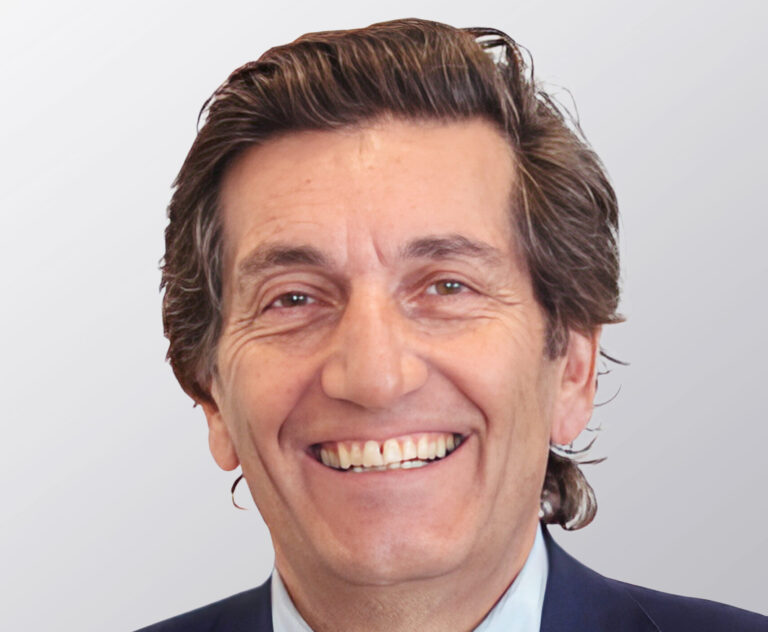
Photo credit: Fanny Schertzer / Wikimedia CC 3.0

You'll also like

 French
 German
 English

Leave a comment