




At Nebia, an almost (too) perfect dinner

Le Regard Libre N° 47 - Ivan Garcia
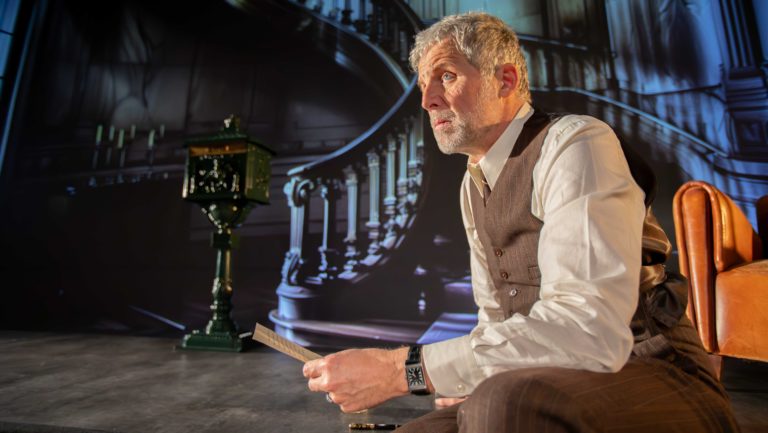
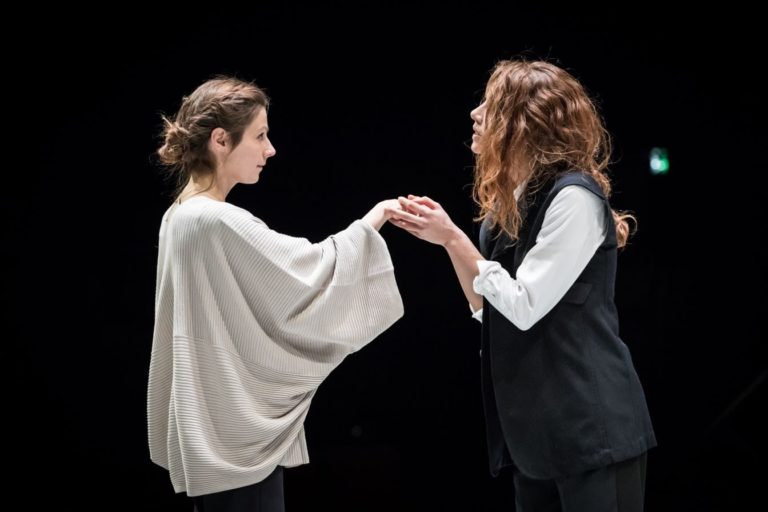
The dinner is an O'Brother Company show based on the novel Cinderella by Eric Reinhardt. It features an employee who, having just been hired, wants to continue climbing the corporate ladder, so he invites his boss to dinner, but the evening goes awry.
On Saturday, January 12, 2019, the recently renovated Nebia Theater in Biel will host the show’s only performance in Switzerland The dinner. Although the show’s plot—an employee who hopes to get a promotion by inviting his boss over and ends up making a fool of himself—is a common trope in many contemporary stories, the audience will delight in this production, which combines minimalist set design with a duo of actors who take turns playing the various roles.
The Choice of Simplicity
On stage, at the beginning of the performance, no one is in sight. The audience sees only a wooden picnic table illuminated by four vertical black spotlights positioned at the corners. After a few moments of waiting, a man, coming from the audience entrance, moves through the shadows toward the stage. Of average height, he embodies the typical office worker: leather shoes, loose-fitting pants, a white shirt, a yellow tie, a beige three-quarter-length jacket, and a slightly receding hairline. Once on stage, he sits down at the picnic table and waits.
Then a woman arrives. Tall, with red hair, she is wearing a skirt, a sweater, and a coat, and is carrying bags filled with food and cutlery. From that moment on, we witness a family picnic scene—albeit one without children. Drinking water from plastic cups and eating potato chips, the man and woman speak little and look toward the audience. Then, the conversation quickly turns to an event that supposedly took place a year ago: a dinner party. From that moment on, the narrative—told in turns by the two actors—uses a technique of mise en abîme and flashbacks to recount what happened a year ago and led to the present. As they finish devouring their appetizers, the man reveals the story of that famous dinner to the audience—a dinner that was meant to be (too) perfect and ended in a letdown.
The All-Too-Perfect Dinner
The man, who says his name is Mr. Trockel, explains that a year ago, he started his new job at a technology company led by the charismatic Mr. Francoeur. Determined to show his boss that he is a man who can and wants to move up the ranks, Trockel takes the initiative, together with his wife, Mrs. Trockel, to invite the Francoeurs to dinner. It will be an extraordinary dinner, featuring «4 toques and 4 écus» recipes—meaning technically challenging and financially costly—taken from the culinary encyclopedia purchased on credit for the occasion.
At first, Mrs. Trockel is pessimistic, but she eventually lets herself be won over by her husband’s boundless energy. He mimics the children’s reaction when dinner is announced. Bénédicte and Thierry, the Trockels« children, will also help out, since the Francoeurs like children. So the whole family gets organized to transform the house into a palace, prepare a sumptuous meal, and come up with interesting topics of conversation… But what initially seemed fairly normal quickly turns surreal. Like when Mr. Trockel buys a luxury car so his boss won’t see him in his old R14. »An employee’s car,« his wife will tell him. »Yes, an employee’s car,” he’ll reply. And, yes, Mr. Trockel is drunk. Drunk on his successes, drunk on his possessions—he wants more and more. This obsession with succeeding—with racking up one success after another—initially makes him very energetic and well-liked, not only by his family but also by his boss.
Finally, the big night arrives, and that’s when everything changes. While Mrs. Trockel, ever the gracious hostess, devotes herself with incredible precision to preparing the meal and making the final arrangements, the guests—who are normally escorted by Mr. Trockel—fail to arrive on time… And that’s just the beginning of the setbacks for the Trockels. Mrs. Francoeur, whose manner is mimicked by Mrs. Trockel, is in a dreadful mood, which contrasts sharply with her husband’s positive outlook. As if to carry the metaphor further, Mr. Trockel gets drunk and recounts his old stories as a helicopter pilot. And there, the model employee turns into a complete failure: sexual innuendo, boasting about his foolish antics—and the list goes on, spoiling what had been a rather successful dinner up to that point. At first understanding, Mr. Francoeur—dominated and humiliated by his wife—becomes unlikable and ends up leaving before dessert is even served.
A satire on consumerism and social climbing
The dinner is a play based on the epic novel (about 600 pages) Cinderella by Eric Reinhardt. However, there is no character named Trockel in Reinhardt’s work. What the O’Brother Company draws upon are themes related to the materialistic world, finance, social climbing, and consumerism. In short, just about everything that has shaped our societies since the Industrial Revolution. While criticism of consumerism has a long tradition behind it, it is rarer to find critiques of social climbing, given that it has at times been glorified, as is the case in Father Goriot from Balzac, in the character of Eugène de Rastignac. In the play, Trockel faces the consequences of his social climbing; he ruins himself, makes a fool of himself, and gets fired. Yet, even though he did it for selfish reasons, he only wanted to do the right thing.
So, The dinner Does he really criticize social climbing? To that, one might be tempted to answer yes, given the total disappointment the protagonist experiences—including his dismissal. The play criticizes this excessive social climbing that prioritizes the end over the means, even at the expense of oneself or one’s loved ones. On the other hand, Trockel’s drive—which made him appear self-assured at an office meeting—is praised by his boss, who tells his new employee that the meeting went very well and that he’s glad to have hired him. In today’s workplace cool, this philosophy may seem anachronistic: be productive at work, but outside of work, just be yourselves instead of acting like socialites.
Write to the author: [email protected]
Photo credit: © Dinan Agglomeration
-
 Le Regard Libre - N° 47CHF10.00
 -
 Digital subscriptionCHF50.00 / year
 -
Standard subscription (Switzerland)CHF100.00 / year
-
Support subscriptionCHF200.00 / year

You'll also like


 French
  German
  English
Leave a comment