



David Vuillaume: «Heritage preservation is not to blame for the housing crisis»

David Vuillaume inside the Patumbah Villa. Photo: Swiss Heritage
Faced with demographic pressure and a housing shortage, heritage preservation organizations are sometimes accused of hindering construction. David Vuillaume advocates for an approach that can reconcile heritage preservation and promotion with today’s challenges.
An art historian and Germanist by training, David Vuillaume has served as director of several museums in Switzerland and Germany before taking the helm at Patrimoine suisse. Founded in 1905, this nongovernmental organization works to preserve Switzerland’s architectural and landscape heritage, as well as to promote quality standards for contemporary construction. For Le Regard Libre, he discusses the importance of—and his understanding of—the concept of heritage, which has now been integrated into and expanded to encompass the concept of built culture.
Le Regard Libre: In your opinion, what is the Swiss public’s stance on current architectural and urban planning issues? Are they aware of these issues?
David Vuillaume: I believe that the Swiss public is generally more attuned to issues of architecture, landscape, and land-use planning than the public in many other European countries. This stems from our semi-direct democracy—or at least from the opportunity citizens have to participate in decision-making. Not everyone is an expert, and not everyone has a particularly refined sense of taste, but everyone knows that, at some point, they can voice their opinion, vote, or support an opposition. This fosters a sense of responsibility.
However, we must avoid assuming that dissatisfaction is widespread simply because critical voices are, in fact, more audible. As part of our work with the organization, we naturally encounter people who are dissatisfied with how their lives are unfolding. We must take this reality seriously: quality of life does not mean the same thing to everyone.
For example, when a historic district, a monument, or a recognized landscape is at risk of disappearing, the public recognizes what’s at stake, takes action, and may even vote. On the other hand, we are much less aware of the gradual decline in quality in ordinary, contemporary neighborhoods. Yet this is where most people live, and where the quality of life can deteriorate without us even noticing.
Masterpieces are not necessarily the most endangered sites in Switzerland. Major monuments, churches, and historic districts are, on the whole, recognized. What worries me more is the more ordinary built environment, outside protected areas, which is also subject to deterioration. It’s harder to defend what is neither old nor exceptional. Yet that is precisely where a lot is at stake.
Based on what values and subject to what constraints—economic, legal, structural—do we build today?
We are faced with expectations that are sometimes contradictory. Some prioritize heritage, others the ecological transition or land-use efficiency, and still others housing affordability. There is also the issue of architectural innovation and the long-term transformation of cities. The problem arises when a political party, a stakeholder, or a policy holds that any one of these elements should take precedence over all the others.
For us, the challenge is precisely to foster a dialogue between them. The Wakker Prize, which we award annually, takes at least four dimensions into account: heritage, ecology, housing, and architectural quality. Ideally, these should not be treated as conflicting interests, but rather considered together.
The pressure is obviously considerable. Switzerland is experiencing population growth, and there is a real need for housing, while the amount of land available for construction is not increasing. However, as the Spatial Planning Act reminds us: we do not want to become Singapore; we want to preserve our landscapes and natural areas. In this context, cultural, aesthetic, or heritage considerations sometimes seem secondary to the urgent need to build and the financial interests of developers. It is within the framework of this tension that the debate must be conducted rigorously.
Can we define the concept of quality? How can we describe and implement it?
When we examine the concept of quality, we discover just how complex it is. But we can get closer to understanding it if we view it as a balance among several dimensions: functional quality, spatial quality, construction quality—in terms of materials and their application—environmental quality, aesthetic quality, and integration into the landscape and the existing urban fabric.
A high-quality building meets all of these criteria. It is not merely efficient, nor merely beautiful, nor merely environmentally friendly. To put it more simply: a good project meets the needs of society while respecting its historical, social, and environmental contexts.
That is the significance of the Davos Declaration, issued in 2018. It asserts that architecture, infrastructure, and land-use planning are all part of culture. This may seem abstract, but the idea is very concrete: buildings, streets, train stations, public spaces, and transportation networks were created within specific contexts; they tell a story, organize our activities, and shape our daily lives. We may not always be aware of it, but because of this, they are an integral part of our culture.
The Davos Declaration thus establishes eight criteria: good governance, functionality, respect for the environment and resources, economic sustainability, diversity of uses, integration into the landscape and cultural heritage, the identity of the place, and finally beauty—that is, the quality of the sensory experience. This framework is an excellent model. The challenge lies in implementing it systematically, both in Switzerland and elsewhere.
Are there any values that are unanimously shared by all stakeholders in the construction industry—users, architects, engineers, government agencies, and developers?
I wouldn’t say there’s unanimous agreement. Interests differ, and that’s normal: developers must finance projects, municipalities are required to defend the public interest, architects must ensure coherence, residents must consider their own needs, and community organizations must keep in mind the long term, the context, and the common good. But that doesn’t mean everything is going wrong. Most projects are carried out without major issues because the stakeholders manage to communicate with one another and reach compromises. We only hear about the problematic projects, which can give a distorted picture of the situation.
The key is to prevent irreversible changes. Once a historic building has been stripped of its contents, once only the facades remain, or once a complex is demolished before alternatives have been seriously considered, it is too late. Swiss Heritage prioritizes intervention in these cases because demolition is irreversible. Promoting the heritage of tomorrow is important, but we must first prevent the irreparable loss of what already exists.
Do current practices still give rise to regional characteristics, or is the appearance of buildings becoming more uniform?
The pressure toward homogenization is real. It stems from the globalization of techniques, materials, regulations, and, more broadly, our lifestyles. We look at the same images, use the same tools, shop at the same stores, and end up building objects that could be found anywhere else. But a building is always situated somewhere. There is a landscape, a site, a history, local materials, and an urban fabric that came before it. In a well-designed project, we should still be able to read that history.
Among the criticisms leveled at today’s built environment, the concept of aesthetics often comes up: unplanned urban development, incoherent complexes, stylistic simplicity, or even a lack of decorative elements. What makes a building or a development beautiful?
Beauty is difficult to define exhaustively, but it would be a shame to reduce it to a purely personal preference. It is part of the everyday experience of a place, but it is not limited to the setting: it can be found in proportions, light, materials, details, a building’s relationship to the street, its neighbors, and the landscape—or even in the way it ages.
Building to a high standard often costs more. We have to admit that. But a well-designed building lasts longer, is easier to repair, and may ultimately prove to be more economical. Yet today we see too many buildings constructed to save money: boxes whose facades and flat roofs aren’t designed to age properly. After a few years, the walls get dirty, the materials age poorly, and what was merely cheap turns out to be simply shoddy.
Protecting our historic heritage does not preclude recognizing the heritage of tomorrow. There are also fine modern works—sometimes unobtrusive—whose quality is revealed in the details. But we must maintain high standards. Switzerland is a country that has the means to do so. Education and awareness-raising are therefore crucial: they help develop, starting in school, a critical foundation, a discerning eye, and a sense of architectural culture. This transformation will take time, but it is necessary.
What are—or what could be—the means of ensuring an ambitious and coherent aesthetic?
There is no one-size-fits-all solution. Design competitions, specialized committees, master plans, regulations, the criteria that define built environment culture, training, and participatory processes can all play a role. However, local governments must have the necessary expertise, and there must be political will.
Large cities generally have urban planning departments, specialists, and resources that enable them to evaluate projects. In smaller municipalities, the local government may find itself alone in dealing with an investor who has a proposal, a budget, and a promise to create jobs or housing. On what grounds should the project be rejected or modified? In such cases, community organizations can provide arguments, expertise, and a voice to help local authorities defend the public interest.
Federalism makes the whole situation more complex. The Confederation can promote a policy on built heritage, but the cantons and municipalities are keen to retain their authority. Some cantons, in turn, delegate a significant portion of the responsibility to the municipalities, which do not always have the qualified staff to handle it. The goal is not to centralize all decisions, but to ensure that each institutional level can truly exercise its own judgment.
Today, we are building the structures and spaces that we will be committed to protecting tomorrow. Do you think today’s projects will be worthy of that protection?
Swiss Heritage is committed to doing both: protecting what already exists and engaging with contemporary architecture and urban planning. There is even a third area that interests us more and more: restoration. It’s not just about preserving a building or promoting a high-quality new project, but about restoring areas that no longer function well today. The Wakker Prize has occasionally recognized initiatives of this nature. In Dornach and Arlesheim, which received the award, the focus was not on celebrating a specific heritage site, but on honoring a collective effort to improve the quality of life in communities on the outskirts of Basel.
Tomorrow’s heritage will not necessarily be a spectacular structure. It could be a neighborhood that has been thoughtfully transformed, a town that is improving its public spaces, a housing complex capable of adapting to its residents and the times, or a project that successfully brings together environmental sustainability, housing, heritage, and architectural quality.
We generally assume that older buildings are better constructed and more attractive than modern ones. Is that really the case?
Not entirely. Poor-quality buildings constructed in the past have often disappeared. What remains is precisely what was sturdy, interesting, or adaptable enough to stand the test of time. We therefore tend to compare the best of the past with the entirety of contemporary architecture. Nevertheless, the historic buildings we preserve possess valuable qualities: they are durable, repairable, rich in detail, and often relatively easy to maintain. They also have the advantage of already existing: preserving them avoids a large portion of the “gray energy” associated with demolition and reconstruction. Heritage should not become a catalog of forms to be replicated. Rather, it teaches us an attitude: to build in a way that is solid, intelligible, and generous enough so that future generations can understand the structure, love it, maintain it, transform it, and perhaps choose to preserve it.
To what extent is cultural heritage valued and supported in Switzerland?
I get the impression that the public broadly supports the idea of heritage. If we clearly explained to citizens that a historical setting, a landscape, or a neighborhood they care about is at risk of being destroyed, many would take action. Even politicians generally want to live on a beautiful street, in a beautiful house, and in a pleasant environment. But when it comes time to vote or make a decision, their priorities shift.
The lack of sensitivity is more prevalent in certain circles of power: parts of the political sphere, the media, and the construction industry. In these circles, historic preservation is often portrayed as an obstacle to housing construction or development. This is a caricature. The need for housing is real, but it is absurd to blame heritage preservation organizations for the crisis.
The right of associations to appeal is not intended to block a project in order to defend private interests. It allows them to ask a court whether a public decision complies with the law. It is a safeguard for the common good. However, this right is limited—or even nonexistent—in some cantons; it is also undermined by attempts to significantly reduce the consideration given to the ISOS, the Federal Inventory of Built Sites of National Importance to be Protected in Switzerland.
What can we learn from our cultural heritage?
First, he teaches us that buildings are repositories of history. In a town like Porrentruy, where I was born, the unusual scale of City Hall or the train station becomes understandable once you connect them to the history of the Reformation in Basel or the Franco-Prussian War. In our daily lives, we don’t necessarily see these things anymore; sometimes all it takes is a guided tour or a shift in perspective to understand what the built environment is telling us. Heritage teaches us several essential lessons. It shows the importance of building to last, using resources sparingly, adapting buildings to the local climate, valuing artisanal skills, and creating spaces that foster identity and a sense of belonging. It is precisely because of these qualities that these structures have endured through the generations. Today, they serve as a valuable source of inspiration for addressing contemporary challenges and demonstrate that it is possible to build the heritage of tomorrow by drawing on the lessons of the past.
The inventory of objects designated as part of the national heritage is accompanied by a hierarchical classification system that determines their level of significance and protection. What are the evaluation criteria?
The inventory of objects is based primarily on historical and scientific research. The hierarchical classification is based mainly on their historical, architectural, artistic, scientific, or archaeological value, as well as on their authenticity, integrity, rarity, landscape or urban value, and their importance to cultural identity. Objects are evaluated according to uniform criteria and then compared at the cantonal or national level to determine their local, regional, or national significance and the level of protection they deserve. It is worth noting here the central role of ISOS. Although challenged by certain political circles, this tool remains essential for identifying sensitive sites and integrating heritage considerations into land-use planning.
How are cultural heritage objects being addressed in the context of current pressures?
This involves, in particular, sharing knowledge with the public through events such as Heritage Days, guided tours, open houses, and tourist activities—provided they are sustainable and well-managed. Awards such as the Wakker Prize or the Schulthess Prize for Gardens also help raise public awareness, particularly when accompanied by public events and sufficient media coverage. Finally, various administrative and legal tools are available: inventories, the classification and protection of monuments and sites, as well as the right of associations to file appeals. These instruments help ensure compliance with heritage legislation and remind authorities of their responsibility to preserve heritage.
Photographer by profession, Nicolas Brodard is a member of the editorial team of Regard Libre.
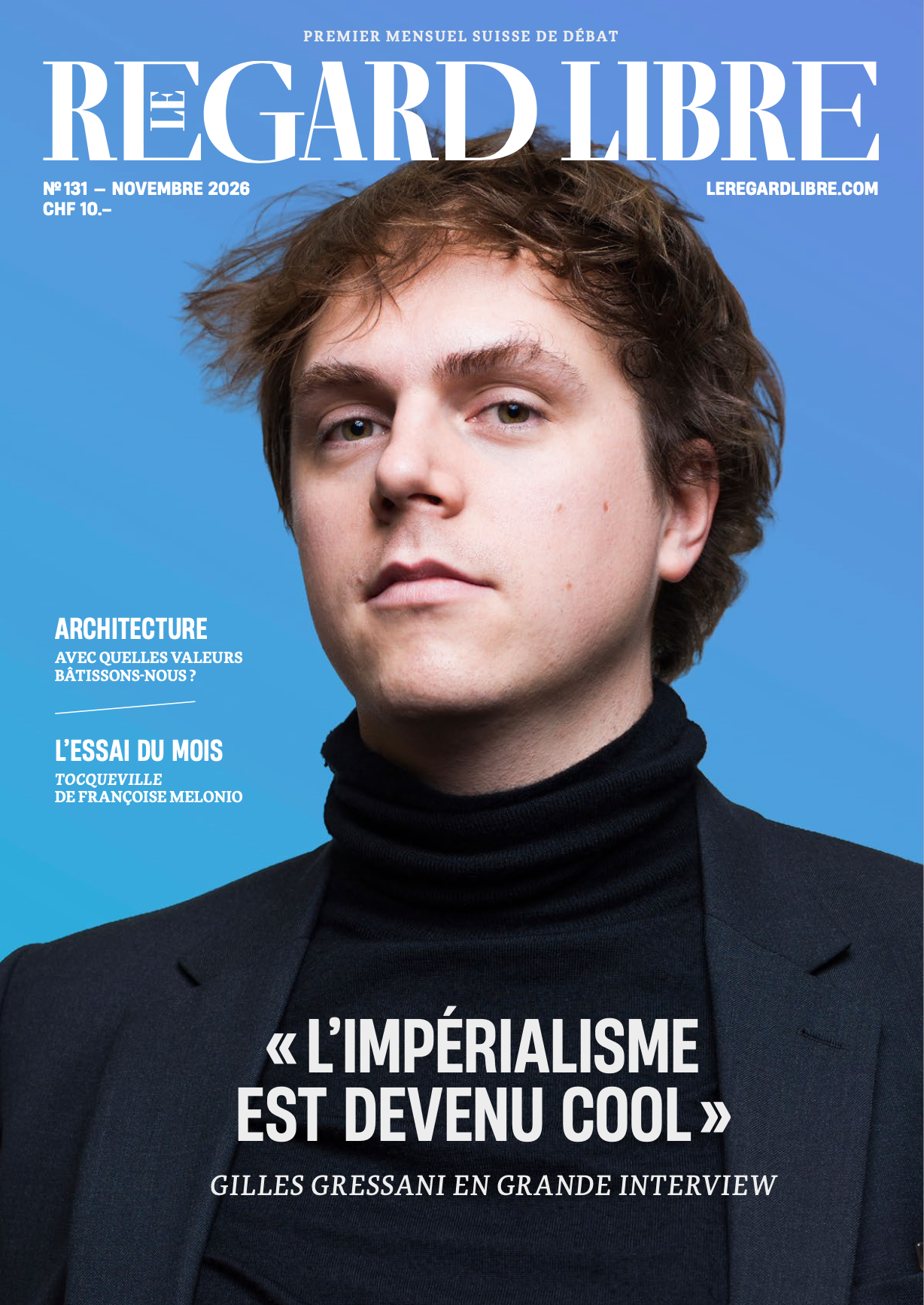
You have just read an excerpt from our feature «What Values Guide Our Construction?», published in our print edition (Le Regard Libre No. 131).
You'll also like






 French
 German
 English
Leave a comment