




«Capharnaüm»: between despair and frustration
Cinema Wednesdays - Hélène Lavoyer
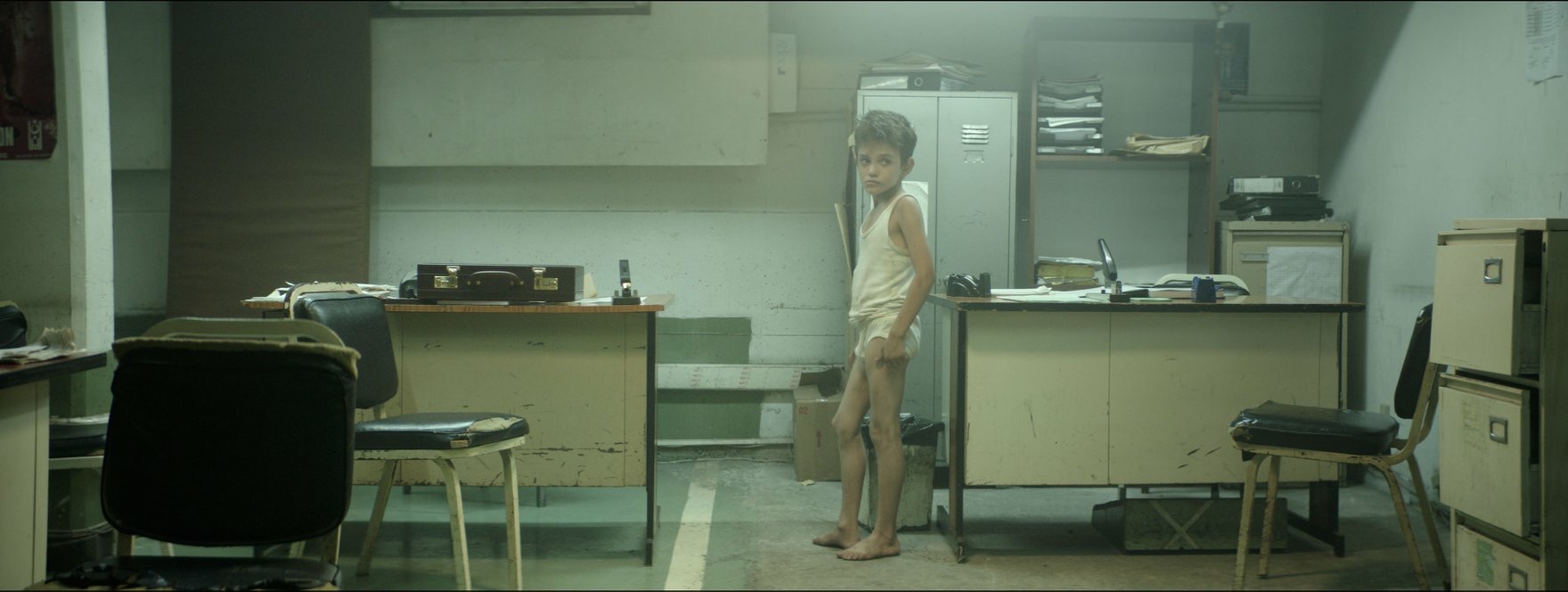
At around twelve, Zain runs away from home after his father and mother agree to give their eleven-year-old daughter, Sahar, to their landlord. But the streets through which the «little man» wanders are nothing, nothing like those we walk here in Switzerland. Firstly, because these are the streets of Beirut (Lebanon), not those of Berne, Biel or Lausanne. The streets of Beirut are made up of low-roofed buildings, with fabric or metal doors padlocked with chains, and on the doorsteps of which stand the neighbors, the comrades in misery.
With no papers and nothing but his disgust for a life that has spared him neither poverty nor hunger, little Zain al-Haaj, with his frail body and huge black eyes, manages to find enough to eat and never seems to stop putting one step in front of the other. Until he meets Rahil, an undocumented Ethiopian woman and her two-year-old son, Yonas. This is the beginning of a reciprocal relationship of protection and care, a semblance of stability and a hint of tenderness that cannot survive the streets of Beirut, forced precariousness, smugglers, hunger, the need for money and powdered milk.
«Kfar. The village. »Nahum. The consolation. So was baptized a small fishing village in what we call the ancient province of Judea (now West Bank and Israeli territory). A place Jesus had visited. A village of consolation by virtue of its name, but one that eventually disappeared from today's geographical maps - a fact that can also be seen as a sign of grace, given the situation in these dry lands with their extreme temperatures.
Why talk about the etymology of the word, why discuss the city that is no more, when we're talking about a film? Well, because perhaps the director should have considered the irony of this etymology for her film, which is its antonym. But a «capharnaüm» is also a big mess, a place where everything and anything is piled up and superimposed. For sure, a Swiss will find Beirut disorganized from its streets to its inhabitants. In Capharnaüm, yet there's not much luck to be found, and not much hope, so to speak.
A film like this isn’t meant to inspire hope. But what, exactly, is its purpose? Two hours of misery that we can neither share nor imagine, which thrusts the everyday realities of refugees’ lives right in our faces around the world, of those who have a home but live in poverty—enough to leave you feeling deeply depressed and suffocated by a sense of helplessness.
Nadine Labaki has written a screenplay brimming with events and a diverse cast of characters. The good thing is that each of these characters contributes something, playing a role that helps us better understand the complexity of life as a mother, a brother, an undocumented worker, or a smuggler when you’re Syrian in Lebanon (or elsewhere). The flip side of the coin, however, gradually comes to light.
First of all, there are these two children, Zain and Yonas (who are inseparable from their real identities, Zain al-Rafeea and Boluwatife Treasure Bankole), whose «role» isn’t really a role at all, raising the question of pity and the morality—or lack thereof—of having children play such roles, or of holding adults responsible for the misery of their offspring. “Capharnaüm”: A place where objects are in large numbers and in disarray. The definition of the word works just as well as a title as it does to describe the plot. Which isn’t a bad thing. And then there are the plot twists that reveal to all of us the causal link between their situations and our Western governments, showing us that no, nothing is entirely black and white.
Have a look Capharnaüm, you’ll be left speechless. Go and let the whip of the world’s misery lash your hearts and eyes—a misery brought to life with even greater intensity by a fictional story rooted in reality. Go see it because this misery must be faced by all, and after the screening, a sense of gratitude will wash over you. And perhaps, when the opportunity arises to reach out to a «stranger,» you’ll do so with a new perspective.
Write to the author : [email protected]
Photo credit: © Sony Pictures Classics
You'll also like



 French
  German
  English
Leave a comment