




Douliou-Douliou Saint-Tropez with me?
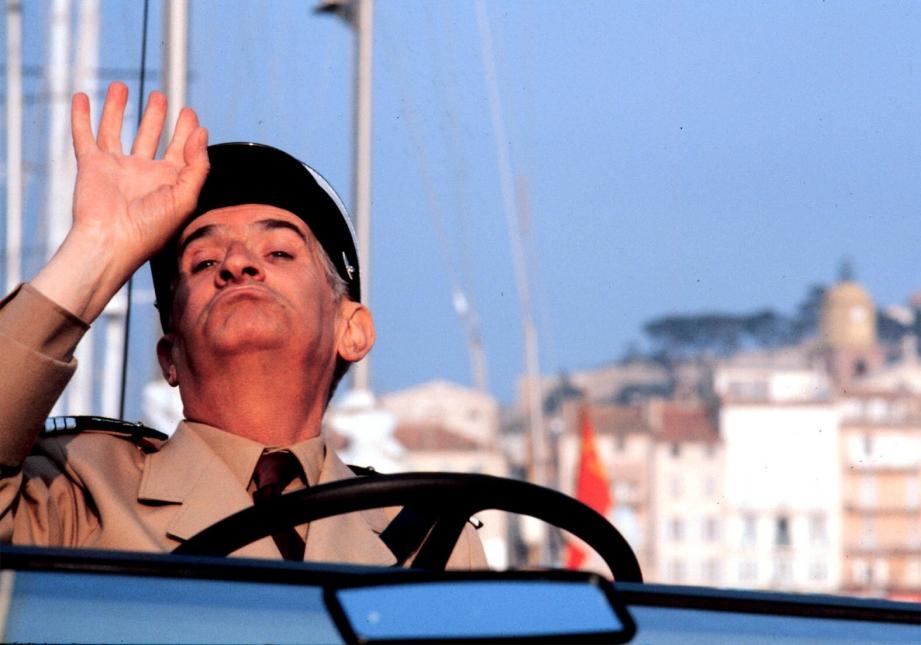
Cinema Wednesdays - Special edition: The coronary with Louis de Funès - Loris S. Musumeci
Summer, sun, beach, vacations, rhythm, dancing, parties, walks, love, pretty girls, pretty boys... and the police. But there's nothing to worry about. The Saint-Tropez gendarmerie blends into the background. Out for a stroll, on a terrace, cordial greetings, no need for fines. The seaside resort is a happy place, and its security guards are all the more debonair for it. It's the South and its spirit that takes care of order.

Except that the carefree attitude and relax The south doesn’t really appeal to Chief Warrant Officer Cruchot. Barely promoted, he is transferred to Saint-Tropez. And he makes his presence known as soon as he arrives with shouting, outbursts, constant “attention!” commands, and fines galore. His subordinates are already trembling, but his superior, Adjutant Gerber, brings him to heel. It’s time to get down to business. They need to track down a group of nudists who are secretly enjoying a beach in the resort town.
«The police represent order, and order is always unpopular.»
While her father is busy on his assignment, Nicole tries to make friends. She accompanied her father on the trip. But the young people of Saint-Tropez make fun of her because of her “small-town girl” ways. To make herself more interesting, she ditches her old, prim outfits and lies to her new friends about everything. She claims to be the daughter of the owner of the biggest yacht in the harbor. She’s having a blast—the boys are all over her, and she’s dancing the twist with her girlfriends. All these lies threaten to come to light; one scheme follows another, eventually landing the authoritarian, moralistic, and ambitious young gendarme in hot water.
The First Time
A classic plot—or a rather unpolished one, depending on how you look at it. That didn’t stop the film from becoming a huge hit with an enthusiastic audience. There are very real and concrete reasons for its success. One might be tempted to think that it was Louis de Funès’s presence that drew people to the theaters. Not quite. It was 1964, and the actor, though already well-liked, was not at the peak of his career. So much so that there was a before and an after The Gendarme of Saint-Tropez for de Funès. This was the first time he fully embraced his character as a short, nervous, grimacing, and stern man. It was the first time he received a standing ovation, even though he wouldn’t reach his breakthrough until the following year, thanks to Bourvil and director Gérard Oury.
Nevertheless, de Funès already owes a great deal to Jean Girault. This is the second time that this still-young director has collaborated with de Funès. But this was the first time he gave him almost complete freedom in his performance. He even encouraged him to trust his instincts as an actor; he pushed him to go beyond his limits, to overdo it. “Do as I say!” “Attention!” Louis de Funès followed orders—and he went overboard. At that moment, disguised as a gendarme, Louis de Funès truly becomes Louis de Funès. Namely, a clown—in uniform and wearing a kepi this time, but that will change—who uses and abuses his power—in the name of the law this time, but that will change, too.

The Gendarmerie
The Gendarme of Saint-Tropez peut cependant compter sur d’autres atouts: le reste de l’équipe des gendarmes, dont l’adjudant interprété par l’excellent Michel Galabru. C’est toutefois dans leur interaction avec Cruchot qu’ils réussissent pleinement leur rôle. Puis il y a non pas seulement les gendarmes, mais la gendarmerie. J’oserais presque dire: la louable et vénérable gendarmerie nationale. On sait son importance en France. On sait ce qu’elle incarne: l’ordre au service de la République et de la vie des Français. Mais les blagues sur les gendarmes ne manquent pas au registre. Dans ce qu’elle a de populaire et de local, elle a aussi son côté burlesque.
A police officer always ends up taking on the characteristics of the local population where he is assigned, while retaining his regional ways. That’s what makes a Corsican police officer in Paris so charming, just like a carabiniere A Tyrolean in Sicily. And then there are all kinds of police officers, ranging from the negligent to the overzealous. The Gendarme of Saint-Tropez It plays precisely on these elements: the differences in attitudes across France, the contrast between the gendarme who spends his days with a glass in hand and the one who spends his days with a ticket book in hand. Not to mention that the gendarmerie is an iconic institution. So it resonates with everyone. What’s more, it touches on this iconic institution without tarnishing it—which appealed even more to the French of the 1960s. It’s often said that we can only truly imitate those we respect. That’s certainly the case with de Funès as a gendarme.
Douliou-Douliou
Finally, let’s give credit where credit is due. The public wants laughs, of course, but also something to feast their eyes on, have fun with, and escape into. And they certainly don’t get their fill of eye candy from de Funès—to say the least. But with the gendarme’s daughter, Nicole (Geneviève Grad), it’s a different story. The beautiful, slightly rebellious blonde is the stuff of dreams. Especially when she dances in skimpy outfits—by the standards of the time, of course. She’s not alone; the young people in the film are beautiful and carefree. A refreshing breath of fresh air. On the beaches of Saint-Trop’. The dream and the southern escape.
How about we dance? To the frenetic, festive beats of Douliou-Douliou Saint-Tropez, between the twist steps and the trumpets. That’s what we want! Laughter, beauty, and great music to get us moving a little. The song, incidentally, was inspired by the film and was performed by Geneviève Grad herself. The track was just as big a hit as the movie, getting young people dancing at popular dances and discos in the 1960s. So, shall we dance the “Douliou Saint-Tropez” together?
Write to the author: [email protected]
Photo credit: © SNC

You'll also like






 French
  German
  English
Leave a comment