



«Daaaaaalí!», infidelity rewarded
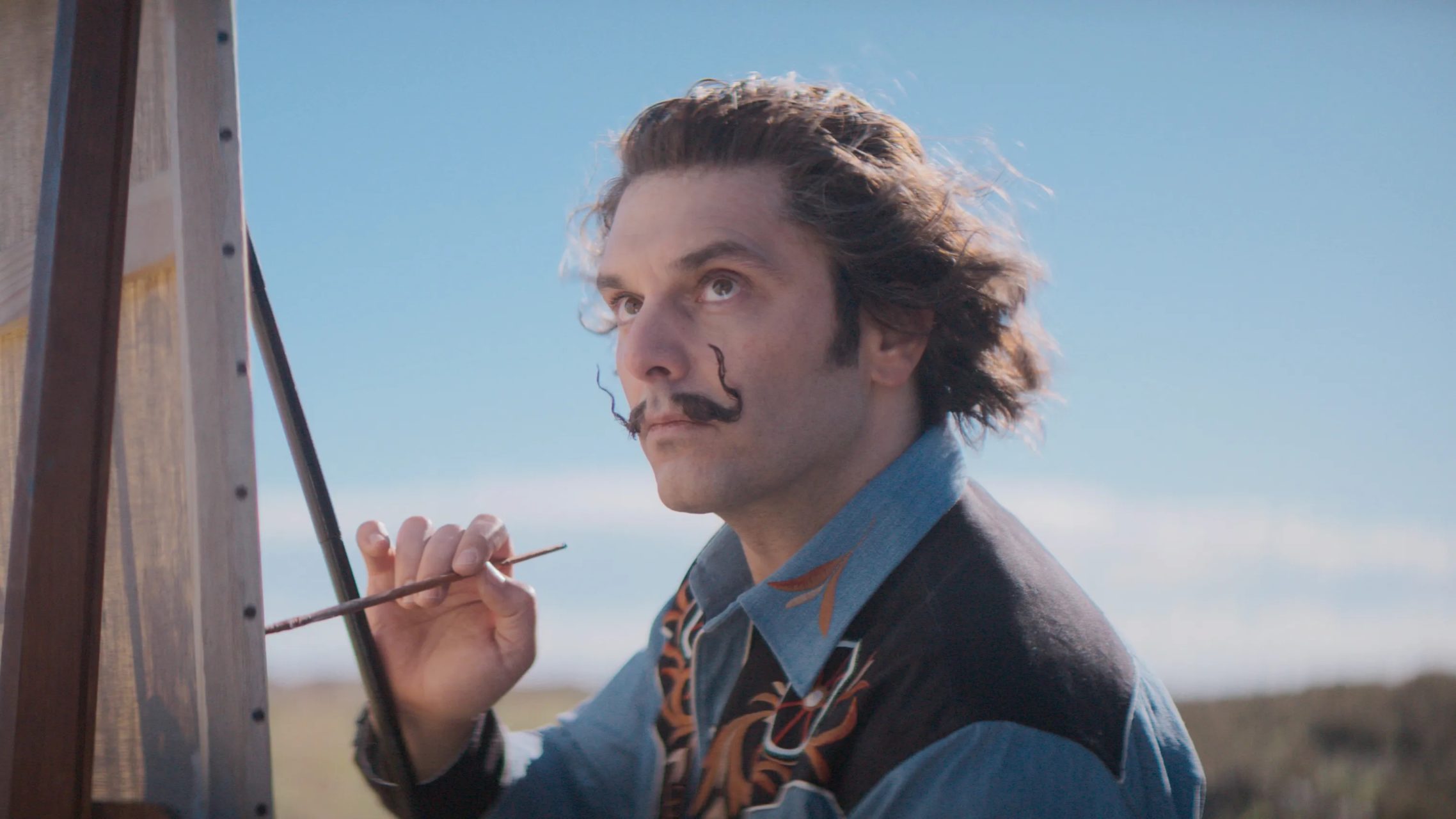
Daaaaaalí! (2024) by Quentin Dupieux
Telling the story of a historical individual has led cinema to the dead end of the biopic. Daaaaaalí!, Quentin Dupieux's new film tries to stand out for its originality, but does it really succeed?
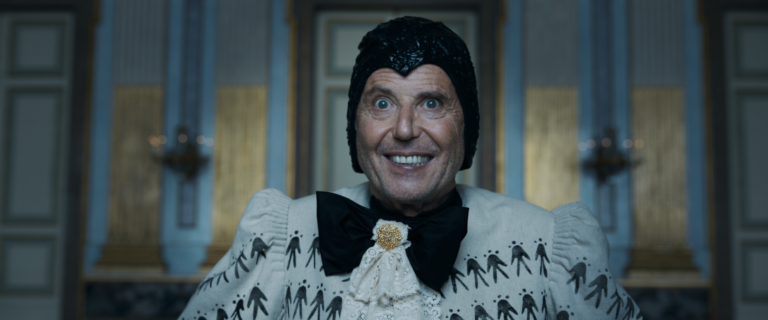
Judith (Anaïs Desmoustier), a converted journalist, unwillingly finds herself at the head of a documentary film project on the eccentric painter Dali, played by Edouard Baer, Jonathan Cohen, Gilles Lelouche, Pio Marmaï and Didier Flamand. But the artist, driven by his moods of the moment, never ceases to compromise the journalist's project, just as he seems to compromise the narrative of the film we're watching.
A cinema of attraction
It would seem that since Réalité, Quentin Dupieux has continued to experiment with simple concepts through films that are quickly written, produced and distributed. Yet, by his own admission, Daaaaaalí! required more detailed writing. The result can be seen on screen: the film doesn't just rely on irrational situations or theatrical dialogue, as has been the case with Quentin Dupieux's last films, but here he mobilizes purely cinematographic tools to serve his narrative.
And this is the strength of Quentin Dupieux's new film: it abandons the usual biopic narrative to treat Dali not as a person, but as a subject. The character becomes a pretext for mixing the ages, interweaving dream and reality, and multiplying references to Dali, but also to the cinema of Luis Buñuel or surrealism.
Read also | Filming makes Quentin Dupieux chuckle
Daaaaaalí! is a film that enjoys a great deal of freedom. To be more precise, it takes full advantage of the audience's confidence in its intelligence. Whereas today's cinematographic writing puts the priority on comprehension, Dupieux relegates it to the background: at the end of the day, what does it matter whether the scene we're watching is real, a dream, or a priest's anecdote during a long meal? The heart of Dupieux's writing is attraction: constantly making viewers want to watch what they're watching, without explaining it.
Daaaaaalí! is a model of the multiple strategies of attraction that can be exerted on the spectator. There is, of course, humor, both in the dialogue and in the staging, sometimes burlesque, sometimes black, coarse and subtle, making the whole project accessible to all audiences. Then there's the strangeness. A priest recounts a completely disjointed dream, inviting the audience to interpret it. A hotel corridor that seems infinite. Some scenes are repeated, and we're looking for variation between them.
But above all, the most important object of attraction is Dali himself. This anarchist as well as monarchist character is unpredictable, and we expect his latest eccentricity as well as his moments of humanity. We constantly try to decode the man from the character, but the task soon seems impossible: Dali contaminates everything, influences everything, destroys everything.
The anti-biopic
We could therefore consider Daaaaaalí! as an excellent entertainment, but a very bad biopic. In fact, the director himself denies that his film belongs to this genre. It's only natural: biopics get a bad press.
This is because the biopic is in an untenable situation: it must transcribe reality as faithfully as possible, with the art of constantly deceiving its audience. This tension is all the more glaring with the actor playing the historical figure. If he doesn't resemble the character closely enough, or if he can't manage to hide behind his character's features, he's considered a failure. If, on the other hand, he's completely faithful and unrecognizable, he'll be acclaimed, so much so that we even forget the figure he embodied. Performance takes precedence over the reproduction of reality. In this way, the biopic can never make us forget that everything it shows us is false.
Read also | Le Daima bad, unidentified cinematic object
By not trying to transcribe his subject's life, Daaaaaalí! is one of the best biopics of recent years. Having several actors embody Dali manages to get rid of this tension: Dali becomes omniscient, a concept whose most salient identity traits are projected onto everyone. We come away remembering not one actor's performance, but Dali's accent, his moustaches, his extravagant costumes.
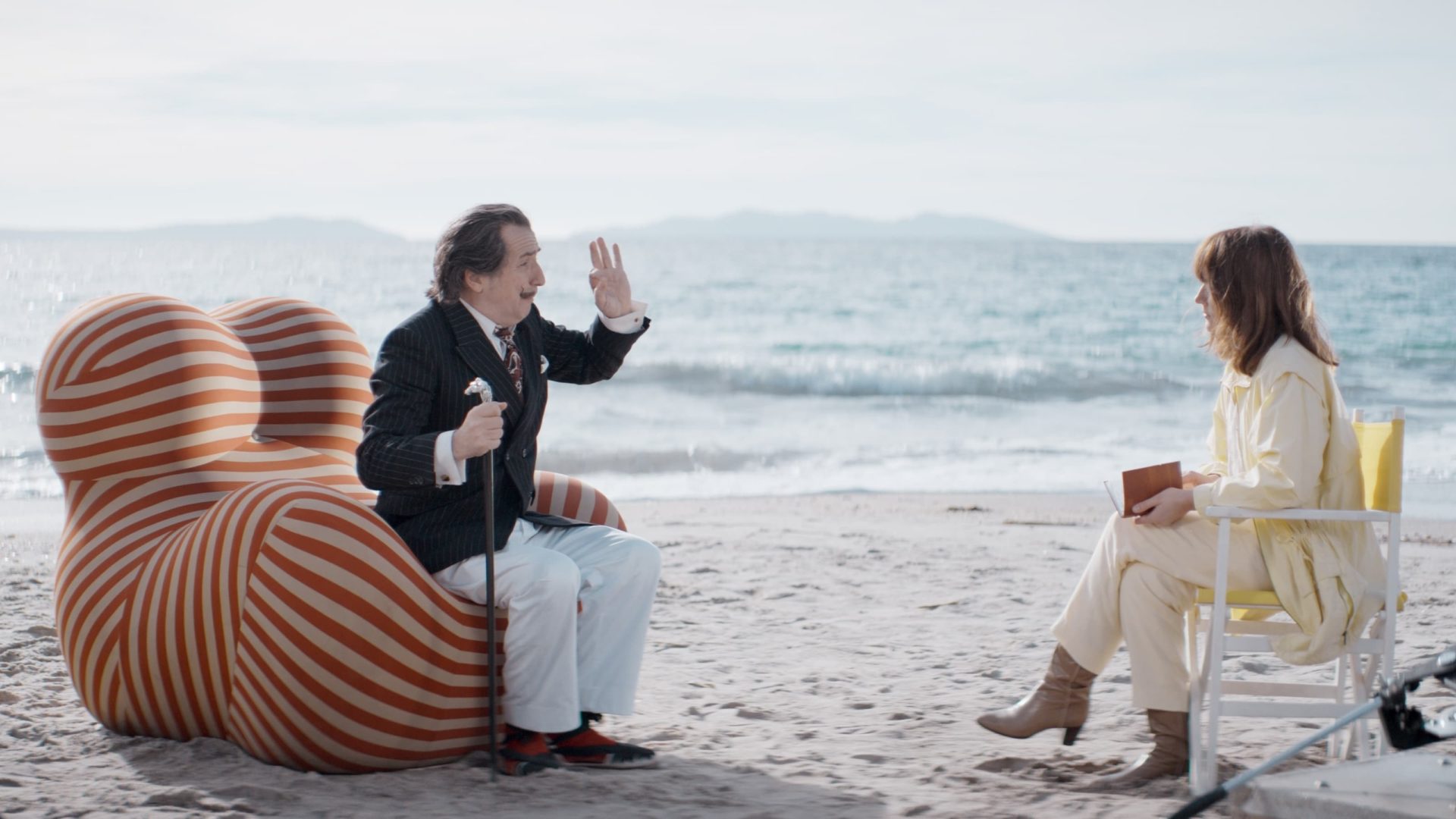
In this way, Dupieux understands very well that the interest of a biopic on Dali is not the race to the truth. He leaves the master's paintings, key events, family and social context to the documentary genre. With fiction, the character becomes a world. The viewer is no longer there to understand Dali, but to experience him.
One might regret that the film is not more provocative or radical, but the director cares about his viewers and seeks to make Dali accessible to as many as possible. The tribute succeeds very well in combining the desire for creative freedom and accessibility to the general public. The balance is struck, the formula works, and it's a pleasure to betray the painter's immensity by enclosing him in this comedy lasting less than an hour and a half.
Write to the author: jordi.gabioud@leregardlibre.com
You've just read an open-access review. Debates, analyses, cultural news: subscribe to support us and get access to all our content!
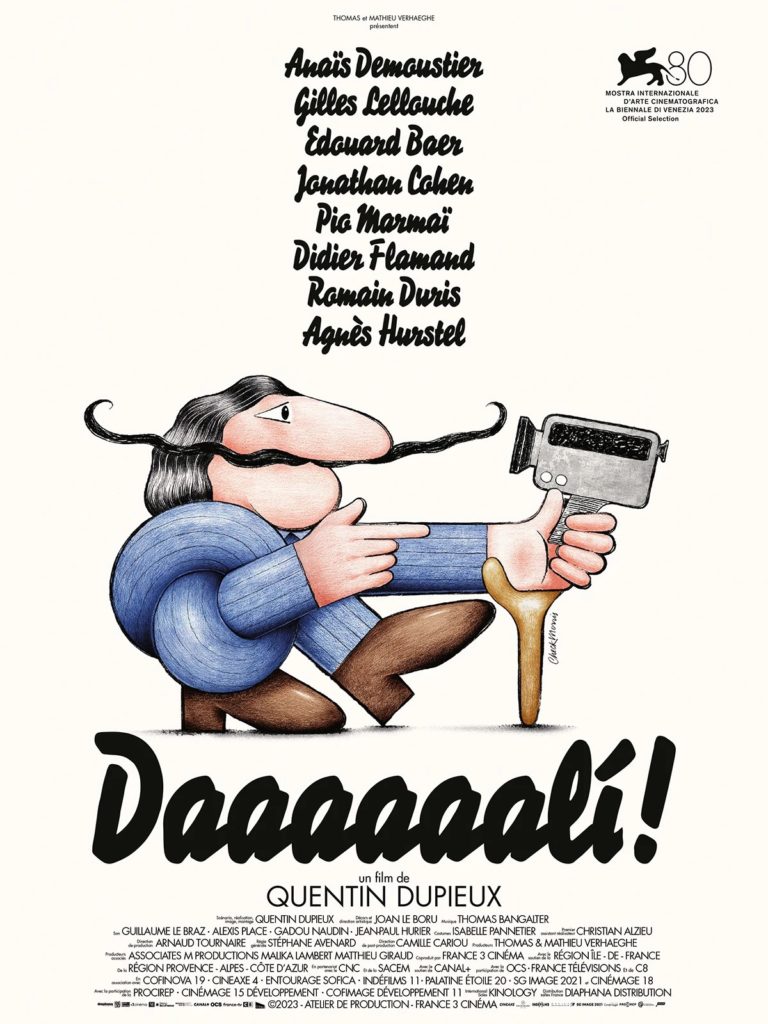
Quentin Dupieux
Daaaaaali!
With Anaïs Demoustier, Gilles Lellouche, and Edouard Baer
February 2024
78 minutes

You'll also like


 French
  German
  English
Leave a comment