



«Everything went well»: family euthanasia
Cinema Wednesdays - Jordi Gabioud
After the success of’Summer 85, François Ozon returns with an effectively sober drama on a theme as weighty as it is liberating: assisted suicide. Let's immerse ourselves in this heart-pounding drama.
Adapted from the novel of the same name by Emmanuèle Bernheim, the film tells the story of Emmanuèle (Sophie Marceau), who is called in urgently following a stroke suffered by her 85-year-old father André (André Dussollier). With the rhythm of a difficult breath, the father asks his daughter for the ultimate favor: to assist him in ending a life that no longer has any reason to exist.
Ozon's cinema is comfortable. What it lacks in originality, it makes up for in efficiency. If the subject matter isn't pleasant, the direction is. While many would have been tempted by a form closer to a naturalism a little worn by the obvious, Ozon favors a steady camera, precise movements and editing whose designer has the good taste to know how to cut before the slightest redundancy bores us. This ensemble is accompanied by excellent acting, with an energetic Sophie Marceau, the best way to exist opposite an unrecognizable André Dussollier in his diminution. Comfortable and effective, these are the watchwords of a film that aims to make a difficult subject like euthanasia audible and visible.
A film about or a film for?
Strangely enough, euthanasia is a political subject, but not a controversial one, at least for a Swiss audience. No doubt because it concerns us all, and despite the veil of «we'll see about that later», we all know that we'd like to end our lives as painlessly as possible. To watch a film on such a theme is to lift the veil and confront ourselves with the end of our own existence. Yet, rather than extolling the virtues of a choice that should be up to each individual, we've decided to take a closer look, All went well offers a simple observation. Care is taken to avoid both the pathos useless and sterile debate.
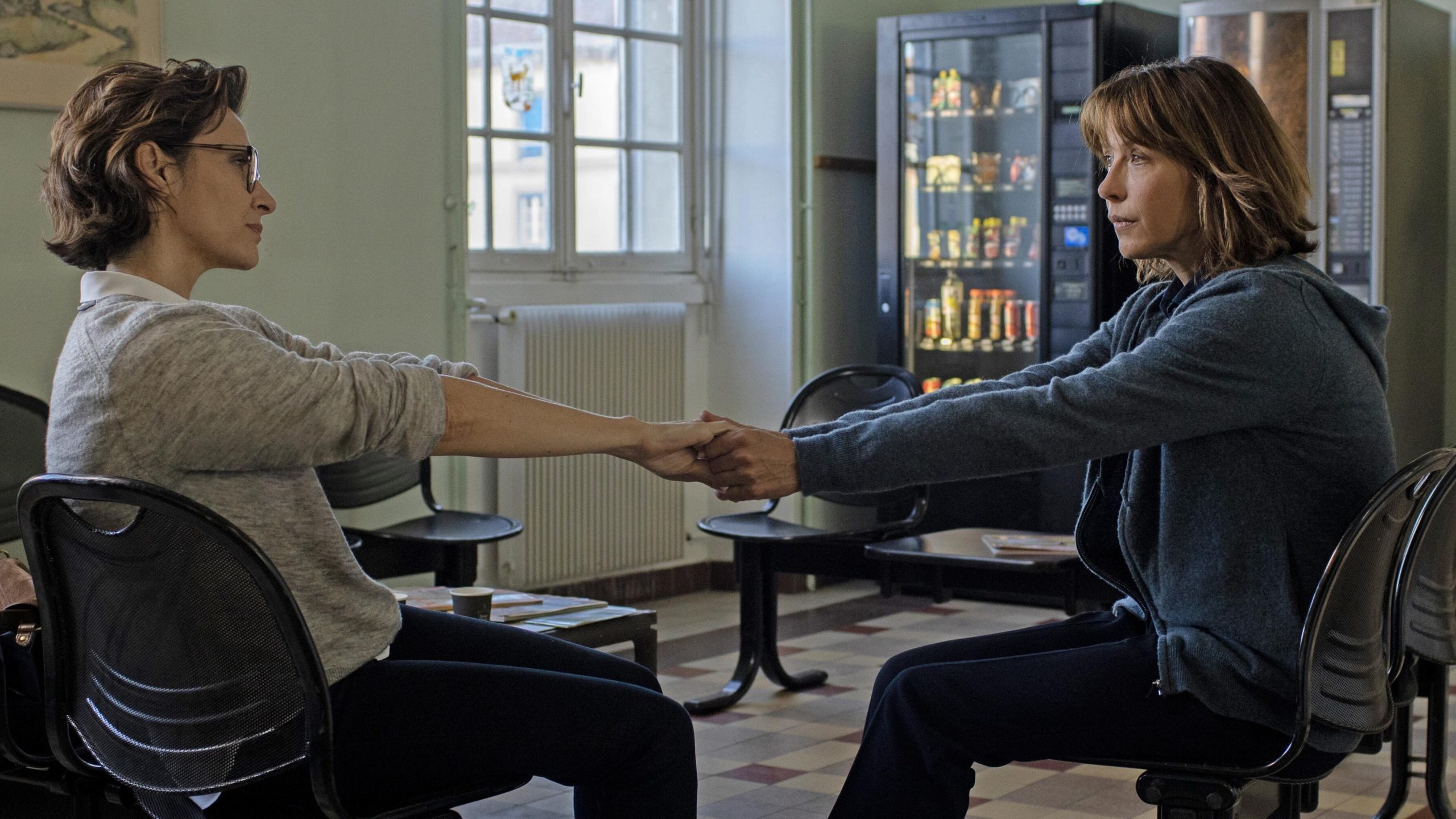
Some may feel that the film is too clinical, too cold to its subject, yet it offers us enough details to resonate with us: a drop beading at the end of the old man's nose briskly wiped away by his daughter, two sisters supporting each other not with words but with the crisscrossing of their legs, the sensation of having little control over our bodies through a shower of drug names distilled down to problems. These brief moments follow one another and multiply, gradually invading poor Emmanuèle's daily life. François Ozon has meticulously prepared a film on. This was the best approach to creating a film for.
Bourgeois tears
In the very first shot, a shelf displays the protagonist's Pléiade collection. If there are any films, it's a Kubrick box set. Activity? Museum visits or a nephew's flute concert. It's a well-established bourgeoisie, a recurring theme in Ozon's filmography. We might have been annoyed by the umpteenth bourgeois drama if the film hadn't had the intelligence to use it to emphasize the fragility that haunts us all. Whatever our status, we all end up weak.
Read also | The Double Lover, from sex to torment
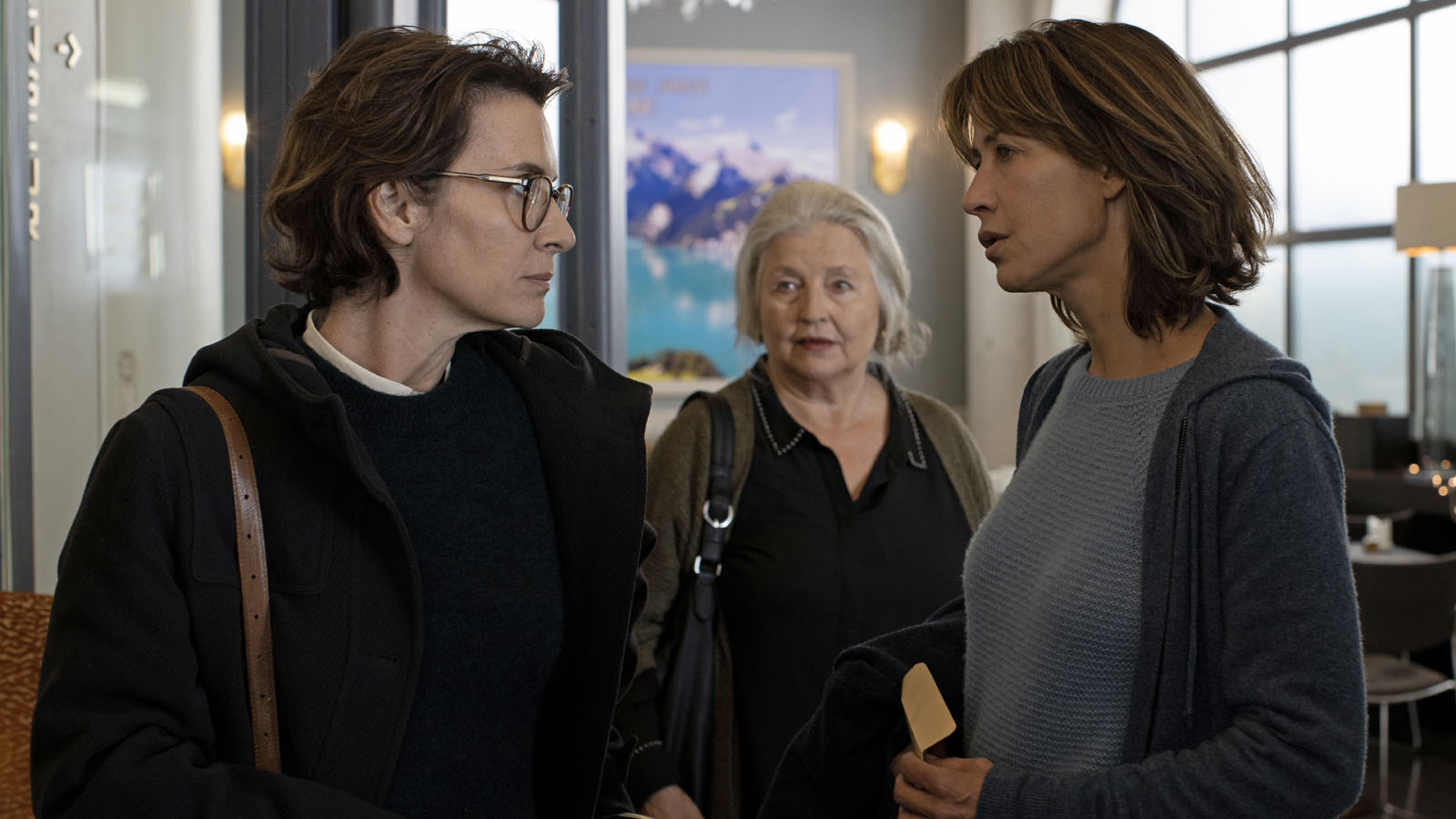
Euthanasia is another story. The bourgeois finds himself on the run from the law, having to escape to Switzerland. The country where euthanasia is permitted is not, however, held up as a model. This is embodied by «The Swiss Lady», played by Hanna Schygulla, the great muse of Fassbinder's cinema. With her slow tone and bewitching eyes, she carries with her a sort of eerie strangeness, a kind of stranger far from reassuring us about the old man's fate. Still, to have the luxury of ending it all when you want, you have to pay. A lot of money. It's the privilege of this family, while the poor «wait», says Emmanuèle, reproaching her father for daring to ask such a favor.
Then there are the steps. Confidence to avoid denunciation. Organizing with the few people you can trust. The family's dirty laundry reappears. Mourning that stretches out over weeks, then months, until the fateful date. Choosing to die takes effort and resources. And then, when the time comes, the tears are less those of sadness at the loss than those of relief at a promise kept.
It's easy to get annoyed by some of the director's choices: his coldness, his distance, his social framework. It's a reading choice that can easily be reversed. The coldness of his direction is a comfort for such a difficult subject. Its distance puts things into perspective, leaving us alone to judge and control. Its social framework accentuates the universal dimension of our weaknesses. pre-mortem, and the absurdity of not giving more thought to a subject that concerns us all. While choosing how we die remains difficult even today, we are fortunate to be able to choose what we read to make that experience as pleasant as possible.
Write to the author: [email protected]
Photo credits: © Carole Bethuel / Mandarin Production / Foz

You'll also like

 French
  German
  English
Leave a comment