




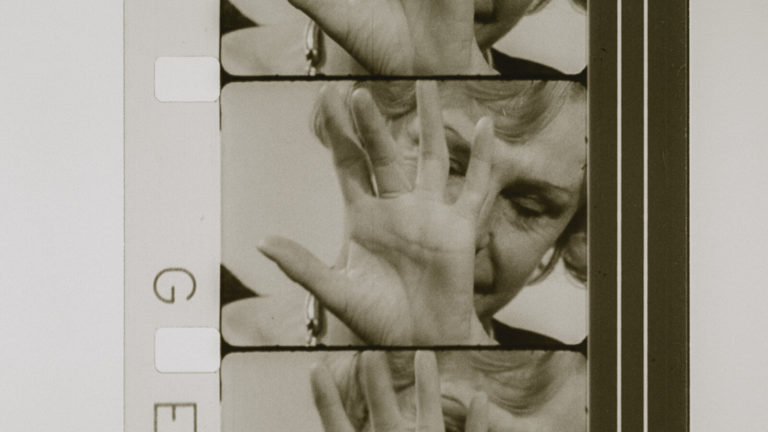
Fanny Ardant as a transsexual in «Lola Pater».»

Zino (Tewfik Jallab) is a young man of Algerian origin. Following the death of his mother, he decides to set off in search of his long-lost father. What a shock it is to find his father. His father is not a man, but a woman. In his fifth film, Nadir Moknèche has entrusted the role of the transsexual character to the delicate Fanny Ardant.
A disconcerting performance
Audiences and press alike are bound to be divided over the fact that the story's transgender hero is not played by someone who has actually undergone such an operation. Especially since, with Fanny Ardant, the Franco-Algerian director has not chosen the actress least known for her femininity. A whole iconography of the sublime woman surrounds the actress who made her name in films such as Soft pedal or Eight women.
But this is to overlook the fact that the filmmaker's choice has the very merit of giving importance to acting and being consistent with his craft. Indeed, it's in the very essence of fiction that characters don't match the actors who play them. Lola Pater is not a documentary, whether the newspaper likes it or not. Le Monde who seems to be increasingly afflicted with what might be termed «acute realism».
Fanny Ardant, with her characteristic manners and elegance, plays Lola, Zino's father, in a very interesting way, since she's free of any desire to be «trans». Her husky, suave voice is a real asset, but for the rest, the French actress is content to play admirably a woman who asserts herself and wants to win back her son's love. Her past as a man is suggested by details such as her clothes, her walk and her make-up.
Nadir Moknèche's life in the background
Nadir Moknèche admits that he drew his inspiration for the screenplay from his own experience. In a maintenance for Télérama, the filmmaker recounts how he came to know several transsexuals personally in the course of his life. These people left a lasting impression on him: «Little by little, I became fascinated by these people who were fighting against the whole world, who would go to any lengths - sometimes to their death - to impose their choice. I remember a boy I used to go clubbing with who confided in me that he was pulling on his penis, not to get aroused, but to rip it off. To get rid of it forever...»
It is above all the filmmaker's relationship with fatherhood that endows Lola Pater with a touching autobiographical fiber: «I lost my father when I was three. And I've always wondered if we would have been accomplices. Would he have approved of my life choices? From question to question, I asked myself: what if my father hadn't died, if I'd been lied to, if he were alive but someone else, what would my reaction have been? I quickly realized that I'd rather have him alive than dead. Alive, as a woman, than dead, as a man...»
A film on the theme of filiation
It is therefore imperative not to read this film in the same way as for Transparent or The Danish Girl. Far from being a story about trans people, Lola Pater exploits the theme of filiation above all else. It's the son's relationship with his father that makes the film so interesting. Initially desired by the son and feared by his father, this relationship is soon reversed, giving way to a fearful, rebellious son versus a loving, assertive father. The film will tell you what happens next.
Theme aside, the quality of the film as such is undeniably lowered by several cinematographic flaws, starting with the pace of the scenes and the lack of surprises. As Le Figaro, It's the script that's the problem, not the actors, who are excellent: «It's a pity that the writing of the film remains weak and superficial.» All that's left is for you to go to the cinema and make up your own mind, and perhaps discover the feminine or masculine side of yourself.
Write to the author: jonas.follonier@leregardlibre.com

Vous aimerez aussi



 French
  German
  English
Laisser un commentaire