




The dehumanization of «The Pianist»
Cinema Wednesdays - Special edition: Polanski's cinema - Loris S. Musumeci
Palme d'Or at the Cannes Film Festival, Oscar for Best Director for Roman Polanski, Oscar for Best Actor for Adrien Brody, seven Césars, among many other awards. The Pianist, adapted from the autobiographical novel by Wladyslaw Szpilman, is undoubtedly Polanski's best-known film and his greatest success. It is one of the most important films on the Holocaust. The work is indeed grandiose. It tells the story of Jewish pianist Szpilman, who escaped deportation to Nazi-occupied Warsaw.
The Pianist is extremely rich. Two and a half hours of film for two and a half hours of detail, subtlety, revulsion, pain, hope and even enchantment. Two and a half hours of emotion and reflection. The richness of the content is matched by the richness of the form. It's all there. From the silences of the dialogues to the brief, incisive statements, from the changes in color tones to their disappearance, from Chopin's music to the cries of distress in the Warsaw ghetto, from Szpilman's heroic, courageous outbursts to his petty villainy, from Nazi barbarism to their ability to be human too, to know pity too. The Pianist, A rich, complete work. Moving.
Losing humanity
Among so many valuable aspects of the film, we have to choose. There is one issue which, in my opinion, reaches its peak: that of dehumanization. The Jews, cattle loaded onto wagons to be slaughtered. Jews, the scourge of humanity. The Jews, a malignant, parasitic beast. They must be treated as such. Nazism almost succeeded. But humanity knows how to spring from a force in man that reason ignores. Subjected to torture and inhuman living conditions, the victims of Nazism either died or resisted. Faced with absolute suffering, faced with evil, man is tempted to behave like a beast, lashing out at his fellow man, stealing his food and cultivating indifference even towards his own children.
The Shoah showed dramatic examples of this, undoubtedly the worst, but the processes of dehumanization have threatened in all the most barbaric wars and other genocides. In Rwanda, mothers went so far as to kill their children. In The Pianist, Jews denounce each other, exploit each other, beat each other up. Fortunately, not all of them. The fact remains that humanity is put to the test when it suffers horror.
The whole film revolves around Szpilman, from his point of view, with the exception of two sequences, one at the beginning showing real black-and-white images of Warsaw, and the other at the end showing a prison camp for German soldiers captured by the Russians. The victim we focus on at the beginning is the city of Warsaw, normal life, Polish culture, the culture of a civilized world where Chopin is played on the radio and we all live together, without any discriminatory distinction of race or religion.
The victims we focus on at the more polemical end are the Nazi soldiers taken prisoner. All young, fresh and strong, but already condemned. For a moment, we follow the point of view of the Nazi officer who saved Szpliman. He embodies the human side of the Nazis: as an oppressor, he nevertheless saved a Jew, on the one hand by not killing him, and on the other by restoring his humanity when he asked him to play the piano. With Polanski, in his life as in his films, executioners and victims are often one and the same.
Rediscovering humanity
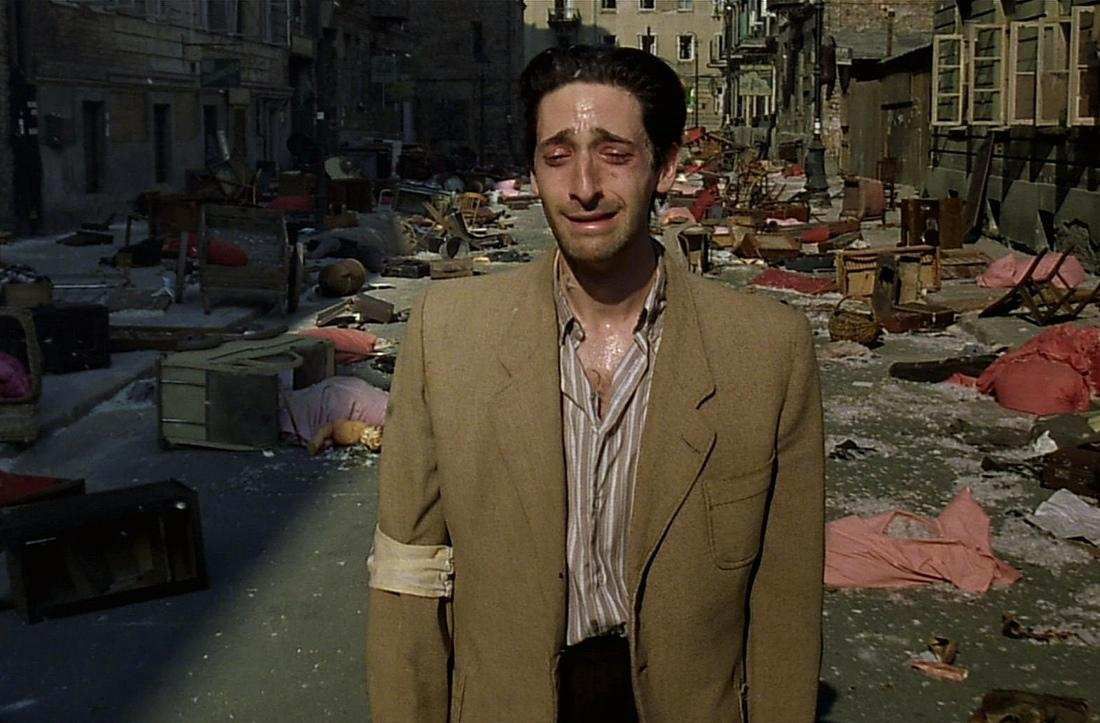
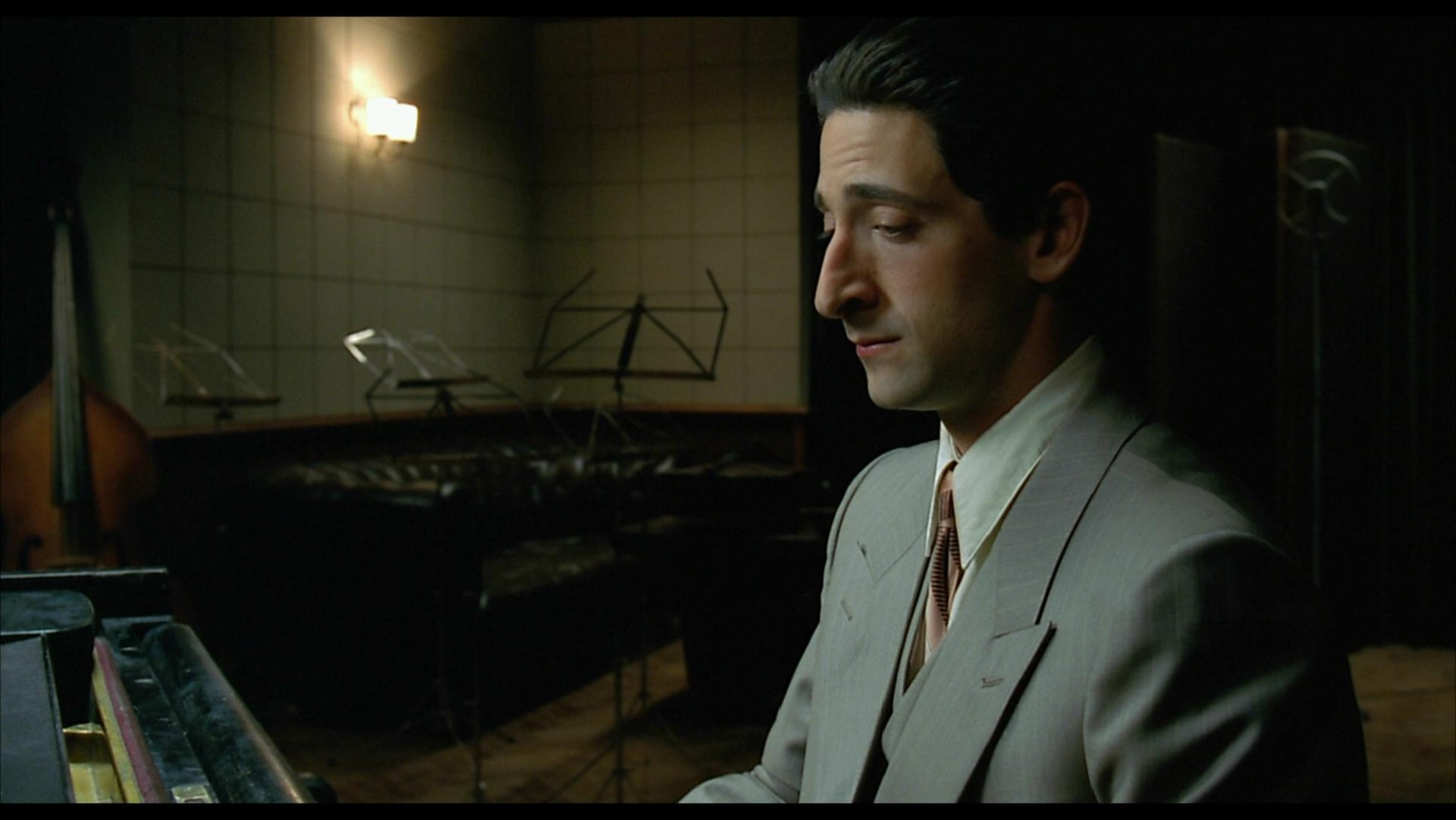
The process of dehumanization is most obvious with Adrian Brody playing the main character. He's an artist, a pianist. A handsome, noble-looking man. Nobility in his physical and moral posture. Magical fingers that dance across the piano keys, making him a virtuoso. Elegant young man, flirting with one of his admirers, a charming blonde. Morally upright, he seeks to help his fellow man. He cares about others. He joins the resistance. But oppression is such that he takes advantage of the resistance to flee and save himself. He wanders the streets of Warsaw. Hides, dirty. Crawls, alone. Szpilman is the handsome pianist who becomes a rat. The animal to which Jews were compared by Nazis and other anti-Semites.
With his claws, the huddled, starving, miserable figure clings to a box of pickles. The only thing he still values. He takes the box with him to his attic hole. And he finds himself face-to-face with the Nazi officer. He can hardly even speak. The beast has taken hold of him. Is he still a man? Or a rodent living on survival? When the officer orders him to play the piano again, the image is brightened by a beam of light that fills the screen. He regains a human posture. Salvation has come from the oppressor. A paradox inherent in human nature. Evil dehumanizes both those who suffer it and those who inflict it. But artistic sensitivity and compassion save both. At a time of transhumanism and eugenics of all kinds, humanity has not yet said its last word. If, like Szpliman, man has resisted Nazi barbarism, he can resist anything. Provided that a small light in his heart reminds him that he is still and always human.
Write to the author: loris.musumeci@leregardlibre.com
Photo credit: © Bac Films
You'll also like

 French
  German
  English
Leave a comment