



«Le Cercle littéraire de Guernesey»: an island of literature and friendship
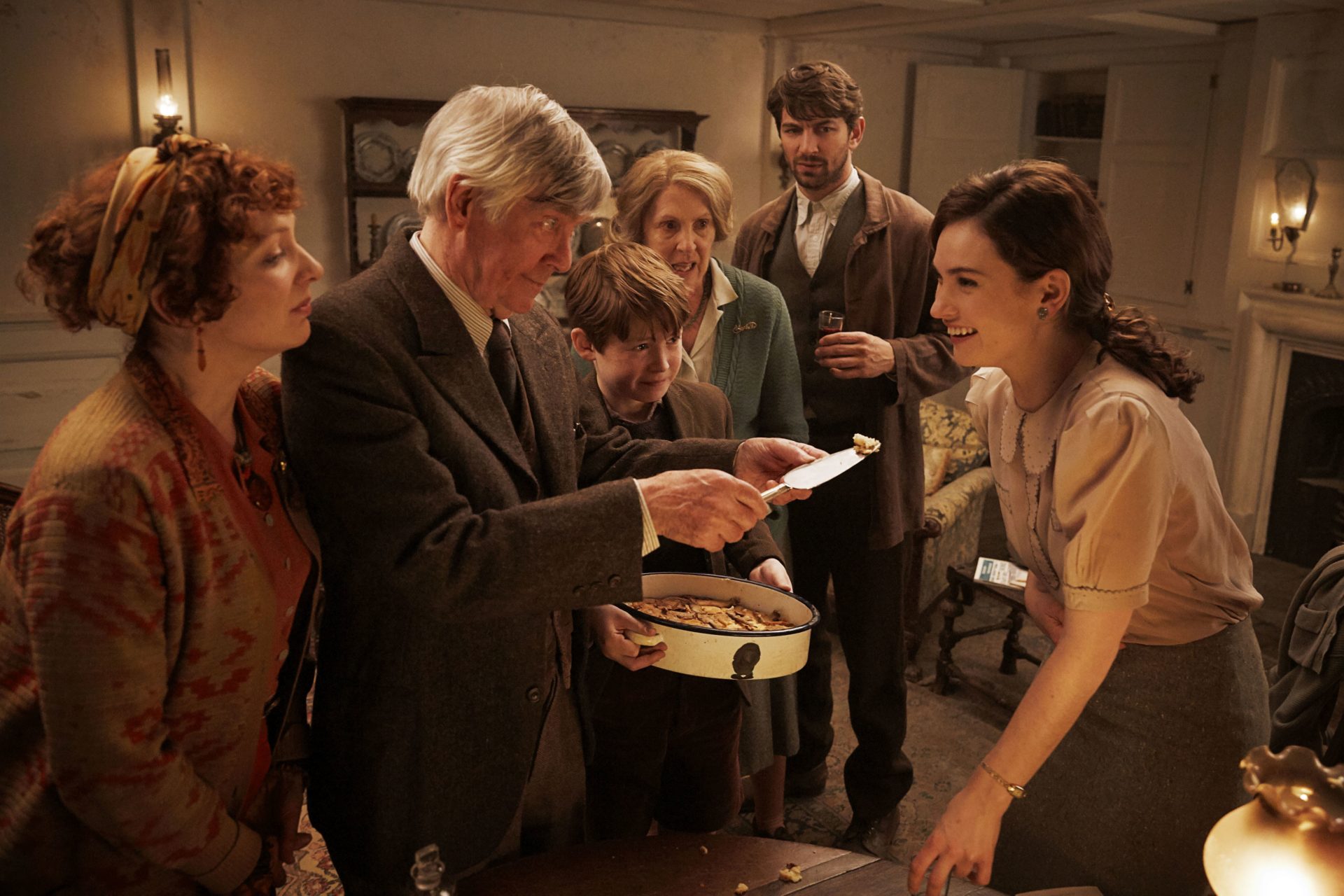
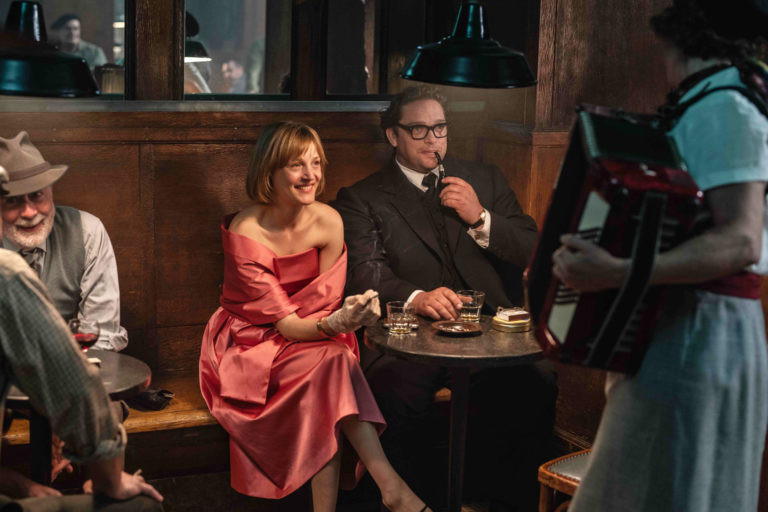
«The Guernsey Literary and Potato Peel Pie Society» © Impuls Pictures
There's the magic of literature. The kind that carries you away, takes you on a journey and touches you. The kind that, shining like a hundred-carat diamond, awakens the imagination, the intimate brilliance. The Guernsey Literary Circle, It's a bit like that, and even more so when you leave the cinema.
The crux of this story unfolds during the German occupation—more specifically, on the island of Guernsey—and finds its resolution within the intimate setting of a literary circle that reads to escape the war-torn reality and to dream. A story set on the island where Victor Hugo spent his long exile.
The Ban on Imagination
Director Mike Newell thus drew on the very essence of literature for his film: sharing. That ordinary moment when two or more people discuss a novel, an essay, or a short story; develop critical thinking, emotions, and compassion. Just as when the five friends in the book club discover the joy of being together and read stories to one another—in defiance of the law, sheltered from the invader, in a living room, after eating pork and drinking gin— homemade by Isola (Katherine Parkinson). It’s curfew time. In the dead of night, when silence makes the sound of words stand out. That moment when loneliness and sadness—as is the case for the five intrepid readers in the circle—weigh heavily on one’s spirits.
What remains when we’re trapped on the same island as our invaders and World War II is coming to an end on the mainland? Words, love, and kindness toward our neighbors. Sharing what little food we have—like when Dawsey (Michiel Huisman) places potatoes in the hands of the war laborers building forts across Guernsey.
Juliet (Lily James) arrives on the island after the war ends. She is a writer and initially comes to write an article for the The London Times. She finds herself at the post office run by Eben (Tom Courtenay)—also a member of the literary circle—somewhat by chance, to ask if there are any rooms for rent on the island, which is still in ruins from the German bombings. Her trip to Guernsey was prompted by a letter she had previously received from Dwayne, the pig farmer. He wanted to know if the novelist could get him a book he could no longer find on the island.
A Struggle for the Truth
This is where the writer’s determination really kicks in. She is determined to uncover the human secrets that both tear apart and unite the members of the literary circle. The five characters are then revealed one by one. Even little Eli (Kit Connor), already a literature buff, will provide clues. He was separated from his family in early childhood when all the children on the island were evacuated to the British mainland to save them.
The filmmaker achieved an extraordinary fluidity in these transitions from one story to another, as if the film were moving toward its final resolution with clarity, precision, and compassion.
How does one conclude a review of a film that one wishes were as endless and infinite as a good novel? Perhaps simply with this question. Or perhaps with the description a scene—all too brief—that encapsulates an emotion at the heart of the entire plot: compassion for others, no matter the cost.
Just a few seconds to get the main points across
The scene takes place in a meadow, near a rocky outcrop on the “green island of hope”—as Lorca’s words will forever sing—amidst the grasses, the blurry film, Juliet’s interaction with little Kit (Florence Keen), and time standing still. The author then becomes part of something more than just a literary circle.
The entire film is captured in this fleeting succession of images, like a slideshow: carefree moments, love, joy, deep wounds, and the desire to heal them with affection. A scene that transcends the film’s space-time—or even our own reality—somewhere between a longed-for paradise and the solid ground beneath our feet. A moment we all recognize!
As I write these words, I’m left with a sense of nostalgia and a feeling of déjà vu that is so familiar and pleasant. It’s as if we’d discovered a group of friends, bound together by history and a love as eternal as a wave crashing endlessly against a reef. Or when objectivity gives way to subjectivity sparked by the film’s emotional impact. A triumph, if we consider the ultimate purpose of all art: to move us.
You have just read an open-access article. Debates, analyses, cultural news: subscribe to support us and get access to all our content!
You'll also like



 French
  German
  English
Leave a comment