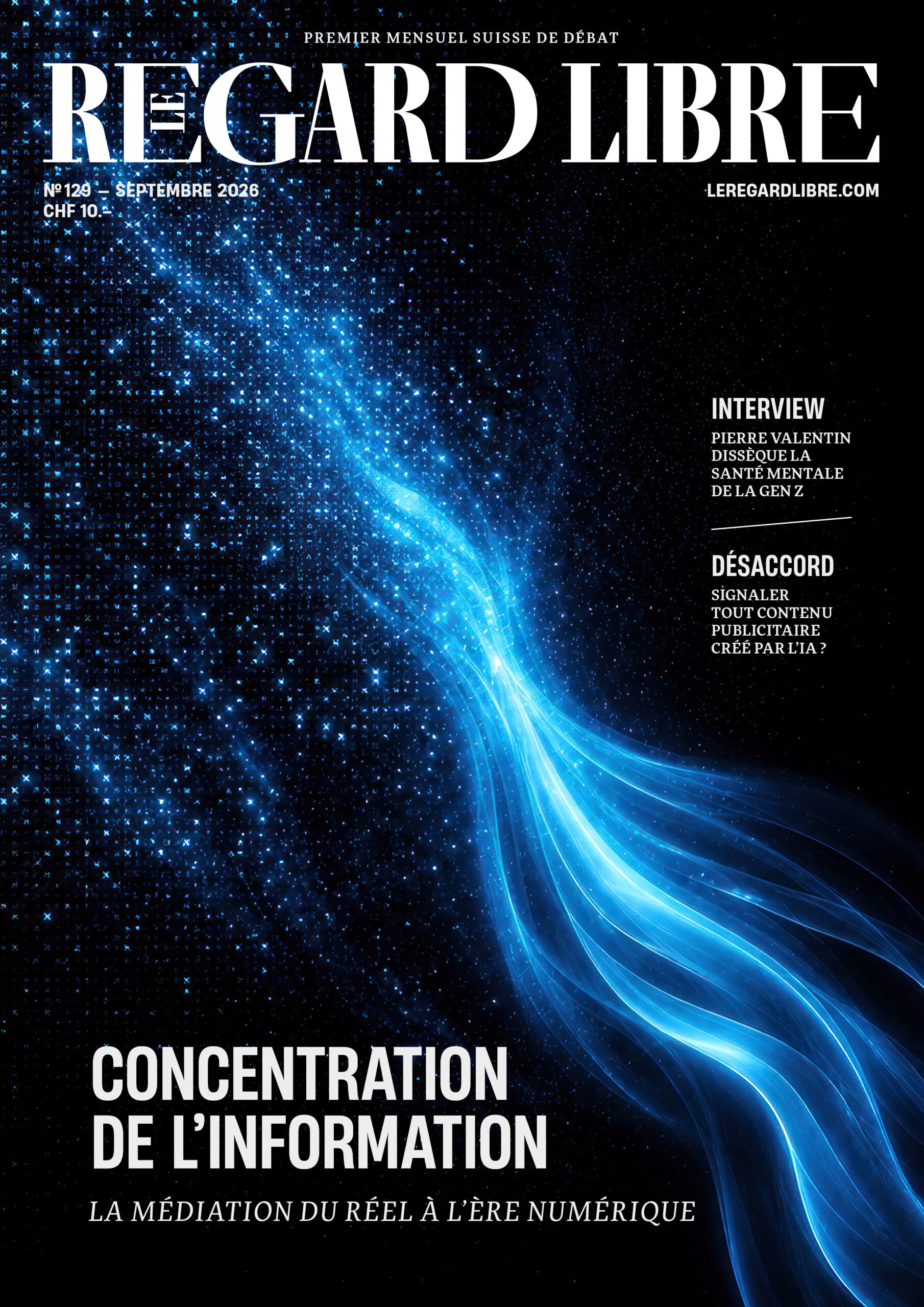




«The Human Particle, a metaphor for the inner journey
Cinema Wednesdays - Hélène Lavoyer
«Breath or wheat?
- Wheat.»
In Semih Kaplanoğlu's eyes, the future population is enclosed within the walls of cities protected by electromagnetic portals that burn out those who try to leave - or enter without having been selected. Agriculture is in the hands of private laboratories unable to understand why, or how, GM crops - the only ones they have - end up deteriorating and self-destructing. Erin Erol (Jean-Marc Barr), a genetic engineer and seed specialist working for the city, is struggling to create a seed that will make harvests sustainable over time.
He then hears about Cemil (Ermin Bravo), a former researcher at the same laboratory who disappeared beyond the wall, between the Dead Lands and the Wastelands. The very moment he discovers the moral and ethical theory that had cost his colleague his job, Erin realizes that the scientific community had been unable to accept the immense mistake committed by industrial societies. The «M» particle—though present in every atom of everything that exists—humans, rocks, the wind, sounds, waves, stars, and water—is, in his view, absent from human creations; it is the one thing that cannot be reproduced, the particle without which neither culture nor life is possible.
And so begins Erin’s arduous journey beyond the city’s borders. Driven by an unshakable intuition and the hope of restoring a better life to the people, he crosses—alongside Andrei—the scorching wall that had until then separated him from the polluted valleys, the acid rain, and the piles of rotting corpses. He leaves Andrei on a beach to follow Cemil, who is reluctant to go. In search of healthy seeds, he finds himself by agreeing to place his life in the peaceful care of the guide, who casts an amused and benevolent glance at Erin with every glance he gives her. Exhausted by the climb and Herculean labor, his determination will carry him past hostile temptations, all the way to the awakening of that human spark.
«Breathe.»
Oppressing Through the Senses
Several aspects allow this ambitious film to leave an indelible mark on the viewer’s mind. Although it might seem that the primary goal is to break away from the classic contemporary film format, it is above all the audience that finds itself torn away from the visual and auditory environment it is accustomed to.
By maintaining a black-and-white palette from the beginning to the end of the story, the familiar framework fades away, giving way to a sense of dread; even as technology allows us to do anything, it can also be the very force that compels us to take a step backward. In this alien atmosphere, even our sense of hearing loses its bearings; no music, no singing—only the whispers of technological or environmental threats, carried by ominous sound waves, a persistent lapping, or the sound of pebbles crunching under Erin’s feet.
A Metaphor Behind the Ramparts
Striking in its sincerity and imbued with a sense of unease tempered by hope and faith in humanity, the feature film conveys an undeniable philosophical and spiritual message that runs far deeper than the simple need to pay attention to and care for nature.
Semih Kaplanoğlu goes far beyond the moralizing or guilt-inducing tropes of Hollywood disaster and apocalyptic films; imbued with this quest for meaning—driven, as is often the case, by a detail that no one pays attention to (in this instance, the reference to Cemil’s work during a meeting)—the film serves as a metaphor for the inner journey toward spirituality and coherence.
Characters for a Single Journey
A growing intuition takes root deep within Erin, prompting him to embark on a journey outside his comfort zone—the city—where certain things are permitted and others are forbidden. Like anyone searching for meaning, the character must break free from the cocoon of beliefs and generalizations in which she was raised.
As the film unfolds, a doubt begins to creep in: Who are Andrei, Cemil, the smuggler, or the child of the desert? Do they really exist? The very moment the question crosses our minds, we realize that all these characters are nothing more than Erin’s guides and tempters.
Among the many possible paths to connecting with this particle that makes us thinking human beings—uniting all of Creation—others and our inner passions are like these characters: opportunities to drift apart or draw closer to embracing and understanding our lives.
Write to the author : [email protected]
Crédit photo : © trigon-film.org
You'll also like



 French
  German
  English
1 comment
I haven't seen it. But the trailer makes me think that Tarkovsky's *Stalker* is a major source of inspiration for this director, isn't it?
Leave a comment