




With «A Thousand Girls Like Me», Sahra Mani fights for the women of her country on a daily basis.
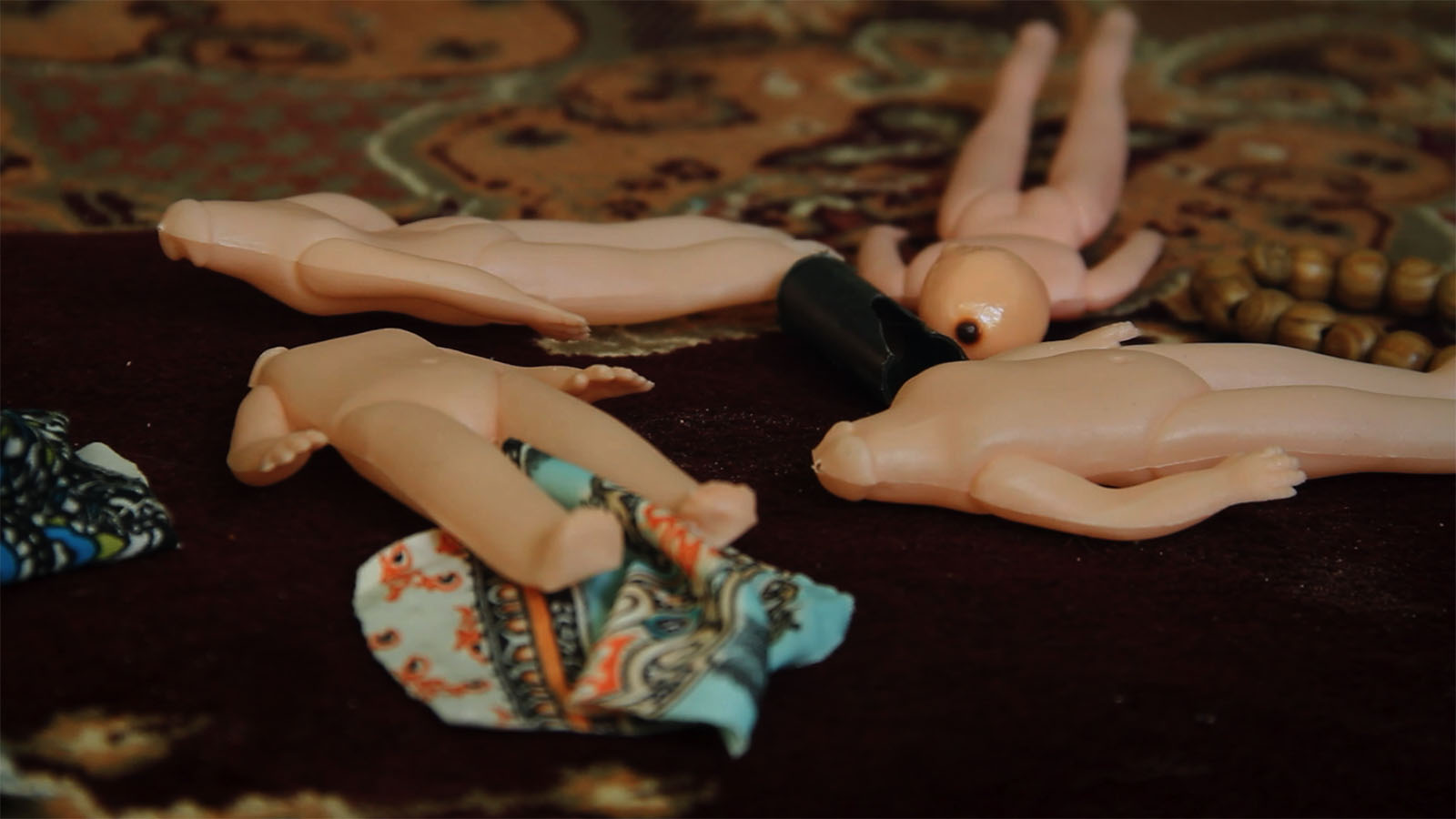
Le Regard Libre N° 50 - Loris S. Musumeci
FIFF 2019 special report
Here's a documentary that makes its mark. And a director who is equally impressive. Her courage and determination to make a difference led her to tell the story of Khatera Golzad in A Thousand Girls Like Me. This twenty-three-year-old girl was abused for years by her father, who went mad because of the war. But talking about this kind of taboo doesn't make a very good impression. Nevertheless, she takes the plunge and speaks out on television. The family excludes and threatens Khatera, with the exception of her mother who supports her and helps her raise her two children; the law is uncomfortable because a woman's voice is rarely heard. And yet, the father is imprisoned. But this does not end the suffering of Khatera, her two children and her mother. At least, until the day she can finally start rebuilding her life in France.
Loris S. Musumeci: Your film made a deep impression on me. But my first thought was to ask you why you chose the documentary format rather than fiction.
Sahra Mani: I’m a documentary filmmaker. Although I’ve also worked in fiction, I’ve decided to devote myself solely to portraying reality through true stories and real characters, without any filters. These are my strengths; however, I have no doubt that another director will take on the subject and turn it into a work of fiction. I must also say that the protagonist, Khatera, possesses such purity and charisma that I doubt any actress could portray the character with such power. It’s also important to consider that my camera captures these critical moments live. These moments are incomparably unique and intense. With a documentary, you have this rather exceptional opportunity to do without words. There’s no need to ask questions on camera; showing a tear, a glance, or a face in pain is enough—and undoubtedly says far more than countless words and explanations.
This means that you have to be there during the worst moments, and that's not easy.
Yes, I was there; and rest assured, even though it’s not easy, I don’t know the struggles my protagonist faces. The reason I get so close to my subject is that I want to commit myself to trying to bring about change. I don’t care about providing entertainment; I want to present viewers with unsettling questions and the harshness of reality. You have to leave a lasting impression to make an impact on people. I want them to think about and reflect on the film, asking themselves how we got to this point. Why so much horror? Why has this war lasted forty years? What are its consequences for the daily lives of the Afghan people?
Can we really say that the father’s guilt—for having raped his daughter on multiple occasions—is largely attributable to the war?
Of course, Khatera’s father was left broken by the war; he spent time in prison, and I don’t know what other painful experiences he may have endured. But that does not justify the destruction of a family—and especially the destruction of the lives of three women. This man has crushed three generations: that of his wife, his daughter, and his granddaughter. And why was he able to get away with all of this for years? It’s because of the system that gives him the power to do so.
Do you think your social advocacy could also serve as a lesson for Westerners?
Yes, insofar as the issue of incest is universal. But even so, there’s a disconnect between our two cultures that makes you impervious to certain aspects of the film. And that’s not a criticism—just an observation. A father can rape his daughter in Switzerland—it can even go on for years—but once he’s reported, it’s over. The justice system will take action against him, and he’ll be punished. In Afghanistan, it doesn’t work the same way: everyone might know about an incestuous relationship, yet nothing happens. If you file a complaint with the police, corruption will prevent them from taking action. On the contrary, you might even make your problems worse. The police ignore Khatera; so do her family members. What’s more, they threaten her because she has tarnished the family’s honor, which is unacceptable.
The problem you describe is three-dimensional: it involves politics, mindset, and religion.
You're right. Rather than religious, I'd say cultural.
Khatera and her mother pray a lot; despite their difficulties, they feel that God is helping them.
They believe in God; they pray. Yet this does nothing to change the mindset that women must remain powerless. This does not prevent Afghan women from getting involved in politics or working in parliament, but they are still under the authority of men. And yet, women are strong. Khatera’s strength is unparalleled; she always maintains her dignity in the face of threats, intimidation, and insults.
His mother is very strong, too.
In other words, the generation of Khatera’s mother and my own mother still believes that men are all-powerful and that it is impossible to stand up to them. But Khatera and some of her peers have come to realize that they are equal to men in rights and dignity—and that they will no longer allow themselves to be crushed.
Your technical work shows that you're a strong person. As we were saying earlier, you're right there with your camera during the critical moments. And so you take some serious risks, too.
I don't know if I'm the strong woman you think I am, but in any case, I'm doing my job. Of course, this job comes with risks. At any moment, I could be killed for what I do.
Are you, despite everything, a happy woman?
(Laughter) I'm trying to be! In any case, I'm happy with my job.
I'm asking you this because the city of Kabul has brought me so much joy, despite its poverty. The children play and laugh, and the scenery is beautiful.
I love this city. We’ve suffered a great deal; we have many problems, but I think Kabul can change—for the better.
Can art serve the political message you're conveying?
Yes, absolutely. I try to balance the pain of my film’s subject matter with the beauty of the images. Quite simply, because that way the message resonates more deeply and goes straight to the heart. The children’s joy and city life bring light to the documentary. That’s what helped me get it distributed in Europe. In France, the film was initially ignored—partly to avoid problems, and partly because people felt that the topic of women’s rights in Afghanistan was becoming a cliché.
Let's talk about hope. Will it come from the children in Afghanistan? Does it come from the European countries that are taking in your refugees?
We want to invest heavily in art and culture. The same goes for education; even today, eighty percent of Afghans are illiterate. Without education, we can expect nothing from our youth. We must educate the new generation so that it can become a source of hope. As for the countries that are hosting our citizens, we thank them. But change must come from within.
You say we need to invest in art, culture, and education. But who is willing and able to do that in Afghanistan today?
My country receives a lot of money, but it all goes toward military spending. Not to mention the corruption that allows those in power to live an extremely luxurious life, completely out of step with the rest of the population. So frankly, I don’t know who could possibly invest in culture today. It has to come from small actions and small projects carried out by men and women of good will—people who are intelligent and have a good heart. It’s not always easy to stay hopeful. But hope is essential if we’re to move forward.
Write to the author: [email protected]
© Sahra Mani, *A Thousand Girls Like Me*
You'll also like


 French
  German
  English
Leave a comment