




Nuance and history with «Les Derniers Tsars» (The Last Tsars)»

Saturday's Netflix & chill - Loris S. Musumeci
Netflix multiplies documentaries and historical series. Quality and relevance aren't always there. Despite this, the platform has the merit of systematically arousing curiosity, even if the trailer promises much more than the film or series is actually worth. So goes life, so goes advertising. In any case, Netflix manages to give its audience a taste for history. As with The Last Tsars, This is a mouth-watering title: you can tell that the film will be more than just a political account. The story is also told through human passions, the aspirations of ambitious characters, the coup de grâce of destiny and its hard knocks. Mission accomplished!
Shading by defects
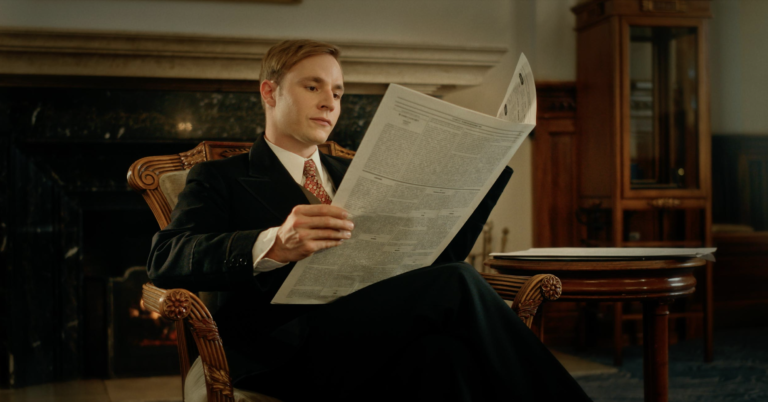
The format of this six-episode series is surprising at first. It even disappoints. One expects a fictionalized, dramatic account of the Romanovs' fatal downfall, the fall of the Russian Empire. It is, except that the format oscillates between fiction and documentary. The interventions of historians are minor compared to the fictional unfolding; their information provides a pause for reflection within the episodes. The story moves forward, and the documentary part provides the nuance required by the complexity of Nicholas II's reign. The fact remains, however, that these interventions, valuable as they are, interrupt the pace of the TV movie. The script would have benefited from integrating these necessary points of nuance directly into the fiction.
This shortcoming makes the series poor, as do the historical inaccuracies identified by specialists. It's also a pity that only historians from Anglo-Saxon universities take the floor: it would not have been superfluous to give the floor to the main people concerned, i.e. Russian historians. We would have expected a more ideological, less objective discourse from them; I think this would have been to underestimate them, even to scorn them. The photography is also part of the series' less successful side: very uneven, it alternates between very polished, aesthetically pleasing shots and entire scenes that are totally flat in terms of form. It takes the easy way out, creating a contrast between the highly polished style of the Romanov court and the rougher style of the people. The series has its share of ugliness.

Nuance through storytelling
But that's not all. If there is poverty in certain aspects of realization, The Last Tsars is not lacking in richness either. Mainly in the psychological construction of the characters and in the subtle treatment of this crucial episode in Russian history. No, the Romanovs are not the horrific executioners of the people, insensitive and cruel, eliminated by brave revolutionaries concerned with equality and justice. No, the Romanovs were not the poor innocent victims of a people driven mad by the propaganda of a few cranks who couldn't stand the nobility.
What makes this possible is the concentration of the story from 1894 to 1918, i.e. from the accession to the throne of Nicholas II, the last emperor of Russia, to the assassination of the tsar, his wife the tsarina and their five children - or four, according to the legend of a surviving Anastasia... - nine months after the October Revolution. Throughout these years, we meet a young tsar full of good will and respect for his family tradition. A young tsar very much in love with the young beauty to whom he was promised: Princess Alix of Hesse-Darmstadt, who became Empress Alexandra Fedorovna Romanova.
As her husband's main advisor, the Empress is not to be blamed for the downfall of the Romanovs, but almost. She obsessed the Tsar with her own obsession: the hemophilia of their only son, which could jeopardize the succession. The sick son needs a healer: heaven-sent miracle or curse, the monk Rasputin enters the scene. But he's far more than just a healer. He wants to conduct his own politics. Alexandra drinks in Rasputin's words, her own messiah, her master; she passes on Rasputin's - disastrous! - to the Tsar, who in turn drinks in the words of his wife, to whom he is clearly submissive. Politics and love don't mix. A succession of bad political decisions, opposed by the official advisors to power, make the Tsar nervous, cruel, out of his depth and even downright stupid when he commits his Empire to a suicidal war.

Character nuance
Rasputin's appearance is a little forced, but his place in the series is an excellent illustration of the infernal mechanism at work in the Romanov family. Alexandra, always sublime, is revealed in her two facets: the tender, concerned mother, the devoted but domineering wife and the arrogant yet totally manipulated politician. Nicholas II remains the most complex character: from the young lover, he becomes the emperor, benevolent to his people but clumsy, to become bitter and compulsive, ending up all humility and piety during his last months of life, while imprisoned in a protected residence with his family since his abdication.
The portraits of the five Romanov children are rightly self-explanatory. At the time of the collective assassination, the eldest, Olga, was twenty-two, and the youngest, Alexis, thirteen. So young, with no experience of power, they can't be accused of anything. So they appear as charming, well-educated young people who also know how to laugh and have fun. No sooner do they begin to discover the world and its pleasures - not least for Maria, who falls in love with a guard in the guardhouse - than they are brutally murdered. If the people were the victims of the Tsar's unreasonable policies, the Romanov children were the first and most innocent victims of a certain Lenin, who ordered their deaths. When a policy opens with the murder of five teenagers, it's not a good sign.
Write to the author: loris.musumeci@leregardlibre.com
Photo credits: © Netflix

You'll also like



 French
  German
  English
Leave a comment