




Raphaël Doan: «AI does not necessarily promote authoritarianism»

Raphäel Doan, a certified teacher of classical literature, is the author of several essays on the ancient world. Photo: DR
At a time when authoritarian regimes are winning people over with their purported efficiency, Raphaël Doan challenges conventional wisdom. In his view, artificial intelligence could both simplify politics and strengthen democracy.
Large language models are on their way to becoming the primary gateway to information for millions of users. Capable not only of selecting the data we access, but also of summarizing, prioritizing, and interpreting it, artificial intelligence (AI) could profoundly transform our relationship with politics.
According to Raphaël Doan, author of Making France a Democracy, these new technologies are not merely tools of control. The essayist and former senior government official argues that they could also make politics more understandable, facilitate greater citizen participation, and restore the people’s power to its rightful place, even though they pose new challenges to sovereignty.
Le Regard Libre: Authoritarian regimes are on the rise because of their supposed efficiency compared to democracies, which are often perceived as slow and indecisive. Yet you argue that democracy is the most powerful of all systems. Why?
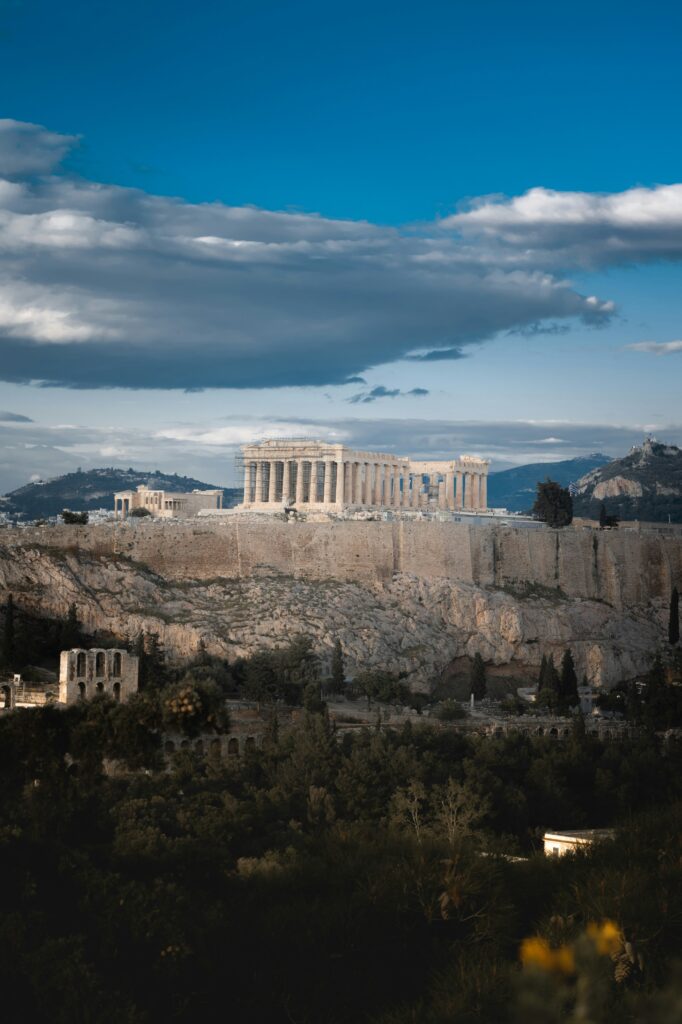
Raphaël Doan: First, for historical reasons. When we look at the Greek city-states, the leading democracy of the time—Athens—was also the most dynamic, the most expansionist, and, in a sense, the most formidable to its neighbors. In recent history, it was a parliamentary democracy—the Third French Republic—that won World War I. I therefore reject the common misconception that democracy is inherently a system of weak compromise.
A democratic decision enjoys a legitimacy that a decision imposed by an authoritarian regime does not. It is therefore more readily accepted and implemented. Conversely, dictatorships must constantly guard against dissent and may also make huge mistakes due to a failure to properly understand the reality of their own country. The history of the USSR provides a good example of this.
You base your analysis on historical examples. However, technological advances may have changed the situation. In his latest essay Nexus, Yuval Noah Harari argues, for example, that our current ability to process vast amounts of information in a centralized manner could strengthen the power of authoritarian regimes.
I don’t believe that. We need to distinguish between two things: the state’s capacity for action and the source of political decision-making. New technologies, such as generative artificial intelligence, do indeed strengthen a state’s administrative capabilities, but that does not mean they necessarily favor an authoritarian regime. A state can very well be highly centralized while remaining democratic. Administrative centralization is not incompatible with the power of the people. On the contrary, it can even allow a democratically made decision to be implemented more effectively. When it comes to major national issues, I therefore see no contradiction between democracy and the centralization of the means of action.
In your opinion, France today is not a democracy. Why?
Etymologically, «democracy» means «rule by the people.» Yet today we have grown accustomed to calling «democracies» regimes that are, in reality, organized to prevent the people from exercising their will. There is constant confusion between democracy and the rule of law. Of course, one might consider it desirable to protect individuals or minorities from the excesses of the majority. But that is a matter of liberalism, not democracy. For the Greeks, who invented the concept, democracy referred to a system in which the people themselves made the laws and made decisions directly. In their view, modern France certainly would not have been considered a democracy.
Should we, then, consider the phrase «liberal democracy»—which is so widespread today—to be an oxymoron?
For much of the 18th centuryth and XIXth For centuries, democracy and liberalism were indeed two distinct and sometimes opposing concepts. Most French revolutionaries, for example, did not generally seek to establish a democracy in the Greek sense of the term. Above all, they wanted a representative government modeled on the British system. Liberal thinkers have long viewed democracy with suspicion, precisely because it could threaten individual freedoms. I am not offering a critique of liberalism here. I am simply noting that it is a bit too convenient to want to benefit from the positive connotations of the word «democracy» while at the same time limiting popular power in the name of liberal principles. You can’t have your cake and eat it too.
This tension is particularly evident today in the growing role of judges.
Exactly. In our contemporary democracies, liberalism is largely expressed through the power entrusted to judges to protect individual rights. The problem is that judges are not elected and have an increasingly broad margin of interpretation. If legal texts were extremely precise and judges were content to apply them literally—if they were simply «the mouthpiece of the law,» as Montesquieu advocated—then the link to the will of the people would remain intact. But that is no longer the case. Major declarations of principle or certain international conventions use very general concepts—for example, «the best interests of the child»—that leave ample room for interpretation. Under these circumstances, judges no longer merely apply the law; they participate in defining it. This further distances the exercise of power from popular sovereignty.
To bring France closer to the democratic ideal, you propose establishing a parliamentary referendum. Specifically, one-quarter of the members of Parliament could directly submit «important issues» to the people. What do you mean by «important issues,» and what makes you think that about a hundred members of parliament would be able to identify them? Doesn’t popular sovereignty consist precisely in letting the people formulate these questions themselves, as is the case in Switzerland?
That is a legitimate objection. In reality, my proposal is, above all, pragmatic. Switzerland has managed to strike a remarkable balance, but it also benefits from a long tradition of referendums. In France, I prefer to propose the reform most likely to rapidly increase the use of referendums. In this sense, Parliament already exists to draft laws. It therefore seems natural to me to also grant it the authority to directly submit matters to the people. In practice, it would suffice to make the shared-initiative referendum more flexible, as it is currently virtually unusable due to thresholds that are far too high.
As for the concept of an «important issue,» I don’t have any scientific criteria to offer. I simply believe that the interplay between the majority, the opposition, and the president would naturally bring to light the issues that deserve to be put before the citizens.
You explain that Athenian democracy was only possible because all citizens could physically gather on the same hill, which has become impossible in countries with populations of several million. However, digital technologies now remove this constraint. Could we imagine a platform that would allow citizens to vote directly on major national issues, or even to propose changes to the law themselves?
We could even go a step further by envisioning a fully digitized legal system, in which citizens could propose changes on an ongoing basis, much like «open source» software. I am not opposed to this in principle, but I see obstacles that are more practical than philosophical. The most obvious obstacle is that of trust: a physical ballot box is visible to everyone, whereas a fully digital voting system requires convincing citizens that the system is completely reliable—which is far from obvious in a climate of deep mistrust. I would therefore be in favor of pilot programs, particularly at the local level, before considering its application to major national decisions.
Another objection to direct democracy is that contemporary issues have become far too complex to be left to the judgment of citizens. Why do you reject this argument?
Because it is based on a false assumption. When we study the administrations of the Hellenistic world after Alexander the Great, for example, we already find tax systems, regulations, and administrative structures of impressive complexity. The role of intelligence is not to add complexity and nuance, but to reduce it. Newton did not explain that the universe was incomprehensible; he summarized it in a few simple laws. Politics should pursue the same goal.
In Charles de Gaulle, this pursuit of simplicity is particularly striking. He manages to make even the most difficult situations perfectly understandable, both in his speeches and in his actions. This clarity is an immense advantage for a statesman, but it is also a prerequisite for democracy. If one claims that problems are too complex to be understood, one logically ends up concluding that citizens are incapable of making decisions. Conversely, the more simply the issues are presented, the more citizens can participate in collective decision-making.
Some would argue that oversimplification leads to populism. Donald Trump, for example, often reduces issues to binary oppositions. Isn’t that a danger of overly simplistic politics?
I think we need to distinguish between simplicity and truth. Donald Trump’s problem isn’t that he simplifies things, but that, on a number of issues, he’s wrong. The U.S. president, in fact, possesses a genuine talent for rhetoric. He knows how to come up with simple, memorable, and effective phrases. When this ability is used to support more accurate analyses, it is an undeniable political strength. You can express absurdities in very complex ways, just as you can express truths in very simple ways. These are two completely different matters.
In a sense, the world has even become less complex than it used to be. Thanks to the internet and artificial intelligence, we now have access in a matter of seconds to a volume of information that was unimaginable just a few decades ago.
Today we have a better understanding of how the world works than our predecessors did. When a monarch like Louis XIV made an economic decision, he had neither the theoretical knowledge nor the tools that we have today. Science has advanced tremendously and makes many phenomena much easier to understand. Artificial intelligence is part of this evolution. Large language models are already excellent educational tools. They make it possible to quickly explain topics that are sometimes highly technical. From this perspective, they can indeed help make politics more accessible.
Some people, however, fear that artificial intelligence will profoundly change the way democracy works. Do you share this concern?
No, not necessarily. In my view, democracy depends relatively little on technology itself. After all, it was invented more than two thousand years ago. AI, on the other hand, will profoundly change society, the economy, work, and, more broadly, our relationship with the world. It will therefore influence democracy indirectly, by transforming citizens themselves rather than institutions.
The fact remains, however, that informed democratic choices require good access to information. Yet the large language models, owned by a handful of American companies, are becoming the gateway to information for millions of citizens. Don’t you see a risk of standardization of thought in this concentration of power?
With every media revolution, the same concerns have arisen. Television—and radio before it—has already been accused of homogenizing opinions. I’m not sure that large language models have a stronger effect than traditional mass media. Many people imagine, for example, that AI will trap users in increasingly narrow cognitive bubbles. Yet early empirical studies seem to show the opposite: people who subscribe to certain conspiracy theories often become less convinced after engaging in lengthy conversations with a language model.
A conspiracy theorist would respond that if these people become less prone to conspiracy theories after interacting with AI, that is precisely proof that their thinking is becoming more uniform.
That's possible (laughter). What I mean is that we still don't know in what direction this technology will shape our societies. The effects could be very different from what we imagine today.
What other risks does AI pose to democracy?
The economy will become increasingly dependent on large language models. As artificial intelligence becomes integrated into all sectors of the economy, the countries that control these models will have considerable strategic leverage. Today, Europeans depend almost entirely on American companies. If, in the future, the U.S. government were to decide to restrict access to certain models for national security reasons, it would have a real means of exerting pressure on the European economy. We’ve already seen a glimpse of this with the temporary restrictions imposed on certain models. For now, the consequences remain limited because AI is not yet indispensable to the economy as a whole. But in ten years, the situation could be very different.
This dependence is mutual: Europe also possesses strategic technologies, particularly in the manufacture of semiconductors.
Admittedly, interdependence exists, but it is not symmetrical. Take, for example, the Dutch company ASML, which manufactures the machines essential for producing microchips. If Europe were to stop exporting them, U.S. manufacturers would still have enough inventory to continue production for some time. In contrast, cutting off access to a language model has an almost immediate effect. The United States therefore has a genuine digital “circuit breaker” that Europe does not currently possess.
The only solution, then, would be to develop our own language models…
In theory, yes. In practice, it’s much more difficult. Reaching the level of major American research labs would require massive investments—equivalent to several percentage points of GDP each year—with no guarantee of success. It’s not enough to simply have good engineers. We need to attract the world’s best researchers, fund colossal computing infrastructures, and have an energy production capacity capable of powering these data centers. Even Mistral, which is currently the leading European player, remains far behind the capabilities of OpenAI or Anthropic. I am therefore not certain that European countries, acting individually, can sustain such an effort over the long term.
Economics graduate and president of the Association Café-philo, Yann Costa is an editor at Regard Libre.
You have just read an excerpt from our feature «The Concentration of Information,» published in our print edition (Le Regard Libre No. 129).
You'll also like





 French
 German
 English
Leave a comment