



Cash doesn't have to disappear
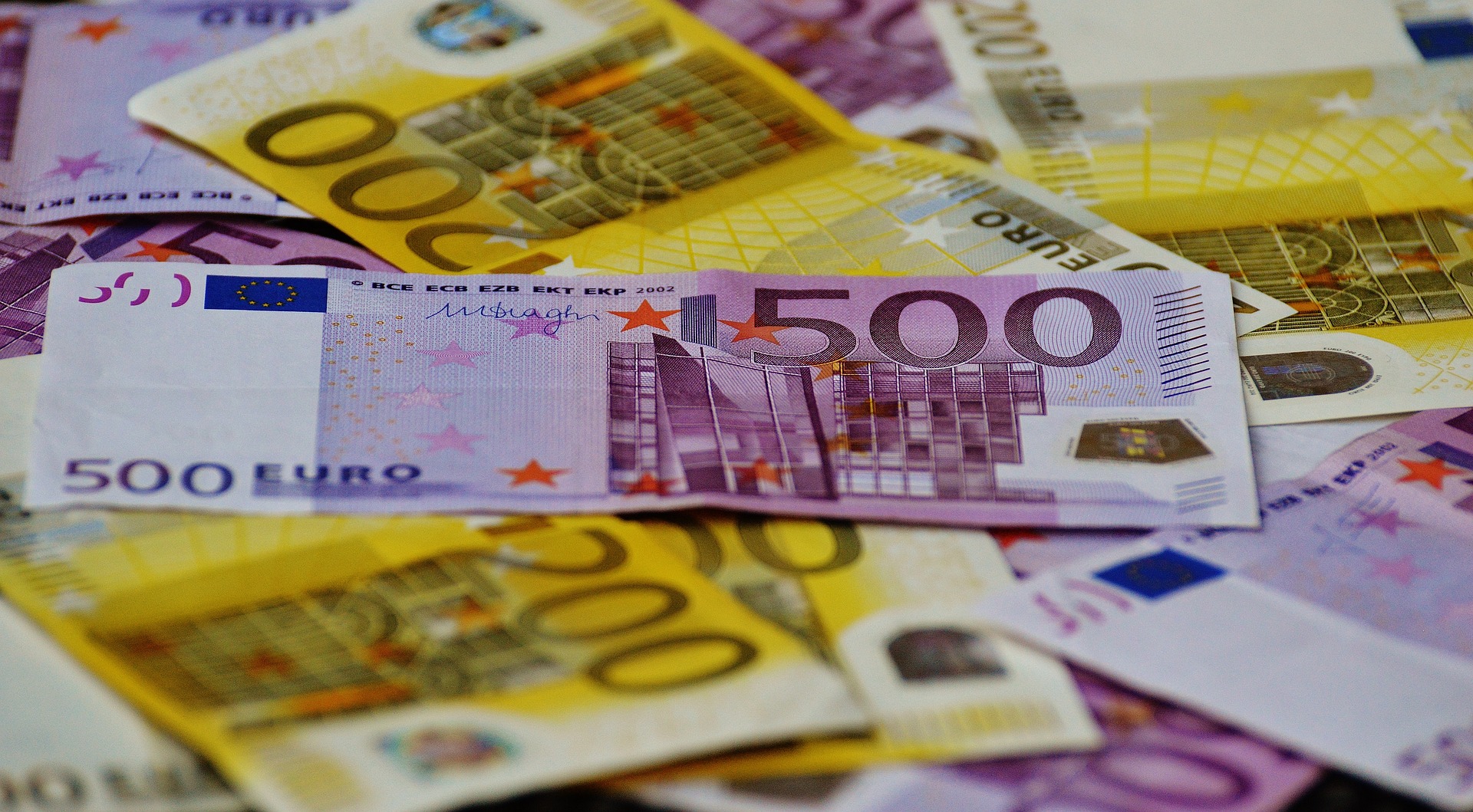
The European Central Bank will stop printing the 500-euro bill starting in 2018. Photo: Alexa via Pixabay
The new 50-franc note marks the launch of the ninth series issued by the SNB. This is an opportunity to highlight the importance of physical currency in this digital age, when some accuse cash, in particular, of facilitating the financing of illegal activities.
Cash transactions have gotten a bad rap. This is nothing new, but the trend seems to have accelerated significantly following the recent attacks in France. Believing they were doing the right thing, policymakers have taken up the cause. This crusade against the cash connaît ses premières victimes: la Banque centrale européenne cessera d’imprimer le billet de 500 euros à partir de 2018. En France, on retiendra l’interdiction de tout paiement en argent liquide de plus de 1’000 euros, ou l’obligation pour les établissements bancaires de signaler toute personne qui effectue des dépôts ou retraits d’espèces supérieurs à 10’000 euros par mois.
Beaucoup plus avancée, la Suède est en passe de devenir «cashless». Au pays des espèces en voie de disparition, seul 20% des achats dans le commerce se règlent encore en argent comptant. Le montant de couronnes (la devise suédoise) en circulation avoisine à peine les 9 milliards de francs suisses. En comparaison, notre chère Confédération paraît outrageusement conservatrice. Les billets en circulation représentent 67’412’087’130 francs suisses. Et la limite pour les paiements en espèce est fixée à 100’000 francs.
A bulwark against bad economic policies
Monetary independence and the relative freedom enjoyed by Swiss citizens are a thorn in the side of those in power. For in addition to being a currency known for its stability, it features one of the last high-denomination banknotes freely available to the public: the 1,000-franc note. This note accounts for no less than 47 billion francs on the Swiss National Bank’s (SNB) balance sheet, even though it represents only about 10 percent of the banknotes in circulation. And contrary to what cash critics would have us believe, high-denomination bills are valued above all by savers. The SNB, in fact, admits as much in so many words on its website:
Since 2008, cash has regained ground as a reserve asset. The increased demand for banknotes is due in part to persistently low interest rates. In addition, the financial and debt crises have made holding cash even more attractive.
Cet amour du billet arborant la tête du peu connu Jacob Burckhardt cache donc principalement un manque de confiance envers les politiques économiques hasardeuses ayant cours actuellement. Aujourd’hui, à cause de certaines banques centrales fonctionnant avec des taux d’intérêt directeurs au-dessous de zéro, le monde marche sur la tête. Il inverse les rapports traditionnels entre créanciers et débiteurs. Auparavant, celui qui prêtait son argent recevait une rémunération pour le risque encouru. Désormais, c’est le contraire. On doit payer pour prêter (déposer) son argent. Pour l’instant, cette aberration n’est pas encore totalement appliquée aux particuliers en Suisse. Seuls ceux qui possèdent plus de 100’000 francs en dépôt sont touchés.
Negative Rates and the Hunt for Cash
The goal of the policy to erode savings is to force people to spend, in order to stimulate growth and thereby generate inflation. There’s just one small problem: the public lacks confidence in the future and, as a result, is hoarding money. This renders stimulus policies ineffective. Consequently, a negative interest rate is applied to «punish» this reluctance. This is where our beloved 1,000-franc bills come into play. They serve as an escape route for those who refuse to let the banks dip into their savings and who, at the same time, refuse to invest. People prefer to stash it all away in a private safe, sheltered from negative interest rates.
Frustrated by this lack of discipline, central banks and certain politicians have declared war on cash. In their eyes, cash is the sole culprit behind the ineffectiveness of their outlandish policies. Once physical cash is eliminated, citizens will be much easier to manipulate. It’s obvious: who would choose to leave their money in a bank account instead of spending it if, day after day, it loses value? Can you imagine that these same sorcerer’s apprentices are considering depositing a sum of money into every bank account («helicopter money») to create inflation? As with the unconditional basic income, the money seems to fall from the sky.
A strategy doomed to fail
Behind this innocent obsession with transparency lies a gravest of all infringements on our freedom. Instead of a reevaluation of current economic policies, we are witnessing the cheerful dismantling of everyone’s decision-making power. We’ll be told that this is a necessary measure to finally revive our struggling economies. Yet that is false. And that is perhaps the saddest part of the story: we would be restricting our freedoms without achieving even a meager positive result. For contrary to what these bureaucrats believe, economic recovery depends on confidence (and thus demand), not on easier access to credit (supply-side policy) or on forcing people to spend their money.
The other argument against the cash est qu’il favoriserait la circulation d’argent sale, la corruption et le financement d’activités illégales. Alors certes, l’abandon du numéraire permettrait d’éviter certains braquages, cambriolages et autres vols à la tire. Cela ne règlerait cependant pas le problème de la relance de l’économie. Et les malfrats se réorienteraient sur des cas de fraude à la carte de crédit. Rien qu’à ce jour, 5% des titulaires de cartes de crédit ont été victimes d’une fraude.
L’espoir des cryptomonnaies
However, there is hope: virtual currencies. The best-known of these, Bitcoin, operates using «blockchain» technology, a decentralized system in which users validate transactions among themselves. This eliminates the intermediaries we are familiar with in the banking world. Other cryptocurrencies are emerging, and because they are not controlled by any authority, they are under attack. The arguments used against them are the same as those used against cash: to put an end to money laundering and various forms of illegal trafficking (drugs, weapons). Marine Le Pen even vowed to ban their use if she were elected in 2017.
According to its designer, the new 50 Swiss franc bill, which went into circulation on April 12, is meant to inspire us to seek adventure, with the wind as its central motif. The wind that, like a breeze brushing against a dandelion in full bloom, gently yet forcefully pulls us away from our usual comfort. It is the wind of hope—the wind of a bright future. A song of freedom!
Write to the author: [email protected]

You'll also like






 French
  German
  English
Leave a comment