




The libertarian pact with conservatives
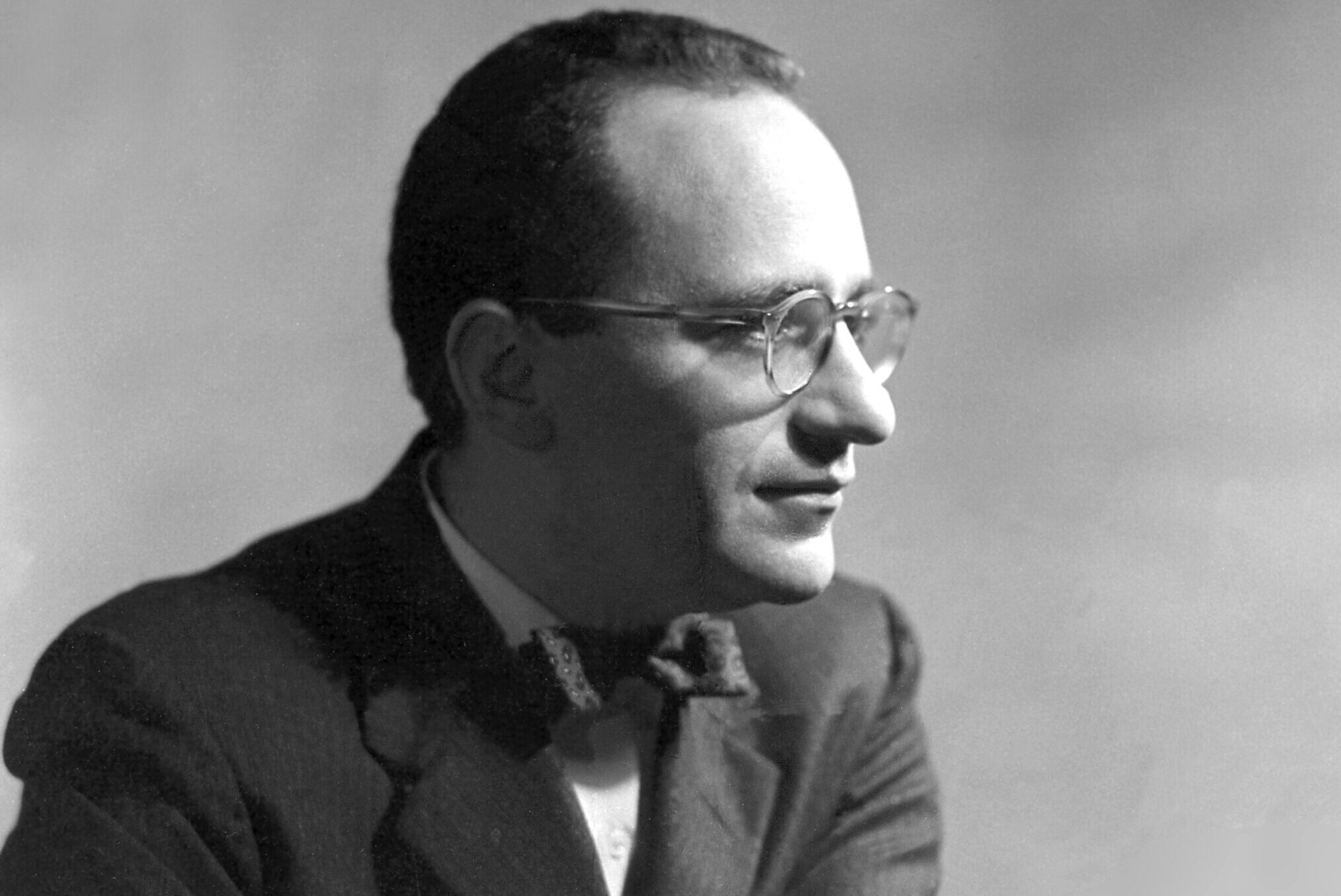
Murray Rothbard, figure of anarcho-capitalism and paleolibertarianism. Photo: Ludwig von Mises Institute / Wikimedia, under CC 3.0)
The American libertarian movement, led by Murray Rothbard, has moved away from dogmatic anti-statism to ally itself with the populist right. A trajectory that poses a central question for liberals: how far to ally oneself without denying oneself?
In recent years, libertarian ideas have gained new visibility. The election of Javier Milei in Argentina, the role played by certain Silicon Valley figures and the debates sparked by Trumpism have all helped to put this current back at the heart of discussions on the future of liberalism. Yet the intellectual history of libertarianism reveals a complex evolution, marked by sometimes paradoxical political alliances.
One of the leading thinkers in this movement is the American economist and philosopher Murray Rothbard (1926-1995). A disciple of the Austrian school of economics and one of its major theorists, the Austrian-American economist Ludwig von Mises, Rothbard radicalized the principles of the classical liberals. Where the latter defended a minimal state, limited to the regalian functions of defense, police and justice, Rothbard went one step further: he advocated the pure and simple disappearance of the state. According to this theory, often referred to as anarcho-capitalism, any public constraint constitutes an infringement of the individual's natural rights.
Locke's natural rights tradition
At the heart of this philosophy lies a central idea: the absolute sovereignty of the individual. From this perspective, private property is a fundamental right, and any form of taxation becomes spoliation. Taxation, in any form, is seen as a violation of property rights, theft pure and simple. The role of the state can therefore never be justified. This radicalization profoundly distinguishes Rothbard from the great representatives of twentieth-century liberalism.th century. Authors such as Friedrich Hayek – also from the Austrian tradition – or Milton Friedman – the inspiration behind monetarism – remained committed to the idea of a minimal state.
This divergence is not just about the role of the state. It also concerns the way in which capitalism is justified. Classical liberal economists often adopted a utilitarian approach: the market is preferable because it works better and produces more wealth. Rothbard, on the other hand, took his cue from the natural rights tradition inherited from John Locke. Capitalism is not only moral because it is efficient: it is also moral because it does not violate the inalienable rights of the individual.
From this vision stems what libertarians call the «non-aggression principle»: no one should suffer coercion or violence, including from the state. This idea nurtures a strong isolationist tradition within American libertarianism. War and foreign intervention are considered violations of individual rights.
Shifting political alliances
While libertarian doctrine is radically coherent, its political history is much more fluid. In the 1960s, some American libertarians joined forces with the radical left. Opposition to the Vietnam War, criticism of the state and the defense of certain individual freedoms brought these activists together with protest movements, some of them far removed from traditional liberalism.
Rothbard himself supported a number of American radical leftists and adopted positions highly critical of US foreign policy. Hostility to military intervention was the main point of convergence. But from the 1970s onwards, the tide began to turn. Rothbard and some of the libertarians gradually broke with the left to seek alliances with the conservative right. This strategic shift was fully theorized in the 1990s.
The central idea is simple: if libertarianism is to carry weight politically, it needs to break out of academic circles and appeal to the American middle classes, especially the white ones. Hayek and Mises didn't believe in an overnight shift to a liberal society, and thought they had to win the war of ideas first. Rothbard, on the other hand, opted for a «populist» strategy, as he himself called it.
For him, winning power required a discourse capable of mobilizing part of the electorate against the political, bureaucratic and intellectual elites. This strategy is explicitly inspired by tried and tested political methods, including those of the Communists and the Nazis. For example, Rothbard understood perfectly well that the demand for security was very strong in the United States, and so he began defending the right of the police to shoot at just about anything that moves – which is not very obvious to a liberal.
The populist turn
This strategy was particularly evident during the 1992 U.S. presidential campaign, when Rothbard supported the candidacy of conservative Pat Buchanan in the Republican primaries. Buchanan developed a nationalist, populist rhetoric that in some ways foreshadowed the Trumpist rhetoric of the following decades.
This moment marks an important stage in the evolution of part of the libertarian movement. From then on, some libertarians sought to articulate their economic ideas with the cultural and identity-based discourse of the populist right.
This orientation has been reinforced by several subsequent political episodes. The Tea Party movement, starting in 2008, and then Donald Trump's elections in 2016 and 2024 illustrate the emergence of new political coalitions in the United States. In these movements, libertarian themes – hostility to taxation, criticism of bureaucracy, defense of the market – are sometimes combined with conservative or nationalist positions.
Today, this evolution is still evident in certain alliances. A number of Silicon Valley figures, such as Peter Thiel and Elon Musk, claim to be part of the libertarian heritage, while at the same time supporting political projects close to the populist right.
Tension at the heart of libertarianism
However, this development raises a fundamental question: are these alliances still compatible with the principles of liberalism? Libertarianism theoretically rests on three pillars: economic freedom, individual liberty and isolationism in foreign policy. However, some of the positions adopted by these new alliances may conflict with these principles.
The question of immigration, for example, poses an obvious problem. A doctrine based on individual freedom should logically defend the free movement of people. Yet some libertarians today justify restrictive migration policies in the name of property rights – usually individual rights, but in this case extended to nations – or the protection of local communities.
The abortion debate also illustrates these tensions. If the individual is sovereign over his or her own body, how can a ban on abortion be justified? Faced with this difficulty, some libertarians propose transferring the decision to the individual states, in order to avoid an overly clear-cut position.
The current debate surrounding American libertarians thus illustrates a permanent tension in the history of liberalism: how can fidelity to principles be reconciled with political effectiveness? The question remains open. But one thing is certain: the alliances that liberals forge are never neutral. They shape the way their ideas are transformed – and sometimes deformed – by political reality. For when a movement calls into question the principles of political liberalism, such as the rule of law, the separation of powers or individual freedom, its compatibility with liberalism becomes questionable, to say the least.
This text is a summarized version by Le Regard Libre from Jérôme Perrier's February lecture at the Journée libérale romande in Lausanne. Jérôme Perrier, who holds an agrégation in history and a doctorate in history from the Institut d'études politiques (IEP) in Paris, is the author of «Le détournement populiste du courant libertarien», published last year in two volumes by the Fondation politique pour l'innovation (Fondapol).
You have just read an open-access analysis from our dossier «What alliances for liberals?», published in our print edition (THE FREE LOOK N°125). Debates, analyses, cultural news: subscribe to support us and access all our content.

You'll also like



 French
  German
  English
Leave a comment