




An unimportant book?

A crime of no importance, prix Interallié 2020, joins the countless stories that have been occupying bookstore shelves in recent years. At least, its author Irène Frain has labelled it a «narrative», not a «novel». This sets the tone from the outset. But while its subject, the murder of her sister, is terrible, this book is not poignant. Perhaps this was not the novelist's aim with this work, which is understood above all - or rather, after all - as an eulogy of literature and its powers.
An autumn weekend. Denise, aged 79, was attacked at her home in a «quiet, almost too quiet» neighborhood, not far from a small wood, a hypermarket, a problem housing estate and an evangelical church she used to attend regularly. A few weeks later, her injuries claimed her life. It was only after her death that her younger sister, Irène Frain, was informed of the tragedy by one of the victim's sons. At the funeral, the novelist sees an opportunity to get closer to Denise's family. But she soon realizes that the rapprochement she so earnestly hopes for will not happen. Nor will mourning, which requires words.
Books against silence
The author-narrator then turns to the law: she wants to understand what happened to her sister, to get more information. She will learn that this murder, mysterious to say the least, is not the first of its kind in this housing estate - nor will it be the last. She will also notice that public opinion is usually moved by the murder of an elderly person, but immediately moves on to something else, never mobilizing for such a case, which is considered (painfully) lost. She will want to sue for damages, will turn to one lawyer, to another, will write to the court. But once again, Irène Frain was painfully silenced.
That's the main plot of this book. It shifts from the third to the first person, alternating between social frescoes and intimate confessions. Also playing on two levels of writing, that of the narrative and that of the notebooks kept by the author herself during the affair, this sober prose - though not stripped down, alas - is not exceptional. The literary device used as a remedy for the slowness of legal proceedings is well known. But it is ultimately in the sincerity that emerges from this approach, which is more therapeutic than artistic, more initiatory than aesthetic, that the strength of’A crime of no importance.
«- How do those of your customers who are going through the same thing as me and don't write?
- They cry out a disease. Often cancer.»
The pages turn as the writer writes down her love for her missing sister, the secrets that accompany her, her difficult relationship with her family... and the saving power of writing, as well as reading. Despite the many thematic repetitions, without which the novel could have fit into a short story, this is a tale of necessity, of intuition, of the cry of fictional freedom to bring out the factual truth. It is also a homage to the elderly, a tenderness for the forgotten - one of the common threads in Irène Frain's work. That's why her story goes beyond mere testimony to touch on the universal. Which is not without importance.
Write to the author: jonas.follonier@leregardlibre.com
You've just read an open-access article. Debates, analysis, cultural news: subscribe to support us and get access to all our content!
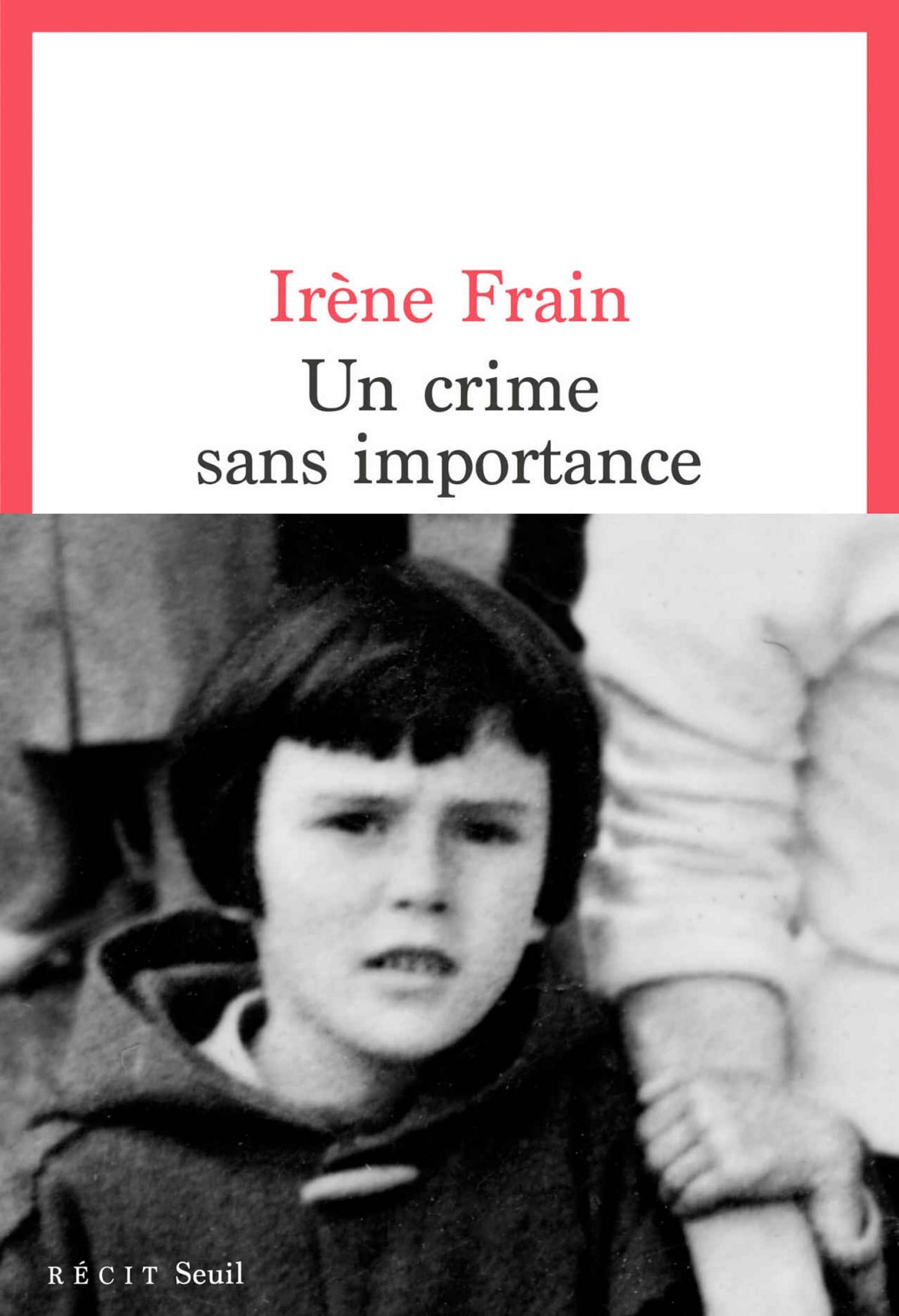
Irène Frain
A crime of no importance
Editions du Seuil
2020
256 pages

Vous aimerez aussi





 French
  German
  English
Laisser un commentaire