



Booklovers Festival: foray into Young Adult literature

Aimed at readers aged approximately 13 to 25, «Young Adult» novels explore themes found in children’s and young adult literature, but with a more mature approach. ©clelie_des_livres
For the first time in Switzerland, a festival of Young Adult literature will be held: from May 31 to June 2, Booklovers will take over Lausanne's artistic district. An incursion into a world that is redefining the practice of reading, for better or worse.
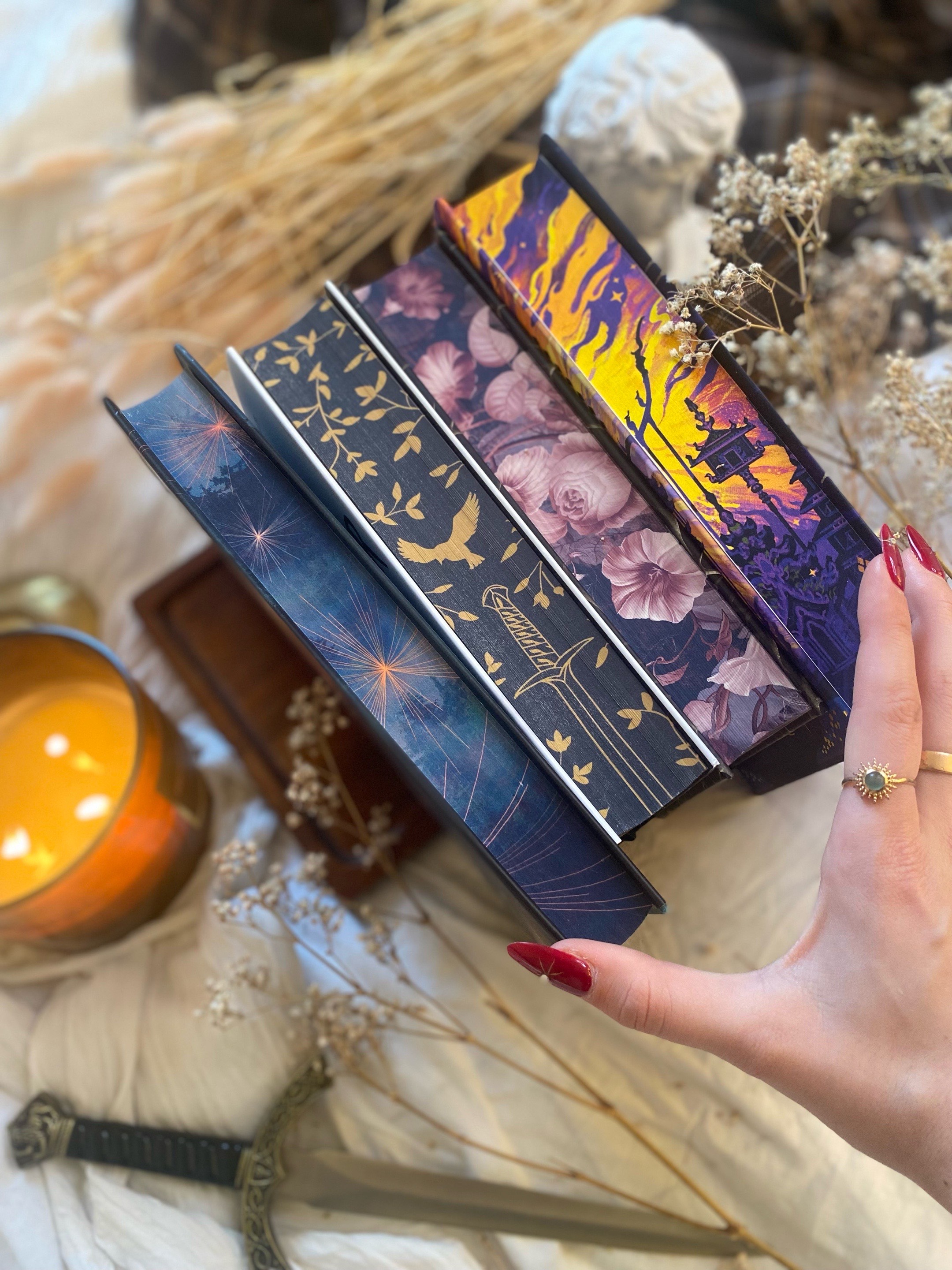
Whether or not you follow the latest news from the literary world, you only have to step into a bookstore to realize that a new kind of book is taking over the shelves: with their richly colored illustrated covers, hardcover rather than paperback formats, and spines adorned with patterns, these books catch the eye because they stand out so starkly next to traditional French editions, which are known for being rather drab. And all of them, almost without exception, are grouped together under a single label on the shelves: «Young Adult.».
This label does not refer to a genre per se, but rather to a category of young adult literature. Although ostensibly aimed at readers aged roughly 13 to 25, «Young Adult» novels (since they are generally works of fiction) explore themes found in young adult literature but with a more mature approach. As a result, more than half of the readers are actually adults!
While the themes are extremely varied, so are the genres, ranging from fantasy to romance (Dark Romance and New Romance, depending on the definition) and even dystopias. In fact, it is the immense variety of characters and worlds that makes «Young Adult» so appealing, according to @velourtine and that she «doesn’t necessarily find that in adult fantasy, which is still very much tied to Tolkien-style clichés.» @thebookstheory, for her part, particularly appreciates the «wide range of possibilities for the imagination» offered by «Young Adult» and @bookstinguette «his cinematic and entertaining writing.».
The Adventure of Reading
While reading has always been a solitary activity, «Young Adult» literature and its offshoots are turning this paradigm on its head. From book clubs popping up all over the place at various book fairs and festivals to the reading retreats and weekend getaways organized by Mathilde Schaller (aka @matoubook), our relationship with reading has fundamentally changed. Reading has now become a collective adventure.
Social media, which has proven to be a major driving force behind this phenomenon—with Bookstagram and BookTok leading the way—is shaking off the stuffy image that literature might have and thereby fueling this desire to share. A reader for only a year and a half, @lilou.books_ had never felt the urge to read before. Then one day, she stumbled upon a book-related video and started following accounts that recommended books. «It was really BookTok that motivated me to read. After watching a video about it, I went to Cultura and didn’t just buy one book—I bought about ten—without knowing if I’d like them, simply because I’d seen them on BookTok.» Since then, she has opened herself up to several other literary genres, including thrillers, and is nurturing this new passion.
Books as a Playground
This ease of access to reading is not the only phenomenon that the «Young Adult» genre has brought in its wake. We’ve never seen anyone dress up as Milan Kundera for a book review, or create an Instagram account for the Baron de Charlus or the Duchess of Guermantes, let alone a Flaubertian fan creating romanticized montages of the romance between Emma Bovary and Rodolphe; yet all of this is commonplace when it comes to Young Adult novels!
There’s a total immersion in the book, its world, and its characters: after putting the book down, you choose your outfit depending on whether you’re taking a photo with *Twin Crowns* or *The Auren Saga*; you match your makeup to the book’s cover design; you bring the romance protagonists to life through Reels; you spend time creating aesthetics or fan art to bring your favorite saga to life, you edit a photo of yourself to add a backdrop and elements from the book… in short, you bring the book to life.
Demystification and Standardization
From now on, the relationship with the text is no longer just intellectual—it’s also embodied. Readers are no longer content to simply talk about what they liked; they show it—and most often by putting themselves in the spotlight. Posing in a cosplay outfit, book in hand, for a post on Bookstagram or a video on BookTok is a way to extend the pleasure of reading and avoid having to leave the characters behind too abruptly. More than just reading a novel, we want to live it—all while blurring the line between fiction and reality.
While grumpy souls may see this as a debasement of literature, this demystification is both welcome and essential; we must take hold of the text and make it our own. Literature is not much without the stir it causes among readers. Nevertheless, this popularization can also carry a certain risk of homogenization, as noted by someone who has been active in children’s publishing for fifteen years:
«Thanks to social media, which has made reading trendy, there’s been a democratization of literature—which is great!—but it’s accompanied by a flood of works coming from all directions, with the problem that this open door no longer has any safeguards. Take Wattpad, for example, which allows anyone to write whatever they want and be read by everyone, without anyone editing or overseeing this literary output. This is, of course, very innovative, but to find something new, original, and beautiful, you have to be patient. Wattpad isn’t the only symptom; the publishing world is no exception: American publishing machines churn out new releases all day long, and readers devour them—they swallow them whole, but without digesting them, without distinguishing between them or establishing any hierarchy. Quantity has thus taken precedence over quality. The main concern is no longer “Was what I read any good?” but “Was it what I wanted to read?” The measure of quality has turned into a measure of preference. And as a result, we’re seeing literary homogenization: readers aren’t looking for something innovative or high-quality; they simply want to have their tastes confirmed; what they want is to read the same thing they enjoyed before.»
The fact is that the reinvention of our relationship with reading, spurred by «Young Adult» literature, has occurred alongside a new way of consuming books… underpinned by a publishing system that is also seeking to reinvent itself. At least one encouraging development remains: the renewed enthusiasm that books are generating.
Write to the author: quentin.perissinotto@leregardlibre.com
You have just read an open-access article. Debates, analyses, cultural news: subscribe to support us and get access to all our content!

You'll also like





 French
  German
  English
Leave a comment