



Would we do the same if we had to do it all over again?
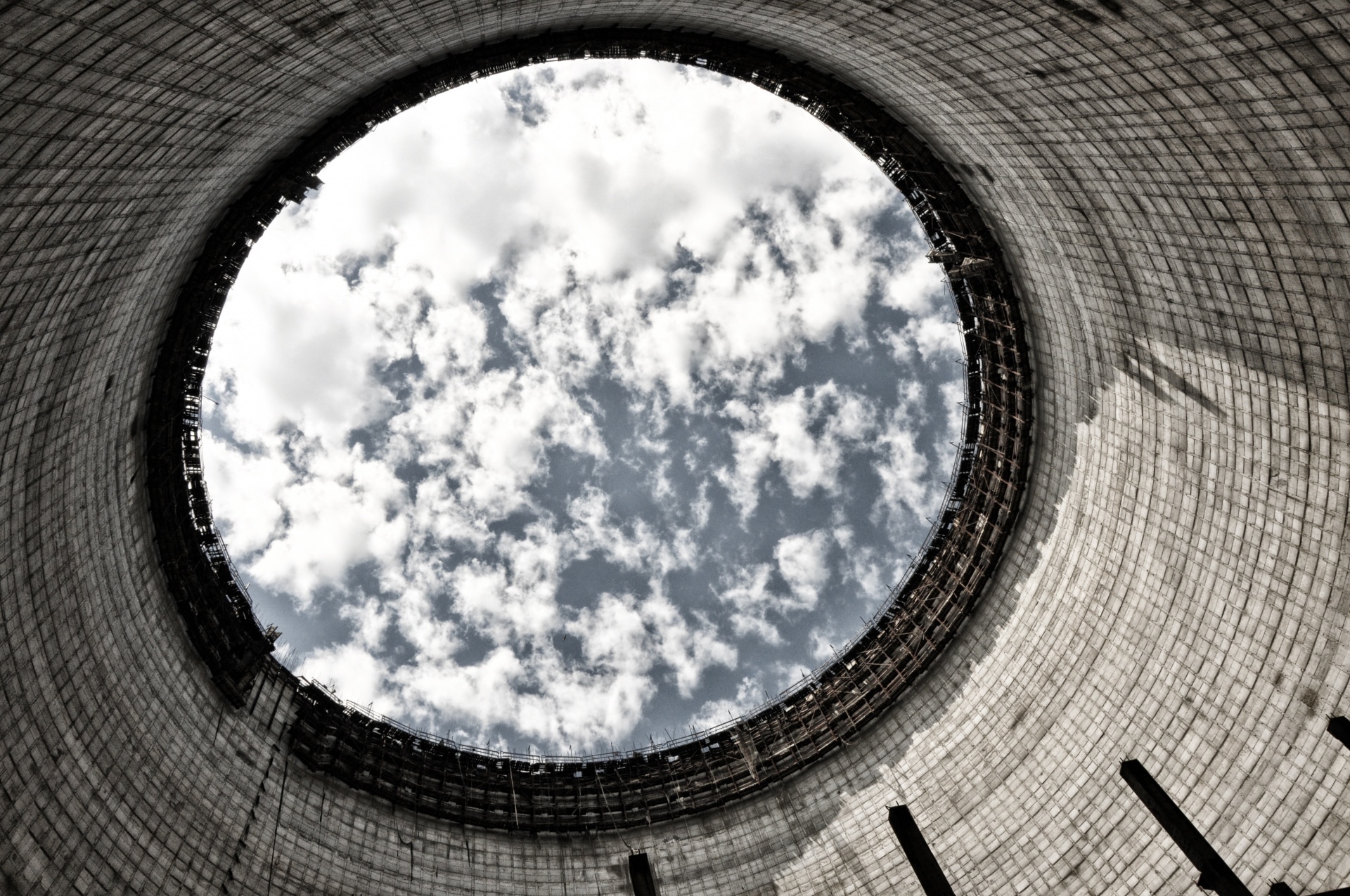
Thousands of years after a nuclear catastrophe that devastated the planet, humanity is rebuilding itself. Is it doomed to repeat certain mistakes? That is one of the questions posed by this existential novel Crâl. An interview with the book's Swiss author, Alexandre Correa.
It's a story set in a post-apocalyptic world, after Chernobyl. But in Crâl, ...the radioactive explosion not only affected an entire region—it depopulated Europe. Only a few survivors remain in southern Africa and Oceania. The novel by Alexandre Correa, a native of La Chaux-de-Fonds, begins a few thousand years from now, as humanity begins its evolution anew, on the ruins of our contemporary society. The main character, Crâl, is one of these survivors. We met with the author during the 30thth St-Pierre-de-Clages Book Festival.
Le Regard Libre: Why did you choose Chernobyl at its peak as the starting point for your novel?
Alexandre Correa: The scenario isn’t entirely unrealistic. If, for example, the melting reactors had reached the pool of water accumulated by the firefighters, the radioactive steam cloud would have had far more serious consequences. I simply exaggerated the point a little. To me, this disaster is very revealing of our times. Radioactivity represents the quintessential modern scourge: it isn’t perceptible to the senses; it has no smell, no color—you can’t feel it. We didn’t see it coming, we didn’t immediately understand its consequences, and we certainly haven’t yet grasped the full scope of the problem.
Cràl is a member of a nomadic tribe from the African continent that has decided to explore Europe. Is this a sort of return to the dawn of humanity?
Yes, Chernobyl was the pretext for a global «reset.» I wanted to imagine the repopulation of Europe via Africa, just as it was in the beginning. But I wondered if we would have learned any lessons from the disaster at all, and if we would really start over in the same way…
So what?
In this society, the elders don’t really remember what led to humanity’s downfall. They have only fragments of the memory. They know that certain things are taboo, that their ancestors did something wrong at some point. But for the most part, they have forgotten the causes. Except perhaps Cràl, who realizes fairly quickly that certain patterns of behavior should not be repeated, even though he lacks the historical context.
Which habits should not be repeated?
For example, one member of the tribe discovers how to make pottery. He then creates small bowls. The problem? He doesn’t stop to think whether this is something they really need. Still, all of a sudden, a certain greed sets in. The concept of possession and wealth emerges. This changes human relationships. And it resonates with Chernobyl. We didn’t really ask ourselves what all of this was for, «deep down.» We invent tools without asking ourselves the right questions, and we endlessly repeat the same mistakes. I’m convinced that human beings are incapable of wisdom.
This realization becomes even more apparent when the Cràl tribe discovers metal…
This society is nomadic. Its members are therefore always on the move. Along the way, they find cans and tin cans. Relics of the past. Old trash. They turn them into sharp objects. At that moment, it’s as if they’ve entered the Iron Age—or even the Age of Metallurgy. This was a huge turning point for the society.
Ce qui est déroutant dans cette découverte des boîtes de conserve, c’est que les membres de la tribu sont persuadés d’être face à un produit brut, non transformé. Cela pose la question de l’essence du mot « naturel ».
C’est exactement ça. Ils n’ont pas les codes. Ils ne savent pas que ce sont des objets manufacturés. Ils les voient comme des éléments naturels, puisqu’ils les trouvent in Nature. In fact, I have to admit that some discussions on this topic wear me out a bit. People talk about nature as if we weren’t part of it. Yet a city like New York is nothing more than an anthill. Is an anthill the natural habitat of ants, while a human city is artificial? Ultimately, the real problem is simply that today our habitats and our man-made structures are encroaching on the planet.
Selon vous, si l’on va un peu plus loin, est-ce qu’il vaudrait mieux éviter d’utiliser des expressions telles que «dénaturer le paysage»?
The landscape is a human construct. It is even a social construct. I think that behind all the talk about nature lies, above all, the idea that we have become detached from it. That is where the problem lies—that we are on the wrong track. Today, we pay little attention to the sensory aspect of our environment. We’ve lost that connection. We place excessive importance on reflection and logic, and no importance at all on sensations.
Is this an ecological novel?
Not particularly, even though nature serves as a backdrop. It’s more of an existential novel and therefore inevitably connected to nature. Let’s just say it’s an ecological novel by accident.
In your book, we don't get the full story, but we imagine it's pretty pessimistic.
This idea of «starting over» has two meanings. Either we hit the «reset» button and choose a different path, or humanity has learned nothing. I get the feeling that the second option is the one that’s becoming clear.
It really gets you down…
I’m deeply pessimistic, but there are also a few ways to confront this darkness. The character of Crâl is very positive. He, in fact, refuses to accept this cycle of repetition. He rejects the band-aid solutions, the absurd explanations, the rules simply dictated by the hierarchy, and the grand founding myths. Crâl shows that nothing is inevitable. That’s where I see a glimmer of hope. Just like the main character, we must remain clear-headed in the face of authority and religion. We must not submit, and we must not swallow everything we’re fed. That is what sets us free.
Write to the author: [email protected]
You have just read an open-access article. Debates, analyses, cultural news: subscribe to support us and get access to all our content!
You'll also like

 French
  German
  English
Leave a comment