




Let's Stop Avoiding Labels

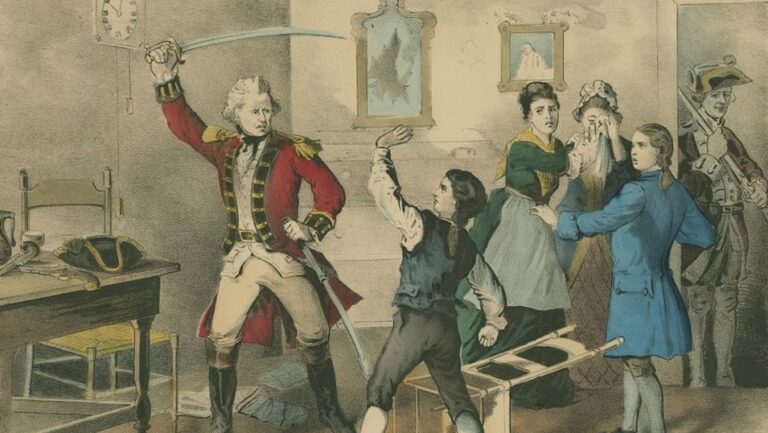
Pablo Sánchez © Drawing by Nathanaël Schmid for Le Regard Libre
Although political labels are often used to dismiss others, they remain essential for understanding ideas and their origins. Provided they are used with care, they can enrich the debate rather than diminish it.
Political labels often make us roll our eyes. And for good reason: in contemporary debate, they serve less to describe than to dismiss, confining those they target to vague categories that impoverish the discussion. «Far right» and «far left» encompass increasingly broad and disparate camps, while ’ultraliberal« has become a convenient insult for anyone who calls for a modestly sized government and a reduction in public spending.
This misuse contributes to the rejection of labels themselves. How many times have we heard a politician refuse to be «pigeonholed» or promise to «transcend partisan divides»? The tactic has become so common that the absence of a label is almost seen as a political virtue in and of itself.
Yet this is to miss the point. It is not political categories that necessarily impoverish the debate, but rather the lazy way we use them. Used properly, on the contrary, they allow us to trace the history of ideas, distinguish between intellectual traditions, and enrich our frameworks for interpreting the present. The bewilderment that certain political movements provoke sometimes stems less from their novelty than from our ignorance of their origins.
A recent experience in the United States illustrates what a self-proclaimed label can achieve. Ever since Zohran Mamdani’s campaign for mayor of New York City under the banner of «democratic socialist,» a flood of articles, editorials, and broadcasts has focused on socialism and social democracy. All it took was for a candidate to openly embrace a political doctrine—and, more importantly, to win an election on that platform—for one question to once again become unavoidable: What kind of socialism are we talking about? His references were scrutinized, his proposals compared to various traditions, and his opponents—including those within his own Democratic camp—were forced to clarify their criticisms.
Of course, labels in no way guarantee the quality of the debate. A poorly understood concept can make the discussion even more confusing. Labels are useful only on one condition: that they are accompanied by a serious examination of political ideas.
In this regard, there is an intellectual tradition that deserves to be revived, of which Isaiah Berlin remains one of the leading figures. A professor at Oxford and a historian of ideas, he devoted a significant portion of his work to schools of thought to which he was deeply opposed—reactionaries, Marxists, nationalists, and critics of the Enlightenment—but whose origins, coherence, and appeal he sought to elucidate.
As historian Mark Lilla lamented in these pages in July, this intellectual legacy has not attracted enough followers. More recently, political scientist Arnaud Miranda has taken up a similar cause by studying the American neo-reactionary movement in Dark Lights. The media attention his work has received also reflects a demand for this type of analysis.
These works share a common approach: taking ideas seriously, defining concepts, examining arguments, and tracing intellectual lineages. All this is done without treating the reader like a child by pointing out on every page who the good guys and the bad guys are. They are based on a fundamental principle that is all too often forgotten: any credible criticism begins with an effort to understand.
We must therefore stop shying away from labels and accept them for what they are: imperfect categories, yet useful for understanding reality if accompanied by a certain intellectual curiosity. It is up to us to take back control and refuse to let them become weapons used to shut down debate. A label should open the door to analysis, never replace it.
Federal Palace Correspondent for the newspaper L'Agefi, Pablo Sánchez is the editor-in-chief of the Regard Libre. Write to the author: pablo.sanchez@leregardlibre.com.
You have just read an open-access article published in our print edition (Le Regard Libre No. 130). Debates, analyses, cultural news: subscribe to support us and get access to all our content!
You'll also like




 French
 German
 English
Leave a comment