



Félix-Antoine Savard et l’âme du Canada
Le Regard Libre N° 28 - Louis-Joseph Gagnon
Few of us French-Canadians and English-Canadians know our writers, whose writings translated the soul of their homeland for their compatriots. Félix-Antoine Savard, a Quebec-born priest, writer-poet and folklorist of the 20th century, is one of them. Why then, if I say that few in Canada even know the name of this author, apart from the few students in the pavilion dedicated to him at Université Laval in Quebec City, why publish an article in a Swiss newspaper?
The reason is quite simple: its name deserves to be spread outside the New World. Wouldn't you Europeans like to taste the fruit of one of your own roots? All the more so since Mgr Savard (a prelate, not a bishop) was the recipient of the Prix de la Langue Française awarded by the Académie Française in 1938 for his famous book Menaud, master-drawer. And everyone will recognize Switzerland as a place highly conducive to the flowering of ideas and artistic life of all kinds, whether glorious or not. Dada and Lenin can testify to this.
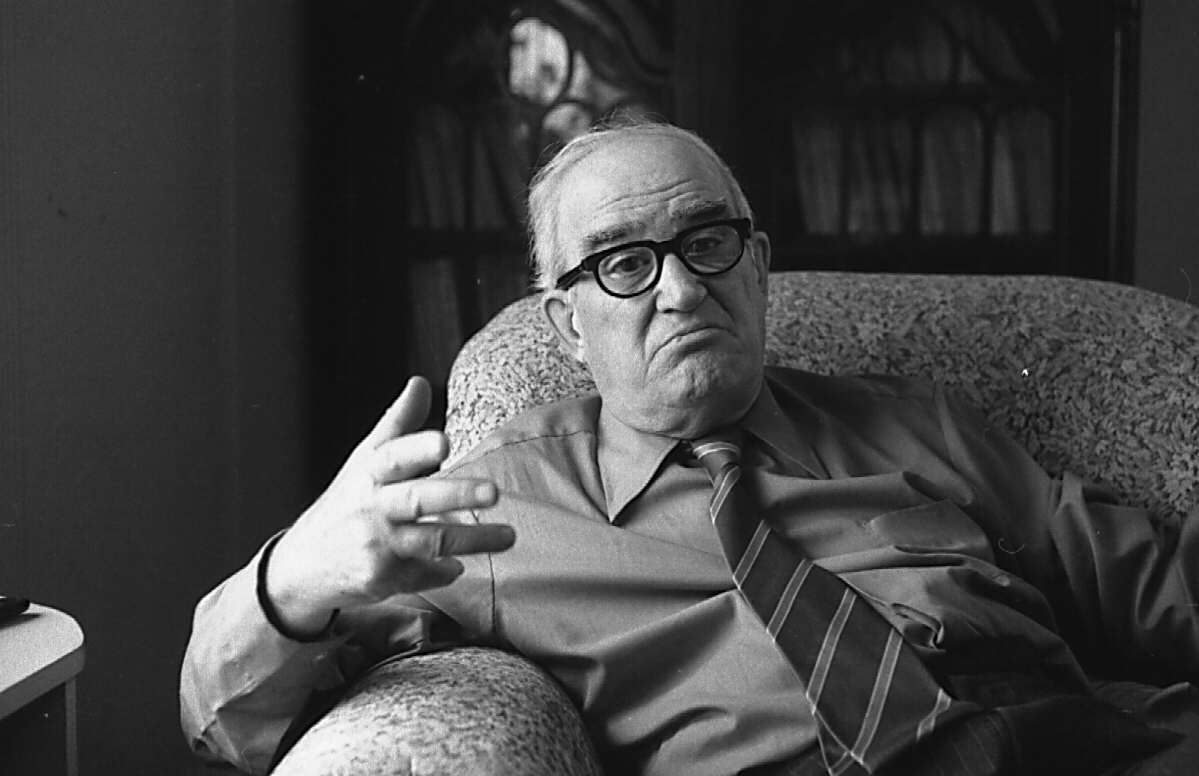
Félix-Antoine Savard. Birth: August 31, 1896, Quebec City. Died: August 24, 1982, Quebec City. Surprisingly, he hardly ever lived in the city where he was born and died. A man of the woods. His parents soon moved to the Saguenay forest region further north. Two characters essentially shaped Mgr Savard's work: on the one hand, his father, an avid hunter and fisherman, who instilled in him a love of nature beyond measure; on the other, his mother, who always insisted on his education, thus enabling him to rub shoulders with the literary Greats, the very ones who marked him throughout his life (Virgil, Claudel, Chateaubriand and Mistral, to name but the most important). Mgr Savard received a classical education with the Marists and became a priest in 1922. With his rebellious temperament and desire for greater freedom from his superiors, this dream became a reality in 1927 when he was appointed vicar of Charlevoix County. This important change in the young priest's life was a turning point that allowed him to enter fully into his work. Through his various travels as a priest-colonizer of the regions of Quebec, he discovered the realities of the inhabitants of the time, especially the foresters and country folk, a theme he would exploit abundantly.
From priesthood to teaching
From the moment Félix-Antoine Savard began publishing, he gradually abandoned his duties as a regional priest to embrace teaching, the second milestone in his life as a writer. From 1950 to 1957, he was Dean of the Faculty of Letters at Université Laval. He gradually moved from a youthful style, full of effervescence, romanticism and awkwardness, to a relatively classical maturation, ever closer to the themes closest to his heart. Some see this as a degeneration of the author, an alienation from his first, pure, virgin pen. For my part, I see it more as a personal journey.
Writing as self-awareness
In his later writings, we can better appreciate Mgr Savard's talent. For one thing is certain: Félix-Antoine Savard wrote himself. He discovered and got to know himself through his writing, as evidenced by the six reprints during his lifetime of Menaud, master-drawer, Over a period of thirty years, he pruned the very heart of this simple, yet astonishingly touching little book. He never stopped publishing, trying out different styles, from the rustic novel of the land to Haikai, via theater, accumulating various prizes and distinctions.
The soul of Canada
I mentioned earlier that Félix-Antoine Savard is one of those people who can touch the soul of the country of Canada. That's what makes him so valuable. When we succeed in getting our hands on a writer who takes us back to our roots, to the land from which we come and which all too often we leave forgotten, when this kind of writer stands before our eyes, we rediscover ourselves. Mgr Savard exploits the constant tension between farmland and forest land, between the desire to settle and the desire for adventure that so marked Canada. He sees in these adventurers of yesteryear our own Greek heroes. As we read, we pass through nature and the seasons, described in extraordinarily poetic terms: «Water: ‘‘I turned into snow to dance with the wind’’ (On the edge of silence)
Félix-Antoine Savard reveals the joys of our joual, a pictorial language bursting with meaning not through the concepts it contains, but through the representations it elicits. So, someone who juggles won't be very gingolant (in other words, a person who thinks, who juggling his thoughts won't be very wild). We thus witness a union between this virile lumberjack and this imaginative poetic spirit. This paradox partly expresses the soul of Canada, a country founded by simple people, full of courage, piety and a desire for adventure.
Admittedly, Mgr Savard is not a literary genius like his masters Virgil, Claudel or Chateaubriand. But that's what makes him even more charming, because he's closer to what he wanted to write about - the country and its people who have touched him so deeply. This sometimes clumsy style makes it easy for any French-speaking Canadian to relate to his work. Through his slight clumsiness, he succeeds in arousing in the people of his nation a part of our soul that recalls our simplicity.
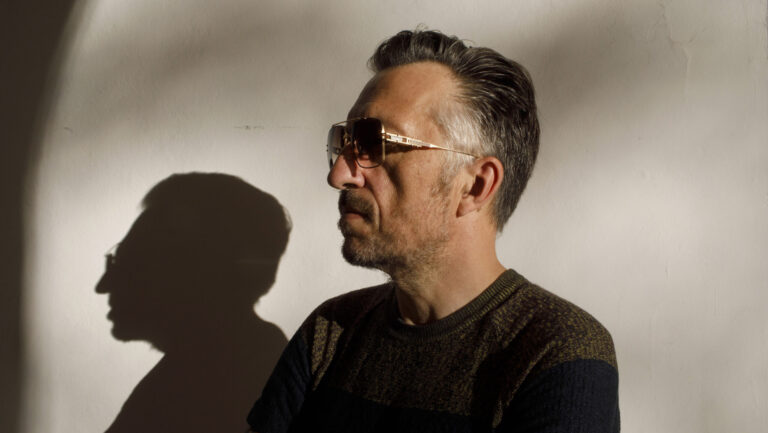
Louis-Joseph Gagnon, our guest of the month, is the first Canadian to write for Le Regard Libre. Until recently a student of philosophy and theology at Université Laval in Quebec City, he is now preparing to join the Institut de formation théologique in Montreal.
Photo credit: © bilan.usherbrooke.ca

You'll also like


 French
  German
  English
Leave a comment