






«Les Injusticiers», a novel of inventories
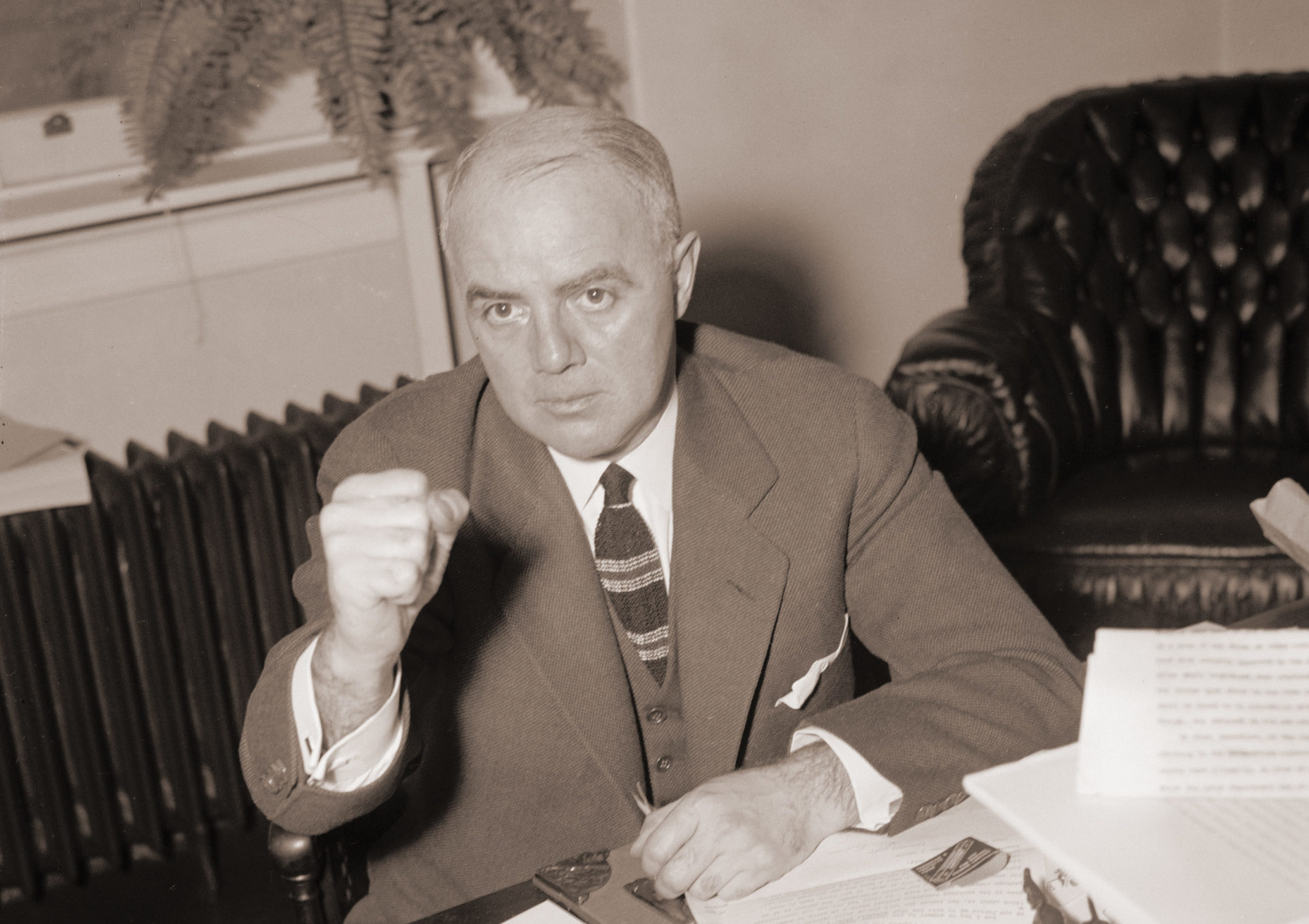
American politician J. Parnell Thomas (1895-1970), tracker of Communist sympathizers © Wikimedia CC 3.0
François Forestier unearths the blacklists of the United States and the Soviet Union during the Cold War. At the heart of his novel are politics and justice thugs, all in a style that doesn't take. But the idea was promising.
At the end of World War II, the major powers were at loggerheads. The Cold War crept in between the United States and the Union of Soviet Socialist Republics (USSR), which were locked in a standoff. Truman versus Stalin, liberalism versus communism. Each side sought to preserve the values upon which its state was founded.
A genuine sense of anxiety—which would soon escalate into paranoia—took hold within these two superpowers. The enemy had to be eliminated, even if it meant persecuting fellow citizens who did not conform to the political ideals championed by the government. Manhunts were carried out, epitomized by J. Parnell Thomas in the United States and Andrei Vyshinsky in the USSR. François Forestier has taken these two figures as his subjects to tell their stories in Visit Injusticiers.
The novel's central theme: lists
The novel opens precisely with fear, an emotion that can inspire the worst acts when faced with the threat of an attack. Parnell Thomas and Vychinski are the perfect men to combat it: neurotic and obsessed, they are willing to do anything to defend the ideals of their homeland. And so these two inquisitors of their time decide to compile blacklists of people who do not fit the mold.
While the former hunts down Communist Party sympathizers, the latter targets any Soviet citizen who shows the slightest sign of opposition to the Party. And while Parnell Thomas is a politician, president of the House Committee on Un-American Activities (HUAC), Vyshinsky is a lawyer, a prosecutor in Moscow. Beyond that distinction, their goal is ultimately the same: to pass judgment in the name of morality.
«The culprit was apprehended and subjected to public outrage: he was part of the healthy faction of the state, but he was corrupt. In every innocent person, there is a criminal.»
In the text, the two «vigilantes» exchange their points of view at breakneck speed. This frenzy is palpable in the writing, weighed down by countless lists of movie stars who have been indicted or titles of films deemed subversive. As the pages turn, this barrage of references becomes utterly dizzying and tiresome. Yet the novel is not lacking in fascinating historical figures, such as Drew Pearson, the famous American journalist for whom journalism was a weapon of counter-power.
Ultimately, The Injusticians has the merit of shedding light on an inglorious chapter of postwar history. The novel, however, fails to live up to its promise: it merely skims the surface of the subject without truly uncovering the mechanisms that underpinned these witch hunts. A promising novel that unfortunately falls flat due to its convoluted narrative thread.
Write to the author: [email protected]
You've just read an unpublished, free-access interview. Debates, analyses, cultural news: subscribe to support us and get access to all our content!

The Injusticians
François Forestier
Knee
October 2023
Page 245
You'll also like



 French
  German
  English
Leave a comment