




Pure intimacy
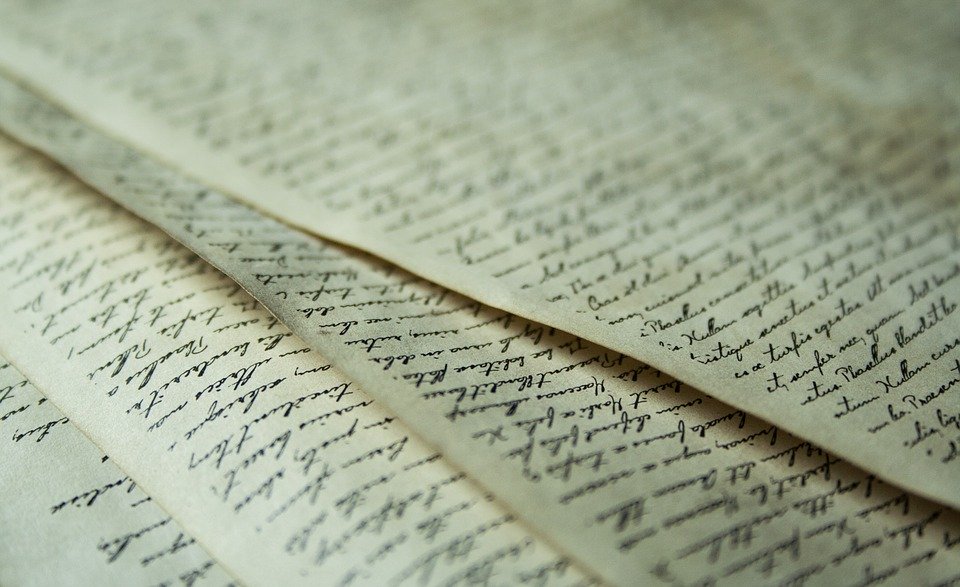
A good time, an ordeal, or just thinking that you suddenly feel like you're really living your life. Watching the changing color of the sky, the sun flooding Damascus one afternoon. Signing books in Vevey with Chappaz, Corinna Bille and Georges Borgeaud. Load up two cows and three calves for butchery and shake the butcher's firm hand. Promising, desperately promising newspaper articles. Shitting under an olive tree in the southern Peloponnese. Measuring time by putting logs on the fire. Tucking your head into your shoulders and feeling the rain on your forehead. In other words, to pass and only pass on this Earth, scratching on the paper of a diary the weft of our comings and goings, the narration of our wanderings, the segment of our trajectories, the tale of our secret attractions and that of our disgusts - this is what this special issue of the magazine Literary Moments, which highlights moments in the lives of Swiss diarists over more than three centuries, from Henri-Frédéric Amiel to Douna Loup.
A publisher recently told me that five percent of readers read a book's preface. To go against the grain, let's talk about the preface before diving headfirst into the lives of others. From the outset, the reader who opens this book will be informed by Jean François Duval of the editorial process of this issue. This is very useful - and worthwhile - for anyone who wants to know how such a project came about, the motivations behind it, and the doubts encountered along the way. From the age-old question that still haunts die-hard Gauls in the Swiss book world: «What is “French-language literature” at a time when young French-language literature is increasingly »mixed and polyphonic«?» to the naming of the diary itself: «Should it be called a diary? Feuillets? Notes?» A cardinal question emerges from this adventure: "What is truly intimate? And to take it a step further, we could ask who's behind the curves of this or that pen. Or how important it is to narrate, as a diarist, the mad race of our atoms. How often should we try, in the evening or the morning, to blacken a notebook to record the weather, an encounter or, who knows, the accident of the day?
Once you've thrown these questions on the fire, you'll have the opportunity to dive headfirst into several intimacies. In Henri-Frédéric Amiel's immense diary, in Monique Saint-Hélier's emotional journal, in René Groebli's loving photo diary or in Corinne Desarzens' whirlwind journal. And what's so charming, along with the intimate, is the gaze. The way these diarists look at their times and the hazards that run through them. Like the diurnal movements of the sky. Like that storm on Sunday September 12, 1869, in Charnex:
«(Five minutes later.) Complete invasion, only one corner remains clear, the entrance to the Valais... Here it is extinguished. The limits of heaven and earth have disappeared. I can believe I'm in a balloon. Yet the rain is soft and soulful. The threat was more terrible than the blow. Even the storm retains a kind of musical suavity and paternal benignity. The lion's paw is velvety. Perhaps this gentleness is the character of autumn? September no longer has the fury of July. Age attenuates, tempers, softens the rages of another season. The elements also seem to become more self-controlled and suppress their savage outbursts.»
When several diarists come together, there's bound to be a mix of voices, personalities, egos and impressions. Each has his or her own perception of human affairs. So, inevitably, there will be diaries that please, others that repel, others that awaken. Some are part of a common literary history, shared like bread, as in the case of poet Alexandre Voisard, who was asked by Alain Bosquet to define his poetry (in less than ten words). While some poets start with the individual, then go beyond him or her to reach a universal, quasi-astral mechanic, speaking of others, the weather, the discovery of a new book, etc., others find themselves in the midst of a shared literary history.
If some naturally blacken the paper to invent, to write a piece of narrative in a corner, to compose a poem to fix an episode of the day or better, to speak of the reality of existing, as is the case with this poem by Jérôme Meizoz at the end of the review, others, on the contrary, turn in circles and only follow the centrifugal movement of their own acceleration, constantly returning to themselves, this only point of departure and arrival, without ever reaching anyone. Still others tell their own stories, tell them a little, and make a few confessions, as is the case with the Dolce Vita by Roland Jaccard, who talks about his work, lost flower girls, his neuralgia, his writing - in short, his daily life in the eighties.
Read also: Roland Jaccard, provocateur among the piss-cold
To each his own newspaper. To each his own voice and style. For the diarists featured in this issue undeniably have a literary verve, a known and recognized quality of writing that makes this special issue a bedside book from which to pick and choose, at random, such an attentive and singular look at the passing days. And for those who, after all these varied diaries, after all these introspections, want to read something else and no longer expect anything from the intimate, there's still Michel Tournier and his Diary, A book to be read without moderation, fully turned towards the outside world by means of writing from the outside.
«Boxing
The rest is reality
and you
you are fiction
the mirror told you this morning.
At the time
you would have gladly
broken
but even
bloody fingers,
boxer,
it would not be enough to prove
that you exist»
Write to the author: arthur.billerey@leregardlibre.com
Photo credit: © Pixabay

Jean-François Duval
Amiel & Co: Swiss diarists
Literary moments N°43
Editions Zoé
2020
333 pages
You'll also like




 French
  German
  English
Leave a comment