




Hergé, the man with the powder puff
Le Regard Libre N° 32 - Nicolas Jutzet
We know Tintin and his inseparable fox terrier, his other faithful companion, a bit vulgar and alcoholic, or the moody and brilliant Professor Tournesol. But who knows the man behind the universe that has enthralled young people and those who try to remain young for over eighty years?
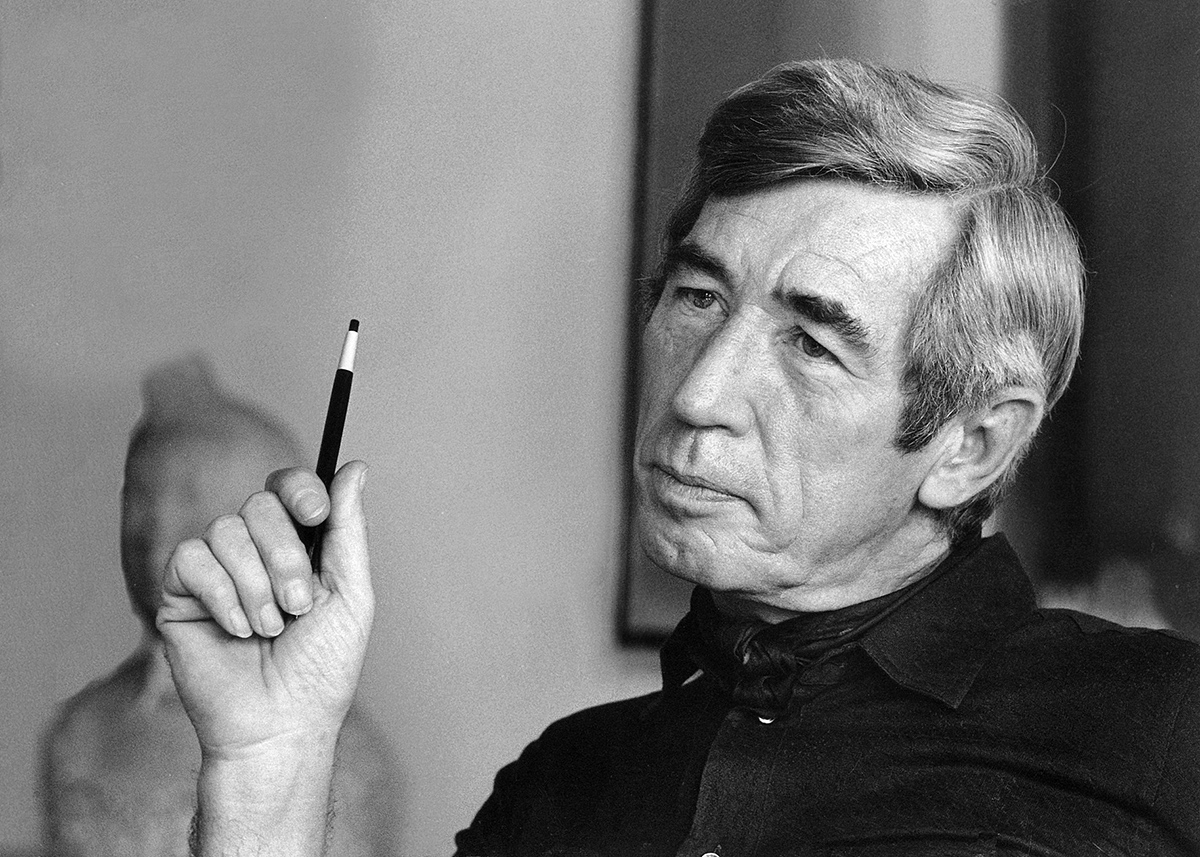
Behind this veritable pillar of the comics world lies a tormented man. Hergé, real name Georges Remi. An ingenious (Hergé is a contraction of the first letter of his surname and his first name) and talented cartoonist, he never ceased to take his mission to heart. The result of his work? A world-renowned and read work. Even today. 250 million albums sold, translated into 110 different languages. A fine legacy. His explicit request to prevent the publication of any further albums by his heroes after his death forces us to make do with what already exists. Twenty-three albums, plus one unfinished. In any case, it's probably illusory to believe that another author, however talented, will be able to bring the reckless reporter back to life. The creative genius died with the death of his devoted Hergé.
His childhood was marked by war. His first war. Paradoxically, the man who gave so many young people the opportunity to experience joyful adventures through his drawings had a dull and difficult start in life. To escape this gloomy environment, he drew and sketched with passion. Eventually, he made it his profession. After starting out as a simple clerk at the conservative newspaper The Twentieth Century, he became a draughtsman. He benefited from the benevolence of the director at the time, Abbé Norbert Wallez. In addition to giving him a better understanding of his own personality, he introduced him to his future wife, Germaine Kieckens.
The first albums were eminently political. Tintin in Soviet land paints a vitriolic portrait, mocking the scarcity and inconsistencies of communism. The second, Tintin in the Congo, is designed to awaken the colonial ambitions of the country's next generation. His superiors see an opportunity to grab attention and spread their ideas to young people through images, which are far more powerful than text. For Hervé, it's a game. However, as the albums go by, the characters and stories gain in depth. Documentation is enriched. Somewhat instrumentalized in his early days, Hergé is slowly breaking free. He took his baby in hand.
A paradox remains. Hergé loves Brussels. Unlike his adventurer, never stingy with new horizons, he moved little. At least at the beginning of his career. We're left with the impression that he travels through his heroes. In addition, a little bit of Hergé slips into each of the key characters. Tintin is the young Boy Scout he once was, and would have liked to become. Captain Haddock, his dark, boorish, frustrated, bad-tempered side. The baffling Professor Tournesol represents Hergé's workaholism. He's a real workaholic, as if anchored to his desk. Dupont and Dupond recall Georges Remi's father and his twin brother, who wore hats and carried canes.
During the Second World War, he joined the newspaper Le Soir, which had fallen into the hands of the Nazi invaders. Upon liberation, he was criticized for his lack of commitment. Pinned down, he was banned from publication for two long years. Rehabilitated, he spent the rest of his life transforming his creation into a veritable industry. Outlets were plentiful, and so was the work.
It was here that he met young colorist Fanny Vlamynck. She turns his head. The dilemma is unbearable for a man with a serious upbringing, for whom morality counts. He suffers. After a long period of reflection, visible in Tintin in Tibet which served as a kind of psychotherapy, Hergé finally gave in. Purity, present in the aforementioned album in the white form of snow, gives way to sin. He decides to leave his wife for the young suitor. More regular travels follow. As delivered, he never stopped drawing, creating and producing. Until his death.
Write to the author: [email protected]
Photo credit: © Creative Review

You'll also like




 French
  German
  English
Leave a comment