




«Le dernier été»: a good song, but not a hit
Tuesday books - Hélène Lavoyer
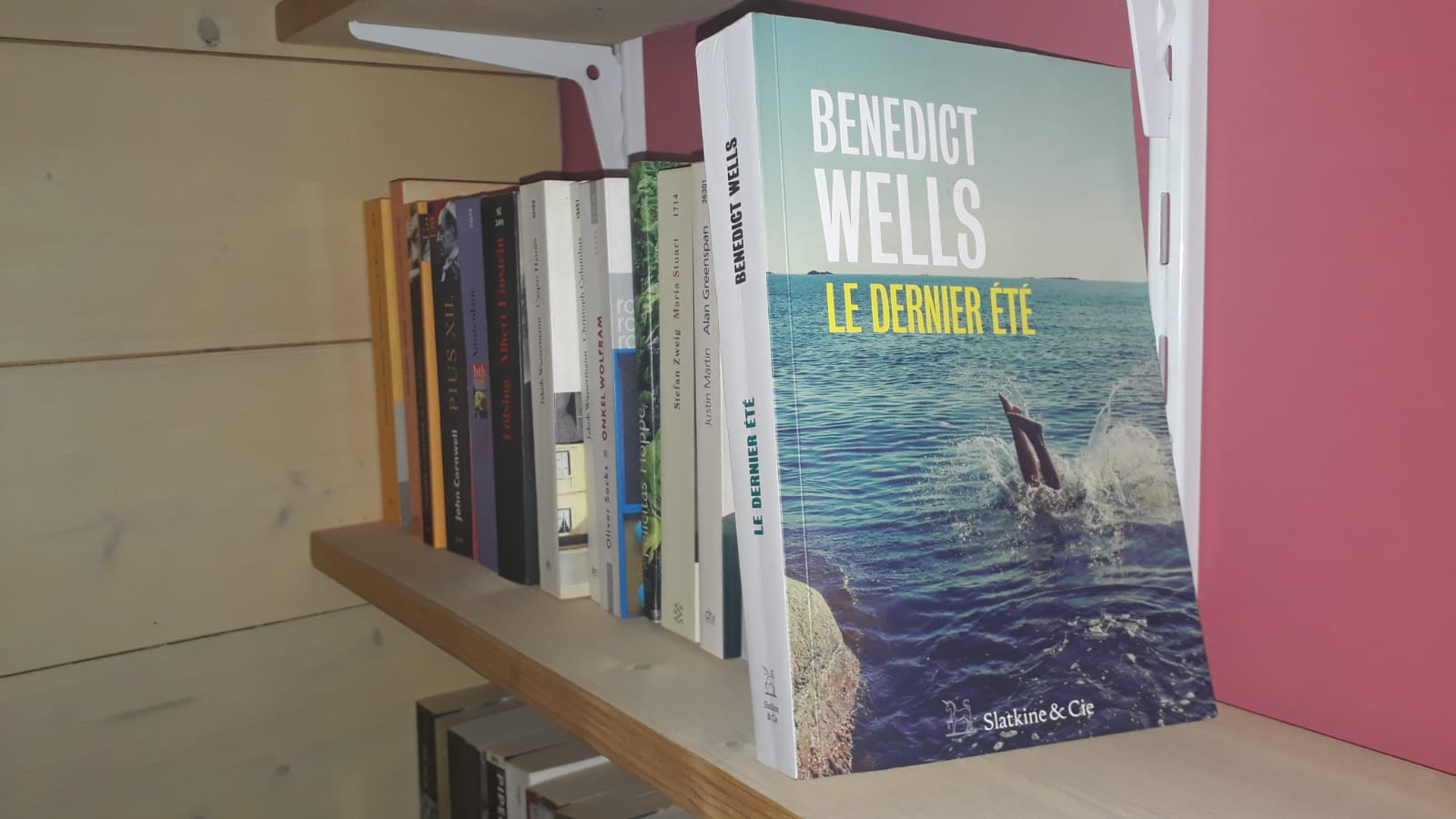
Benedict Wells's first novel, The last summer invites us to meet Beck, «a teacher on the verge of forty», who has had a string of one-night stands and one-night stands with his only friend Charlie, and who one day finds in Rauli Kantas, one of his students, the chance to seize an old dream that had been snatched from him: to become a world-famous musician. Rauli is young, unaware of his talent, and Beck, in an existential crisis, already imagines Rauli, Charlie, himself and Lara, the first woman - and only person - who can make him feel that strange, unsettling emotion of genuine attachment.
La première tranche de l’histoire est profondément habitée par le thème de la musique; Beck découvre le prodige qu’est Rauli, et se met à lui écrire des chansons, il rêve à nouveau. Après que l’on s’est bien installé dans l’histoire, rythmée par quelques péripéties mais globalement banale, après que l’on s’est finalement attaché à Beck, antihéros blasé et passif, après que l’on a appris à appréhender le caractère secret mais profond de Rauli et celui de Charlie qui devient tôt un malade mental à cause des drogues et de la fête, le roman finit par muer pour sa deuxième partie. Elle nous entraîne pour un road trip which takes Rauli, Beck and Charlie all the way to Istanbul.
For the structure of his novel published by Slatkine & Compagnie, Benedict Wells has chosen two parts entitled «FACE A» and «FACE B», like a vinyl record, and with each chapter the title of a song indicating a short summary of what's to come. An interesting choice, given the musical theme that runs through most of the novel. As the pages turn, the reader's eye wanders between the lines, quickly forgetting that he or she is reading and living with the narrator the story of Beck, a thirty-seven-year-old adult who contemplates the passage of time and the events of his life, without being a real player until Rauli arrives.
«We already knew we'd never see Rauli in an apron serving burgers or extending credit in a business suit. He'd find a job where he could earn a living keeping his own clothes.»
The last summer ne démystifie pas la vie d’adulte telle qu’on la conçoit à l’âge de vingt ans. Elle reste marquée par les réminiscences et par tout ce que la jeunesse promettait et qui s’est trouvé, au fil des choix et des impositions, happé par le grand tourbillon de l’impossible, du lointain, du rêvé au goût souvent amer. L’adolescence, au travers de Rauli, reste ce moment d’indécision et de crainte que l’on décrit souvent dans les bouquins de psychologie, mais aussi ce moment auquel c’est la passion qui guide le cœur, énergie increvable et qui en renvoie au visage de ceux qui n’ont pas réussi (c’est-à-dire Beck).
Benedict Wells' writing is simple, blending short sentences with longer ones with fluidity, without ever abandoning sobriety. The language is banal, everyday, and it's precisely this that allows the reader to connect with the characters, whose thoughts are rarely or never described, as in the case of Rauli, Lara and Charlie. It's a quick read, and it's easy to imagine the scenes and characters; a small subtlety is that the narrator has a special bond with the main character, which isn't explained until after a good chunk of the novel has been swallowed, piquing the reader's curiosity.
Even so, the novel remains rather defeatist, with an ending that doesn't really offer refuge or hope for those who haven't lived the life they wanted. It does, however, emphasize the importance of the energy of love. Beck doesn't have it, he seems extinguished, and only moments with Lara or his love of music keep him alive and creative - along with, of course, suffering.
«Après le repas, ils étaient sur le balcon avec Lara, ils fumaient. Il faisait frais, tous deux avaient mis leurs vestes. Beck repensait à leur sortie en boîte de la veille et à sa haine de la danse. Danser, c’est bon pour les connards qui s’appellent Niko ou André, pensa-t-il, et pourtant c’est le cas de Lara. Elle m’est tellement étrangère, se dit-il, elle est beaucoup trop jeune, qu’est-ce que je fous là sur ce balcon avec elle? A cet instant, elle lui sourit. Beck lui rendit son sourire sans le vouloir avant de comprendre qu’il le voulait, car il se sentait d’un coup pousser des ailes. Il l’observa de profil et n’éprouva à nouveau ce sentiment qu’il l’aimait bien, simplement.»
Benedict Wells
The last summer
Editions Slatkine & Compagnie
2018
402 pages
Write to the author: [email protected]
Photo credit: © Hélène Lavoyer for Le Regard Libre
You'll also like





 French
  German
  English
Leave a comment