




«Le dernier été»: a good song, but not a hit
Tuesday books - Hélène Lavoyer
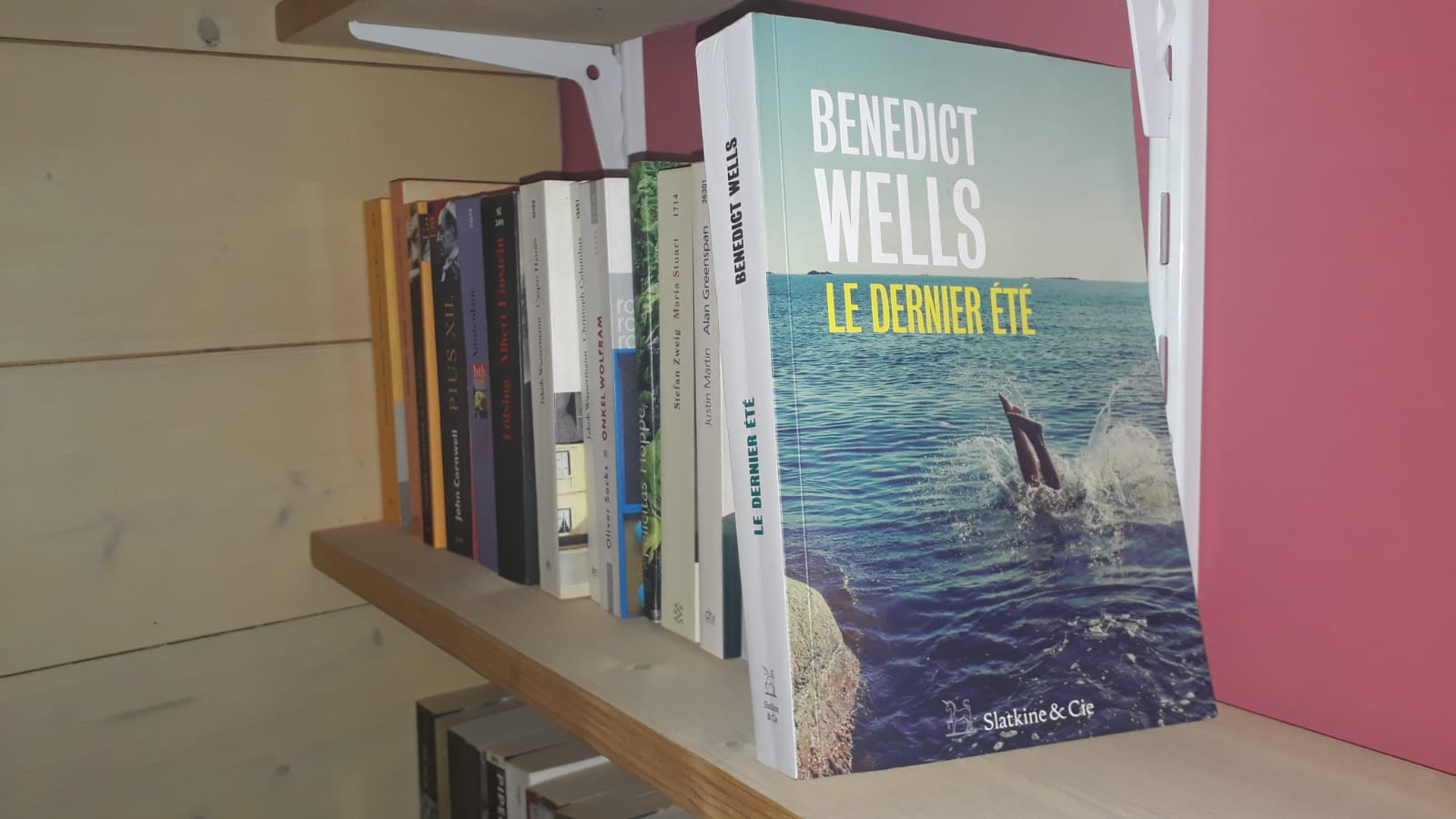
Benedict Wells's first novel, The last summer invites us to meet Beck, «a teacher on the verge of forty», who has had a string of one-night stands and one-night stands with his only friend Charlie, and who one day finds in Rauli Kantas, one of his students, the chance to seize an old dream that had been snatched from him: to become a world-famous musician. Rauli is young, unaware of his talent, and Beck, in an existential crisis, already imagines Rauli, Charlie, himself and Lara, the first woman - and only person - who can make him feel that strange, unsettling emotion of genuine attachment.
The first part of the story is deeply inhabited by the theme of music; Beck discovers the prodigy that is Rauli, and starts writing songs for him, dreaming again. Once we've settled into the story, which is punctuated by a few twists and turns but is, on the whole, banal, once we've finally become attached to Beck, the jaded, passive anti-hero, once we've learned to appreciate Rauli's secretive but profound character and that of Charlie, who soon becomes mentally ill as a result of drugs and partying, the novel finally shifts into its second part. It takes us on a road trip which takes Rauli, Beck and Charlie all the way to Istanbul.
For the structure of his novel published by Slatkine & Compagnie, Benedict Wells has chosen two parts entitled «FACE A» and «FACE B», like a vinyl record, and with each chapter the title of a song indicating a short summary of what's to come. An interesting choice, given the musical theme that runs through most of the novel. As the pages turn, the reader's eye wanders between the lines, quickly forgetting that he or she is reading and living with the narrator the story of Beck, a thirty-seven-year-old adult who contemplates the passage of time and the events of his life, without being a real player until Rauli arrives.
«We already knew we'd never see Rauli in an apron serving burgers or extending credit in a business suit. He'd find a job where he could earn a living keeping his own clothes.»
The last summer doesn't demystify adult life as we understood it in our twenties. It remains marked by reminiscences and by all that youth promised and which, as choices and impositions were made, found itself caught up in the great whirlpool of the impossible, the distant, the dreamed of, often with a bitter taste. Adolescence, through Rauli, remains that moment of indecision and fear often described in psychology books, but also that moment when passion guides the heart, an indestructible energy that throws it back in the face of those who didn't make it (i.e. Beck).
Benedict Wells' writing is simple, blending short sentences with longer ones with fluidity, without ever abandoning sobriety. The language is banal, everyday, and it's precisely this that allows the reader to connect with the characters, whose thoughts are rarely or never described, as in the case of Rauli, Lara and Charlie. It's a quick read, and it's easy to imagine the scenes and characters; a small subtlety is that the narrator has a special bond with the main character, which isn't explained until after a good chunk of the novel has been swallowed, piquing the reader's curiosity.
Even so, the novel remains rather defeatist, with an ending that doesn't really offer refuge or hope for those who haven't lived the life they wanted. It does, however, emphasize the importance of the energy of love. Beck doesn't have it, he seems extinguished, and only moments with Lara or his love of music keep him alive and creative - along with, of course, suffering.
«After dinner, they were on the balcony with Lara, smoking. It was cool, and they had both put on their jackets. Beck was thinking about their clubbing the night before and his hatred of dancing. Dancing's only for assholes called Niko or André, he thought, and yet that's the case with Lara. She's such a stranger to me, he thought, she's much too young, what the hell am I doing up here on this balcony with her? At that moment, she smiled at him. Beck unintentionally returned her smile before realizing that he wanted to, because he suddenly felt like growing wings. He looked at her in profile and felt once again that he simply liked her.»
Benedict Wells
The last summer
Editions Slatkine & Compagnie
2018
402 pages
Write to the author: helene.lavoyer@leregardlibre.com
Photo credit: © Hélène Lavoyer for Le Regard Libre
You'll also like





 French
  German
  English
Leave a comment