



Requiem for the album (≈1965-1995)
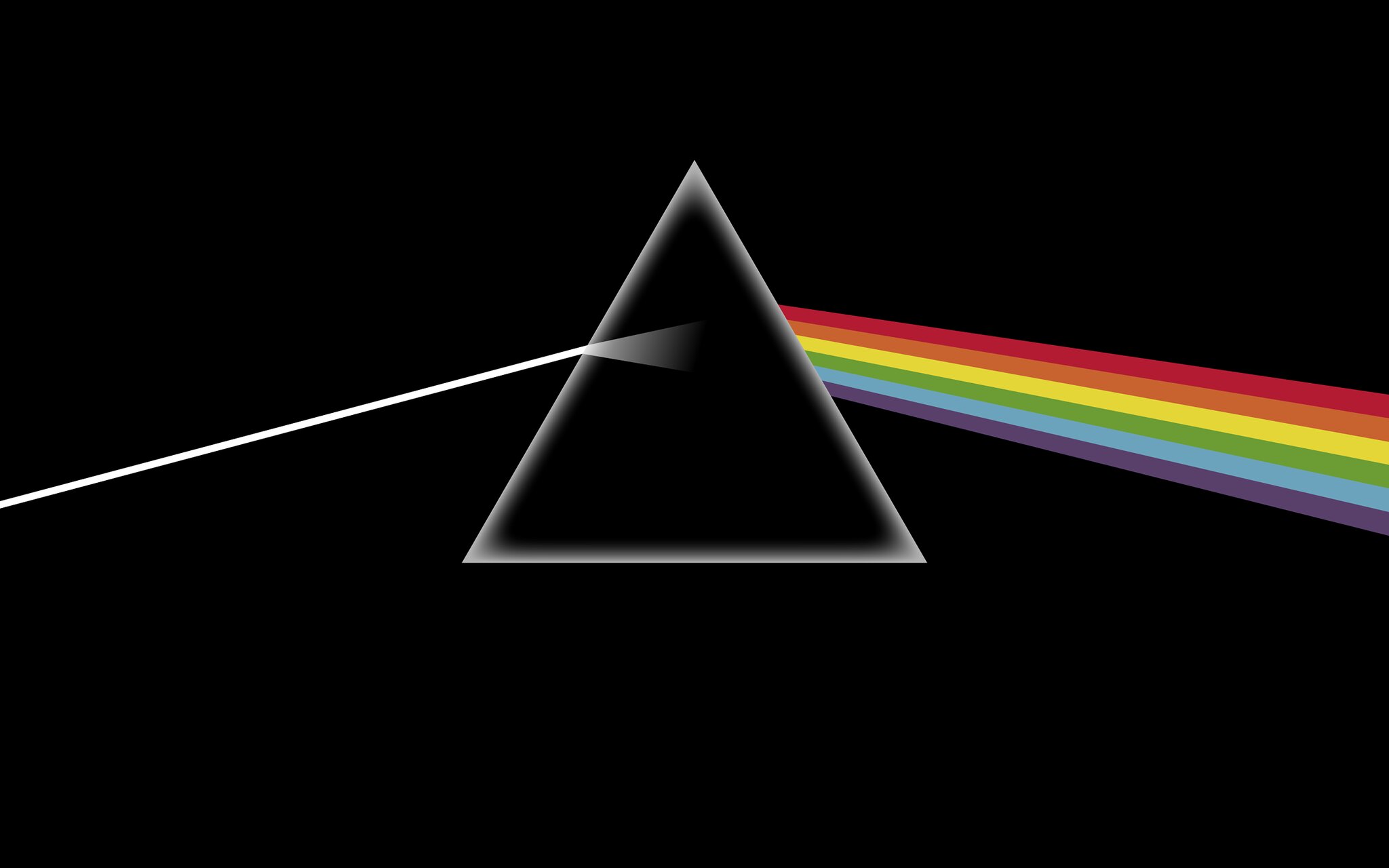
Extract from the cover of «The Dark Side of the Moon» (Pink Floyd, 1973), one of the best-known albums and a beautiful metaphor for the 60s. Photo Rick (via Flickr, licensed under CC BY-NC-SA 2.0)
With progress, it's easy to know what you're gaining, harder to know what you're losing. So let's take this opportunity to perform an autopsy on the lovely corpse that is the pop album format.
The album was born in the second half of the 1960s and died around 1990. This gives it an age of 25-30 years at the time of death, roughly the life expectancy of a horse or a dolphin. Over this brief period, albums sold better than singles, which is all the more remarkable given that they are obviously more expensive.
Before this, music producers generally saw the album as a simple collection of singles, sometimes recorded several years apart and sometimes even selected without the artist's knowledge. Hence the need to specify on the cover which songs were included. Thus, the Beatles' first album, Please Please Me – particularly significant in symbolic terms, insofar as they themselves largely initiated the advent of the king album - not only bears the title of a single present within it, but also specifies on its sleeve the name of a second («... With Love Me Do and 12 other songs»). In other words, the distinction between compilation and thealbum was frankly thin.
Read also | 1966-1971: a golden age nobody lived through
With the Beatles, but also Bob Dylan and the Beach Boys, the album became a coherent artistic statement. Covers became increasingly «artistic», and the artists' faces (and even their names!) even disappeared from some of them. In the highly influential Srgt Pepper's Lonely Hearts Club Band (1967), followed by their Abbey Road (1969), transitions were introduced to link certain tracks together. With the great Pink Floyd albums of the 1970s, it became virtually impossible to extract a single song from the rest of the album, so much so was the album constructed as a coherent whole, rather like a classical symphony, with several «movements» and melodic themes recurring repeatedly.
Then digital downloading, the ancestor of streaming, arrived, putting an end to this golden parenthesis of the king album. The CD had already increased the time limit to 80 minutes (rather than 40-60). Which, as composer Samuel Andreyev reminds us in our conversation Transmission, could be a trap, or a poisoned gift. Many artists rushed to fill this space by making albums that were bloated, less dry, too fat. Today, the personalized playlist has buried the album. Like a metaphor for an age in which fragmentation has replaced cohesion. Although the playlist also offers a form of cohesion between several songs, according to other criteria than the album: the author of these lines being a playlist obsessive, it would be particularly hypocritical to see only a loss in this mutation.
Read also | Music in tune with streaming
Let's conclude, however, with three less than gratifying observations. Firstly, the end of the album coincides with the explosion of passive listening and the fall of active listening. We're certainly hearing a lot more music than we used to. listening less. Fragmentation doesn't stop there, and Spotify now offers the possibility of discovering new singles with 30-second extracts. pieces of pieces. Finally, this fascination with fragmentation, difference, transgression and deconstruction - and, symmetrically, the demonization of coherence and cohesion, associated with fascism - was itself, ironically, initiated by those who were able to consecrate the album format: the artists of the 1960s-70s.
This is one of the possible readings of what is undoubtedly the best-known album cover: that of The Dark Side of the Moon, by Pink Floyd. It shows a ray of light diffracting into the colors of... the rainbow.
The essayist Pierre Valentin, author of Malaise dans la génération Z («Malaise in Generation Z») (Gallimard, May 2026), talks to intellectuals on his YouTube channel «Transmission».
You have just read an open-access article published in our paper edition (Le Regard Libre N°127). Debates, analyses, cultural news: subscribe to support us and access all our content.

You'll also like





 French
  German
  English
Leave a comment