



Madame Bovary, that's us!

Les bouquins du mardi - Special edition «Les coronarétrospectives de la littérature» - Jonas Follonier
I was looking forward to one day writing about Madame Bovary, my favorite novel, even though I've never actually read it (see below). In my opinion, there is nothing of importance that has been written that is not contained in this work by Flaubert. A book about nothing, but where everything is present, against a backdrop of boredom and repetition. Commentary.
Madame Bovary, which Flaubert wrote in fifty-three months. The Charterhouse of Parma in fifty-three days, draw whatever conclusions you like), recounts the daily life of Emma Bovary, a woman married to a provincial doctor who pursues adulterous relationships to alleviate her boredom. But the repetitive nature of Emma's bovarysm - a psychological phenomenon of dissatisfaction named after Flaubert's classic - perpetuates rather than kills boredom. Beyond the plot, which is not a plot at all, centered around the main character and her actions, it is the province that is Flaubert's literary material in this novel. A novel which, incidentally, is not subtitled «novel» and which strips Emma of her identity by naming her «Madame Bovary» in the title, thereby demonstrating her status as an example among others.
Boredom, a gift from God
Everything in Madame Bovary, is boredom. Starting with the reading. What an ordeal for the reader to read this book as a book, from beginning to end! It's undoubtedly because of the boredom intrinsic to Flaubert's tale of nothing - for yes, it's a «book about nothing», by the author's own admission - that I've never read this book. It's my bible, but I've never read it. I'm exaggerating, it was for the word: I've read it, but never continuously. I have read Madame Bovary in fragments, perhaps I've even read it dozens of times in total, but I've never read it. Anyway, moving on. In addition to the lack of interest in the fate of this provincial woman who spends her life expecting to live better than she is living, it's Flaubertian writing itself that conveys this omnipresent boredom: use of the imperfect subjunctive, description of biotopes to the point of saturation, duration of unimportant actions - the important ones, on the other hand, take from zero to one sentence each.
Read also: Stlaker, a metaphorical Tarkovsky's metaphorical film to (re)discover
It is enlightening to recall the genesis of Madame BovaryFlaubert went to Egypt with Maxime Du Camp, who was there to take photographs, and was so bored by the trip that he came up with the idea of a bored woman in Normandy, as he sailed down the Nile (according to Du Camp). All he needed was a plot: Flaubert was a lucky man, with a story whisked to him by Louis Bouilhet, his other great friend. In any case, for Flaubert, it's not the story that counts, it's the form! «L'histoire d'un pou vaut bien celle d'Alexandre», he said. And so it is that boredom is central to a work that was itself spawned by a period of boredom.
On this subject, Frédéric Beigbeder, who is interviewed in our magazine edition to be published next month, The world is unreal, except when it's boring«. And it's true. Flaubert pulled off the brilliant trick of creating his work - and his character - in his own image: Emma is bored in her hole, just as Flaubert was bored on the waters of the Nile. »Madame Bovary is me,« exclaims the writer somewhere in a letter. The most evocative image of Emma Bovary's universal boredom is her eternal posture at the window. Flaubert believes that country people stand at their windows the way city dwellers go to the theater. Ennui, quand tu nous tiens! There's also something sensual behind that feeling of pleasure with her forehead against the window. But Emma's sensuality, Fabrice will explain it better than I can..
Automatons that that we are!
Another central matrix of Madame Bovary - which has nothing theoretical about it, the reader gets it right in the face: repetition, linked to boredom. Another value of the imperfect, you'll note. Let's take a step back. What is Madame Bovary, if not a masterpiece of the 19th-century cultural and artistic movement of realism.th century? Well, realism, as Flaubert claims, is designed to produce an effect of reality. Contrary to what we've heard all too often, this literary genre aims to reproduce reality. likely - that is, what the public is likely to believe - not reality. This literature is not based on reality, but on itself, like all literature in the end. For what better place to find examples of the illusion of reality than in illusion itself, namely art? All literature, then, thinks only in its own terms.
Madame Bovary is no exception to the rule. And the reproduction of the real is so present that it can be found in all kinds of reproductions. Repetition is general in Madame Bovary: the repetition of Emma's moves, illusions and disillusions; the comedy of repetition; accumulations of all kinds; imitative harmonies in the sound of sentences; the characters« repetition of words they hear in their social environment - those famous conventional formulas, of which "couci-couci, between zist and zest»is the most hilarious example. Let's not forget that the subtitle of Madame Bovary is «Mœurs de province»: Flaubert describes the habits and customs of Normandy, which he knew well, living near Rouens. His social life was very limited, and he preferred to spend his life writing, sharing a flat with his mother, then with his sister.
«Madame Bovary is suffering and crying right now in twenty French villages at once».»
(Flaubert, «Correspondance»)
All this brilliant assembly of parrot echoes denounces the parrots that we human beings are. A bunch of automatons with no real freedom, courage or satisfaction! Faced with this implacable observation, which demands the lucidity of a Flaubert, the question is: what's left for us? Answer: art. As always. Art as a way out of the absurd in the thought of Albert Camus. For Flaubert, as we know, art is form. For him, «sentences are adventures». They constitute his absolute. But art is also a way of mocking our species, through irony. Flaubert's use of irony includes free indirect discourse and italics, highlighting ready-made expressions and idiolects. There's no mockery of provincials in this novel: the city-dwellers who make up the book's readership are taken in by their own «I» when they think they're venturing into exotic everyday life. For Madame Bovary is all of us.
Write to the author: jonas.follonier@leregardlibre.com
Cover image cover: Illustration by Charles Léandre for Madame Bovary by Flaubert, engraved by Eugène Decisy. Off-text illustration on page 213: «Bovary watching his wife and daughter sleep», 1931.
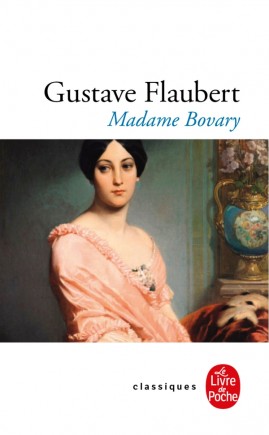
Gustave Flaubert
Madame Bovary
Editions Le Livre de Poche
2019
672 pages

You'll also like




 French
  German
  English
Leave a comment