



Philippe Claudel: «How will future centuries judge your era?»

OLYMPUS DIGITAL CAMERA
Le Regard Libre N° 48 - Loris S. Musumeci
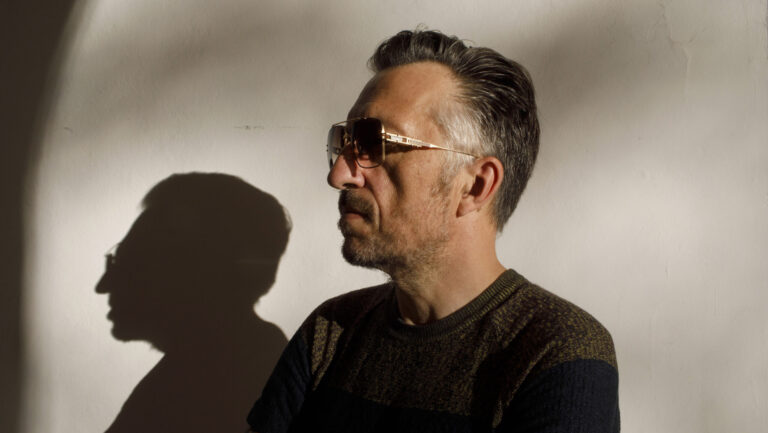
PPhilippe Claudel is one of the leading figures in contemporary French literature. But his artistic talents extend to theater and film as well. He is also a member of the prestigious Académie Goncourt. His latest novel, The Dog Archipelago, tells the story of an island where, one fine morning, three bodies of Black men are found washed up on the beach. Migrants. For whom the hope of a better life elsewhere has been drowned forever. The island’s residents see these bodies as a threat to their future. They must get rid of them.
This exceptional event was made possible thanks to the Alliance Française de Fribourg and its president, Madame Monique Rey.
Loris S. Musumeci: What inspired you to write? The Dog Archipelago?
Philippe Claudel: A writer isn’t someone who lives apart from the world. He’s someone who lives in the world of people, in today’s world, and who is no different from others. A great deal of information and events come his way and affect him. The difference between a writer and others lies in the hypersensitivity that the writer develops. Once a writer is moved in a unique way by an event, a desire to create fiction is born. In my case, I’ve always been interested in the fate of others—in the figure of the person living next door, on the other side of the border, the one who aspires to integrate into a community that isn’t their own of origin. I have explored this type of character in my previous books. And of course, after the collapse of the Syrian and Libyan regimes, significant waves of migrants began arriving in Western Europe, bringing with them the challenges of reception that this entailed. So it seemed relevant to me not to address the phenomena of migration per se, but rather to address our own situation—that of living alongside, with, for, or against these men and women who aspire to come to our country.
In that sense, is your novel a plea against our era? In the first chapter, a sort of divine voice does indeed ask, «How will future centuries judge your time?»
When you're living in We are rarely in a position to judge or assess our own era. Yet when we look at history—even recent history—we tend to pass judgment quite easily and quickly. On the other hand, we fail to realize that we ourselves will be subject to judgment in the near future. So I wanted to invite my readers to imagine how future generations will judge our actions—or our failure to act.
And yet, I still get the impression that you’re being very cautious in your judgment. It seems to me that this is linked to the fact that the characters are «gray souls.» A statement by the Mayor—which I consider central—truly conveys the difficulty of passing judgment: «You understand what I mean,» the Mayor continued, “and you know full well that I am neither a scoundrel nor a heartless man.”
Yes, of course. This is at the heart of the complexity of human nature. I always try to avoid jumping to conclusions. I’m in no position to judge others. I’m neither better nor worse than anyone else. I simply try to present situations by bringing together people who embody certain attitudes. That’s why the characters in the book are identified by their roles, and each is responsible for a particular aspect of the story—whether political, as in the case of the Mayor, or religious, as with the Priest. And based on that, if there’s a particular moral to be drawn, it’s up to the reader to draw it. I do not judge the characters I portray. The Mayor, in particular, who may come across as more black than gray, also has his reasons for acting the way he does. He is willing to get his hands—and his soul—dirty to protect his community.
Especially since he himself is also a victim of the situation, whether because of the island’s geography or because of all the pressure he’s under.
Absolutely. In fact, the mayor embodies the difficulty of politics. It’s very hard to govern a country; we’re seeing that clearly in France today. We even go so far as to wonder whether it’s really possible to govern. Either we let our country drift, or we try to make decisions to ensure the cohesion of the community.
Regarding the form of The Dog Archipelago, it reads like a crime novel: the dialogue is prominent, and the chapter breaks build suspense.
Absolutely. I’m always concerned with engaging the reader and working at the intersection of literary genres. I also constantly try to reinvent the novel form by giving it different voices. You can’t write today the way Balzac did. Many still do, but it would be like me showing up in Fribourg tonight dressed in 1830s clothing! What would shock us in terms of clothing wouldn’t it also shock us in terms of literature? Balzac’s realistic writing was magnificent when used in his time; practiced today, it would be a bit outdated. What interests me, then, is revitalizing the novel. For The Dog Archipelago, this is a text that falls somewhere between a parable, a detective story, a metaphysical tale, and a fable. What’s more, it draws on ancient roots through the coryphaeus’s words at the beginning.
What is particularly interesting about the techniques used in detective fiction?
As soon as you have a crime scene, a corpse, and so on, the reader naturally wants to know who killed whom, how, and why. Writing a mystery novel, however, is no easy task. Fortunately, I have mentors like Simenon, Leonardo Sciascia—a Sicilian author who blends crime fiction with metaphysical storytelling—and, of course, since we’re in Switzerland, Friedrich Dürrenmatt. Dürrenmatt has a knack for setting up a whole scenario of suspense, even though, in the end, the investigation to find out who the culprit is doesn’t really matter; what matters is the exploration of the human soul. So, in my novel, the essential element isn’t the discovery of anything in particular, but the investigation itself.
The element of fable is also very present—why did you choose not to name any real places or mention any dates?
In fables, fairy tales, and myths, specific time periods are rarely specified, so that the story can have universal appeal. It would be too easy to limit the events to Lampedusa in 2016, from October to December. One of the early drafts of the text was written in that spirit, and I found it too realistic and too reductive.
Too moralistic, too?
No, I was simply afraid that my novel would become outdated too quickly and that readers would think it didn't reflect their own lives today. That's what I had done in The Brodeck Report where at no point is there any mention of Germany, Jews, or the Holocaust. We are dealing with something even more detached from reality, to the point of achieving the universal significance that myths have always possessed.
In addition to being a writer, you are also a filmmaker and a member of the Académie Goncourt. How did you react to the latest winner? Their children after them by Nicolas Mathieu?
It was the book I’d been carrying around all summer. I’d discovered it before my coworkers and encouraged everyone to read it. I worked hard to make sure my colleagues at the academy would read it and love it. I did everything I could to ensure this book would be recognized. Admittedly, this is only the author’s second book, and in principle I’m somewhat hesitant to award a prize to an author early in their career; that’s why I wasn’t very supportive of awarding the Goncourt Prize to Leïla Slimani in 2016 for Gentle Song. But with Nicolas Mathieu, it’s different. He’s already in his forties, and his first book, War on the Animals (2014) was very strong. And you can tell he has real potential. Furthermore, Their children after them It completely captivated me in so many ways: on the one hand, it displays a consummate mastery of the novel form and chapter structure; on the other hand, it is an ambitious narrative because it tells the story of a generation of young people who are rarely portrayed in contemporary French fiction. The characters are strong; the scenes are absolutely exceptional. Finally, the language is beautiful: well-written, original, and unique.
You and Nicolas Mathieu have one thing in common: an interest in the human soul.
For one thing, there’s a geographical closeness between us, because he’s from Lorraine, just like me. I know the world he writes about inside and out. Indeed, he’s committed to exploring the human condition and shining a spotlight on characters we rarely see in French fiction. You know, French fiction is essentially Parisian. Most literary works come from authors who live in Paris and write about Parisian life. But Paris isn’t France—it’s just one region, and a very specific one at that. That’s why it’s refreshing to have writers like Nicolas Mathieu who offer something different.
You, too, offer something different from what’s being done today—in particular, by refusing to write about World War I.
I refused to write many articles to mark the centennial, which began in 2014 and ended late last year. I asked that the young people who died in that war be left in peace. It’s been a hundred years; it’s time to stop now. This stems in part from a misunderstanding: Grey souls (2003) isn’t really a novel about World War I. What interested me more was drawing a parallel between the death of a murdered child and the deaths of thousands of young men on the other side of the hill. The novel was actually inspired more by the war in the former Yugoslavia. Just an hour and a half by plane from my home, massacres were taking place. As I sat there smoking and quietly having a drink on a café terrace, I felt guilty that there was nothing I could do. That is the backdrop for Gray Souls. Of course, as someone from Lorraine who lives in a region deeply marked by World War I, I’m strongly influenced by it. Every year, when I go mushroom hunting, I find shells, and my family stories are connected to that as well.
Are you currently exploring a particular world for your next novel?
I always have several projects in the works: short stories, novels, plays, and screenplays. I have various files open, and each one is progressing at its own pace. So, to be perfectly honest, I don’t know which of my books will be published next, because there are several taking shape. In any case, there’s a lot of variety in what I’m writing right now. What France has been going through over the past few months concerns me deeply. In fact, I started a novel two years ago called *La horde*, which is about people leaving their jobs to gather on the roads. But will I continue it? I also have other projects, particularly political novels. But I don’t know which ones will be published and which won’t.
We'll see.
Yes, and in any case, I’ve always valued, in writing, that immense freedom to do whatever one wants—or not to do it at all. Of all the arts, it is the one that allows people to be the freest. To write—unlike music, film, or painting—you don’t need anything: no instruments, no money, and no special equipment. All you need is a notebook, a pen, or a computer—things that are within everyone’s reach. In that sense, writing is truly a realm that’s a joy and a pleasure to explore.
Write to the author: loris.musumeci@leregardlibre.com
Photo credit: © Loris S. Musumeci for Le Regard Libre
-
 Le Regard Libre - N° 48CHF10.00
 -
 Standard subscription (Switzerland)CHF100.00 / year
 -
Support subscriptionCHF200.00 / year
You'll also like



 French
  German
  English
Leave a comment