




When lesbian passion becomes letter writing
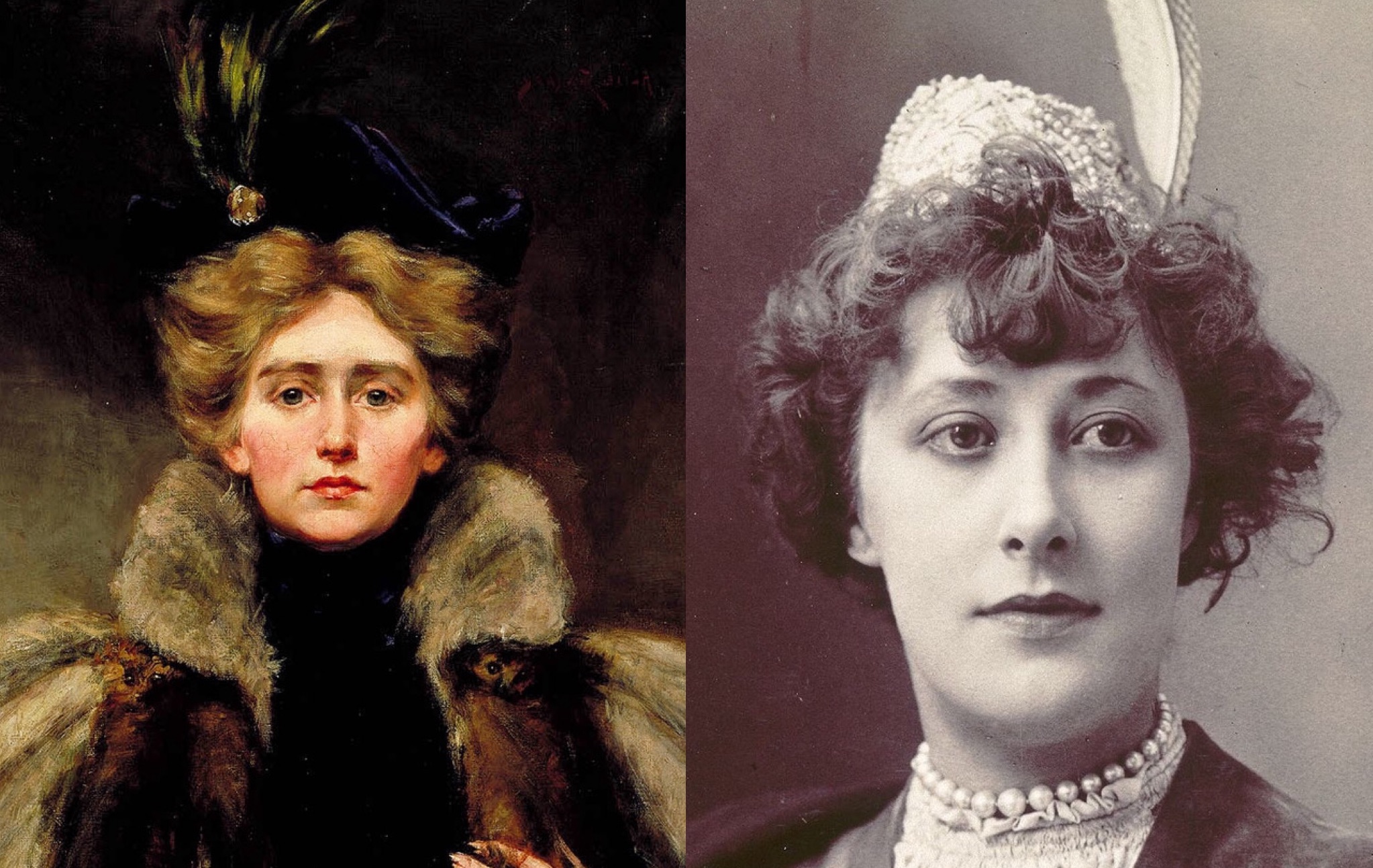
The last year of the 19th centuryth In the 19th century, a passionate romance blossomed between two women in the French capital. And not just any women: one was a wealthy heiress from across the Atlantic, the other a courtesan, among the most famous of her time. And since this romantic flame was captured in letters exchanged between the two women, what a pleasure it is to see them published by Gallimard more than a century later.
Anne-Marie Chassaigne, whose stage name is Liane de Pougy, is a dancer. She leads the life of a «demi-mondaine»—that is, a woman supported by a wealthy Parisian; a life of promiscuity, in short. After breaking free from her first husband—who had shot her in the back following an affair—she pursued multiple romantic relationships, with both women and men. An openly bisexual woman—if such labels have any meaning at all—she chose the most prestigious lovers from among this hypothetical audience. Described as «the prettiest woman of the century» by Edmond de Goncourt, her charm, tinged with her Spanish heritage, is undeniable—it is more than just a certain charm.
Read also | Happy days, our series on the correspondence between Corinna Bille and Maurice Chappaz
This beauty, so widely discussed by turn-of-the-century authors and the press alike, did not fail to make an impression on a new and discreet admirer, Natalie Clifford Barney. Natalie is a well-to-do twenty-three-year-old American who has just arrived in Paris and appears dressed as a Florentine page on the cusp of becoming a courtesan. There have been more conventional ways to make an entrance. Surprisingly or not, it worked. Liane de Pougy succumbed to the charms of the young woman with sapphic desires. It was the beginning of a whirlwind romance. The daring Natalie became her «beloved.».
Two foreigners
From this love, we retain what is most precious: the way these two women feel and express it. These famous letters, collected under the title «Love correspondence». Beyond the utterly unique and thrilling romance, the literary flair of this collection is very much present. While scholars of ancient Rome had already racked their brains trying to determine the legitimacy of the epistolary genre and at what point a letter becomes, strictly speaking, literary, here there is no room for doubt, insofar as Natalie Clifford Barney already possessed the calling of a poet and novelist—a calling she would later fulfill. Even though Liane de Pougy responds with words that also move the reader, one cannot help but notice that her young lover has far more style.
«I'm a stranger to you, but you're my beloved because - and keep my secret well - on evenings when you're alone with sleep I ride on a moonbeam (the steeds of my distant country) that leads me in haste to the prettiest flower in the world.»
Love is strange in that it binds two strangers together in intimacy. This is something this young lady—whom everyone would dream of having as their sweetheart—understands well. Contrary to what you might hear at any dinner party, loving someone isn’t about getting to know each other. It’s about learning to live with the fact that the more you know the other person, the less you really know them. In other words, love and misunderstanding have been intertwined since the dawn of time. Hence the sometimes appealing nature of the unattainable. Especially that kind of unattainability that might one day become attainable. Liane de Pougy is desired by Natalie Clifford Barney simply because she is so far away, so high up. However…
«Yet you exist, for it was indeed you who wrote these letters to me, and if you exist, there is only one path for me in life: the path that leads my kiss to your lips!»
Through her letters to Liane de Pougy, Natalie Clifford Barney takes us deep into her innermost thoughts with her profound reflections. Her letters are philosophical and grounded. They remind us that the paradox of love is the paradox of what is fundamentally a travelthe road to the destination, it is the real destination. But this road is for something. And that something—the destination itself—seems to shatter the magic of the journey as soon as it is reached. But then the discovery of a land—whether untouched or not—can, and must, follow. That is love. That is life.
Court life rather than a life of love
«I almost hope that seeing you will make me forget you; then I’ll be able to continue my monotonous refrain: «She doesn’t understand, and I move on.» Am I searching for the elusive? For better or worse, I’ll never have the sorrow of realizing my ideal, so perhaps I’ll give up on idealizing reality!»
The mutual discovery between these two women will initially unfold as the most fiery of passions. They will listen to each other fall asleep. They will wallow in their desires. They will love each other to the point of death. They will drain each other’s souls until they are destroyed. Alas, this was bound to happen for a couple so deeply intertwined and so shaped by the allure of secrecy and the uniqueness of their intellectual, sensual, and sexual encounters. The depression of the comedown follows the illusions of a fleeting high. Liane de Pougy will not heed her lover’s calls for emancipation and will remain in her world of ridiculous aristocracy—a world that shares with love its fleeting nature, but lacks its simplicity and authenticity.
But Natalie, who sleeps among the roses that Liane never gave her, isn’t about to let that discourage her. She’ll go from one romantic relationship to the next, crafting a life filled with countless liaisons and earning herself the nickname “Amazon.” And since she does exactly as she pleases—for she remained a young woman at heart until her death, unlike Liane de Pougy, who was an Emma Bovary from the moment she was born—she’ll do whatever she wants with this story, which, even though it was what it was, has been. And just as Liane herself retained a magnificent memory of that one-year romance—which she would later describe as her «greatest sin»— these love letters came fully to life with their publication in 2019 by Éditions Gallimard, deeply moving readers who were by no means lesbian.
«When are you coming back? Oh, but I forget that it shouldn’t matter to me anymore. Farewell, Liane, since you’re forcing me to repeat a meaningless phrase when I feel deep down that this goodbye is compelled by so many memories. But this can happen from afar, and all I have to do is think of you to find you again!»
My love, we'll meet again.
Write to the author: [email protected]

Natalie Clifford Barney and Liane de Pougy
Love correspondence
Gallimard
2019
368 pages

You'll also like






 French
  German
  English
1 comment
[...] Read also: When lesbian passion becomes epistolary [...]
Leave a comment