



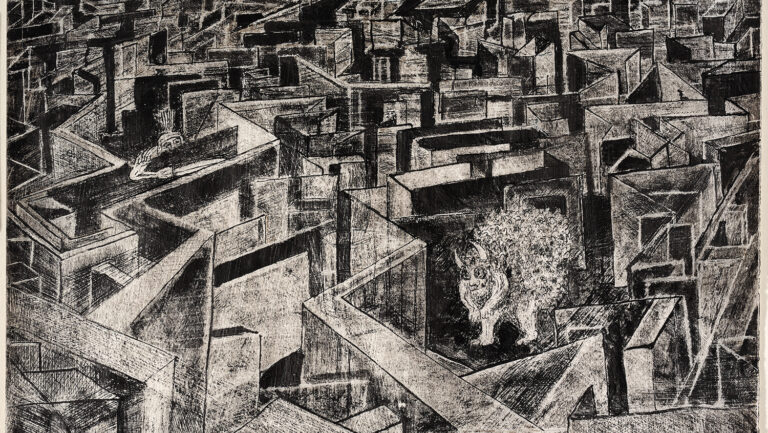
«The adversary»

Emmanuel Carrère. Photo: Wikimedia CC 2.0
«I'm sure he's not acting for others, but isn't the liar in him? When Christ comes into his heart, when the certainty of being loved in spite of everything brings tears of joy to his cheeks, isn't it still the Adversary who is deceiving him?
I thought writing this story could only be a crime or a prayer.
Paris, January 1999».»
Jean-Claude Romand: Ideal family man, conscientious son, successful doctor... and liar, murderer, madman.
His story is that of an ordinary man who, for eighteen years, lied to everyone about everything. It all came to a head on January 9, 1993, when he killed his wife, children and parents, and tried unsuccessfully to commit suicide. It was then that we discovered that he was not a doctor at the WHO as he had claimed. He was nothing. For all those years, without a shadow of a doubt, his family and friends believed him in the lie of a lifetime, but just as the truth was about to tear away the veil of imposture and re-emerge into the light, Jean-Claude Romand found no other way out than to murder «those he loved», those who would have been bruised by this suppressed truth, so old and new at the same time.
However, the most unfortunate thing about this story is that it's real. Emmanuel Carrère wrote his account of this «news item» between 1993 and 1999, and finally published it in 2000 under the silent and telling name of The Adversary.
Reading this «report» is one of those that really gives you a deep sense of unease. More than just an uneasy feeling, it is in fact a visceral anguish. Carrère succeeds in writing in such a way that the reader truly lives Jean-Claude Romand's lie, indeed we suffocate in the same narrow, dark corridor of deception, suffering with him, but also with those close to him and their ignorance of the truth. At times, we even feel like screaming out this hidden reality and hoping that someone will hear it within the pages of this book. The strangest thing, however, is the opposition of feelings towards the main protagonist's own person; at times, there's a loathsome hatred that cries and screams towards this monster who has, for almost a lifetime, vomited with all his stomach on the trust given to him on a daily basis by those who loved him, and at other times, a tender compassion for this being completely lost in his lie, which is in fact only the dirty, musty fruit of a simple crisis of youth.
Plus, the title itself, The Adversary, is full of meaning and questions. It appears for the first time at the beginning of the book, when Carrère introduces the reader to the situation and speaks of Jean-Claude Romand's parents: «They should have seen God, but instead they saw, in the guise of their beloved son, the one the Bible calls the Satan, that is, the Adversary». This evocation of the «satan» as a common noun, which then leads to the ’Adversary« as a proper noun, makes it clear that this testimony leads to a real reflection, from a more religious point of view, on the »character« of the devil and the different aspects he can embody, but above all to a problematic on evil in general, this universal »Adversary«. And it's here that we can better understand the suffering we feel when reading this report: through Jean-Claude Romand's character and his lie, we find the »Satan« in each of us, through the protagonist's »fight«, we see our own »fight« against the evil that swirls around us like a cluster of flies, daughters of Beelzebub (Hebrew: king of the flies). Our nature is to love the truth, and it is indeed the truth that sets us on the path to happiness, but when the Adversary, the Lie, arises, in apparent benignity at first, it is only the strength of remaining firmly in friendship with reality that can save us, because deep down it is in illusion that evil plunges us. We could even say that evil's hold over us is perpetual illusion, in other words: hell.
The Adversary Carrère's excellent writing brings to light the tragedy of lying and its disastrous consequences, as embodied by Jean-Claude Romand, this «victim» of evil, whom no one can judge. The only thing we can do, and indeed must do, as human beings, after reading this testimony is, in a Camusian scheme of the absurd - for lies are absurd - to become aware of and clearly identify the Lie, to rebel against it by refusing it morally but accepting the weakness of the liar's human error («accepting» does not mean «justifying»), and to fight with true love, the love of authentic friendship, in unconditional trust in the other.
Yes, this Adversary's worst enemy is undoubtedly Friendship.
You'll also like





 French
  German
  English
Leave a comment