




«The Schmock: FOG talks about Hitler's flatulence
Tuesday books - Loris S. Musumeci
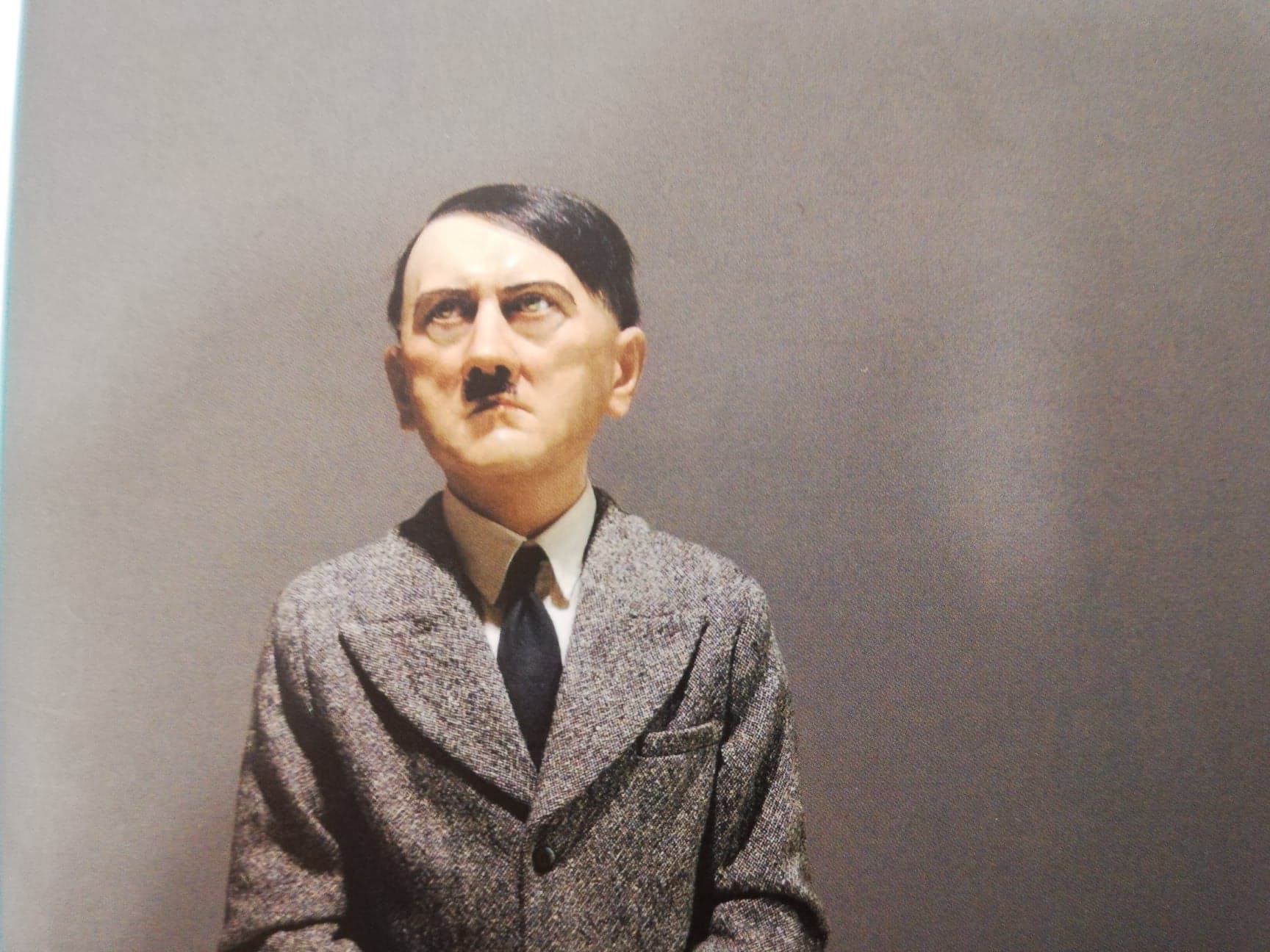
If it weren't for the book jacket with its little kneeling Hitler doll, if it weren't for the name of the author, Franz-Olivier Giesbert - FOG to his friends -, The Schmock wouldn't appeal at first glance. Another novel about the Second World War period, in Nazi Germany no less. But if you like FOG, you'll go for it anyway. All the more so as he announces on the back cover that he's been brooding over this story for a long time. The author has something important to tell us. A story of friendship, family and politics; Visit Schmock is sharing.
Heil Hitler, I want a banana
A sharing that gets off to a very bad start. We know that the writer handles derision and, above all, self-mockery with talent. We know he's sympathetic, offbeat, but rigorous. He doesn't write just to write. Following a mysterious, sensual prologue featuring the unlikely union between a Nazi officer and a Jewish fugitive, the novel jumps to 2018. Between Munich and New York, we meet two old men, one of whom holds the record for being the world's oldest man. Two zany, extroverted old men.
Funny, but you don't know where the plot is going. When an old parrot shouts «Cuckoo, senorita, Nichte salutes you well, come closer so I can kiss you, heil Hitler, I want a banana, God is not with the SS, amen», we inevitably laugh, recognizing FOG's lightness. But after a few pages of the same kind, it's all too much. A heap of nonsense that leaves only one expression on the reader's face after a short-lived laugh: disappointment.
Well-written, fluid, but catastrophic in terms of content. The massacre lasts sixty-four long pages. And as if the author had premeditated the limits of his reader's patience, he then gets down to business. At the cost of losing some readers along the way, FOG has in fact accomplished a major act in literature, that of pleasing himself. Perhaps he even wrote the first part under the influence of drink, the tastes and virtues of which he is known to appreciate - and rightly so!
FOG, a hard worker
Getting serious doesn't mean getting serious. Throughout the novel, the text retains its sense of humor. Except in passages where the seriousness of the events described calls for a certain sobriety, and where the destruction of preconceived ideas about the period, about Nazism and about Hitler, demands a certain vigor from the no-longer-laughing pen. FOG wakes us up, and teaches us a lot. Because, as he likes to say, «I'm a hard worker. Yes, he works. He's read a lot of books to offer us The Schmock. A sharing of knowledge, humor, emotions and reflections. A generous sharing that, despite its exasperating beginning, becomes precious and pleasant as it progresses.
For it to be pleasant, you need a pleasant story. A story that sweeps us off our feet. A story in which the madness of the characters can teach us about the human condition, in its joys and sorrows. In its hopes and setbacks. These are the days of series and sagas. The phenomenon may seem new, but in reality it's always been successful. If only for the thrill of following the story of a family through several generations. Nor are they constructed in the strict form of an episodic season, The Schmock takes the reader on a journey through time, Stufe bei Stufe - since we're in Germany - across three generations.
Three generations of two families, united by friendship and commerce, gradually separated by racial diktats: the Weinberger family is Jewish, the Gottsahl family ethnic German. Yet the members of these families are good, cultured people who know how to rise above the rantings of rising anti-Semitism. People who also know how to sit down with Hitler and weigh up his burgeoning ideology. FOG has a sense of character. He succeeds in portraying each member of these two families, making the reader want to get to know them better and better. To get inside them. To think with them. To be able to understand, thanks to them, how this nation of intellectuals and artists allowed, without too much concern, a sick man, a Hitler, to rise to the top. To command everything.

Hitler is a schmuck
From the characters, and the journey within them, we move on to Hitler, who incidentally gives his name to the title. «Schmock» means «fool» in Yiddish. Hitler is a schmock. At least, that's what most common-sense Germans think, most Jews who can't see the danger coming. How could such an outsider, not so bad in his early days, not so bad a painter as he was made out to be, sick in the truest sense of the word, disappointed by so many betrayals, alienate an entire country, an entire Reich?
«- I've seen photos of you with Hitler...
- I've seen it four or five times.
- What kind of man was he?
- A sad, complex character. You can never be too wary of people with complexes. He had no sense of humor. Laughter washes away everything, stupidity and meanness, but he kept them inside him. That's probably why he smelled so bad. His breath and sweat were foul. All around him, the air was unbreathable, and the sensitive characters were unwell. I'll tell you all about it, I've made lots of notes about that period. I'll show them to you.»
The reality of Hitler's character, which the author also pities at times, but mostly derides in a highly amusing way:
«Allow the author an incision. All historians agree on one essential fact that could explain Hitler's many grimaces and tantrums: he had gas. A Wagner of flatulence, he let out a foul-smelling fart that day, then a second, and yet another, all the while speaking in a relaxed tone, while his tablemates were on the verge of suffocation.»
All right, it's a little big. FOG lets loose; with his pen, not his ass. All right, I'm a bit rude too. But it's not my fault: FOG influences me. At least we laugh at Hitler. No gratuitous mockery, but an understanding of the character's inner pain that leaves us with an interesting approach to his unhappiness and frustration, but that doesn't explain, and never will, the horrors committed.

The art of the writer-journalist
The novel uses a light touch, without ever offending anyone's dignity. No obnoxious black humor. No camp humor, of course. So much so that the story refuses to go beyond the extermination camps. For the sake of coherence. A desire to distinguish between the sacred and the profane. You can't laugh at Hitler's flatulence and then watch children being gassed. FOG is polite and prudent. He knows what he's doing. He knows how to talk about certain subjects, or how not to talk about them at all.
«Don't count on the author to recount the daily life of the death camps. It's a sin, we can never say it enough. Cursed be the forgers, the plagiarists, the shameless novelists, the grave desecrators. They sully everything they say. We therefore refer to the great stories of sublime survivors: The Night by Elie Wiesel, If it's a man by Primo Levi, The SS state by Eugen Kogon, The human species by Robert Antelme, None of us will return by Charlotte Delbo, The concentration camp universe by David Rousset, Ravensbrück by Germaine Tillon, La Traversée de la nuit by Geneviève de Gaulle-Anthonioz, To be without destiny by Imre Kertész, That was Dachau by Stanislav Zàmecnik.»
And here's the art of a writer-journalist who knows how to place a fine bibliography without isolating it at the end of the book. Here's the anti-academism that unfolds by citing sources through the simple citation of works without footnotes. Here's a novelist who knows how to tell history in a story, and in an engaging style. He speaks directly to us. He's close to the reader. Franz-Olivier Giesbert begins The Schmock in madness, because we know for a fact that he's faithful to his reader, that he's a hard worker, a good man, a good guy, who once again manages to introduce lightness, love and friendship into a dense, strong and tragic text.
Write to the author: loris.musumeci@leregardlibre.com
Photo credit: © Loris S. Musumeci for Le Regard Libre

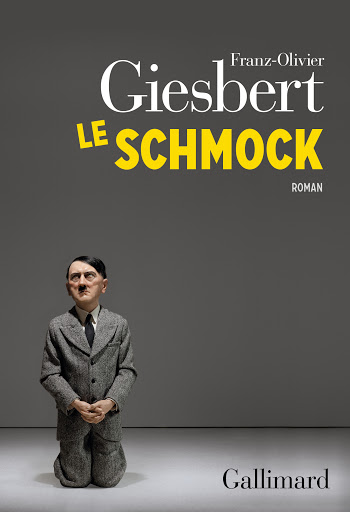
Franz-Olivier Giesbert
The Schmock
Editions Gallimard
2019
395 pages
You'll also like





 French
  German
  English
Leave a comment