




A Journey into the Murky World of «Calypso Blue»
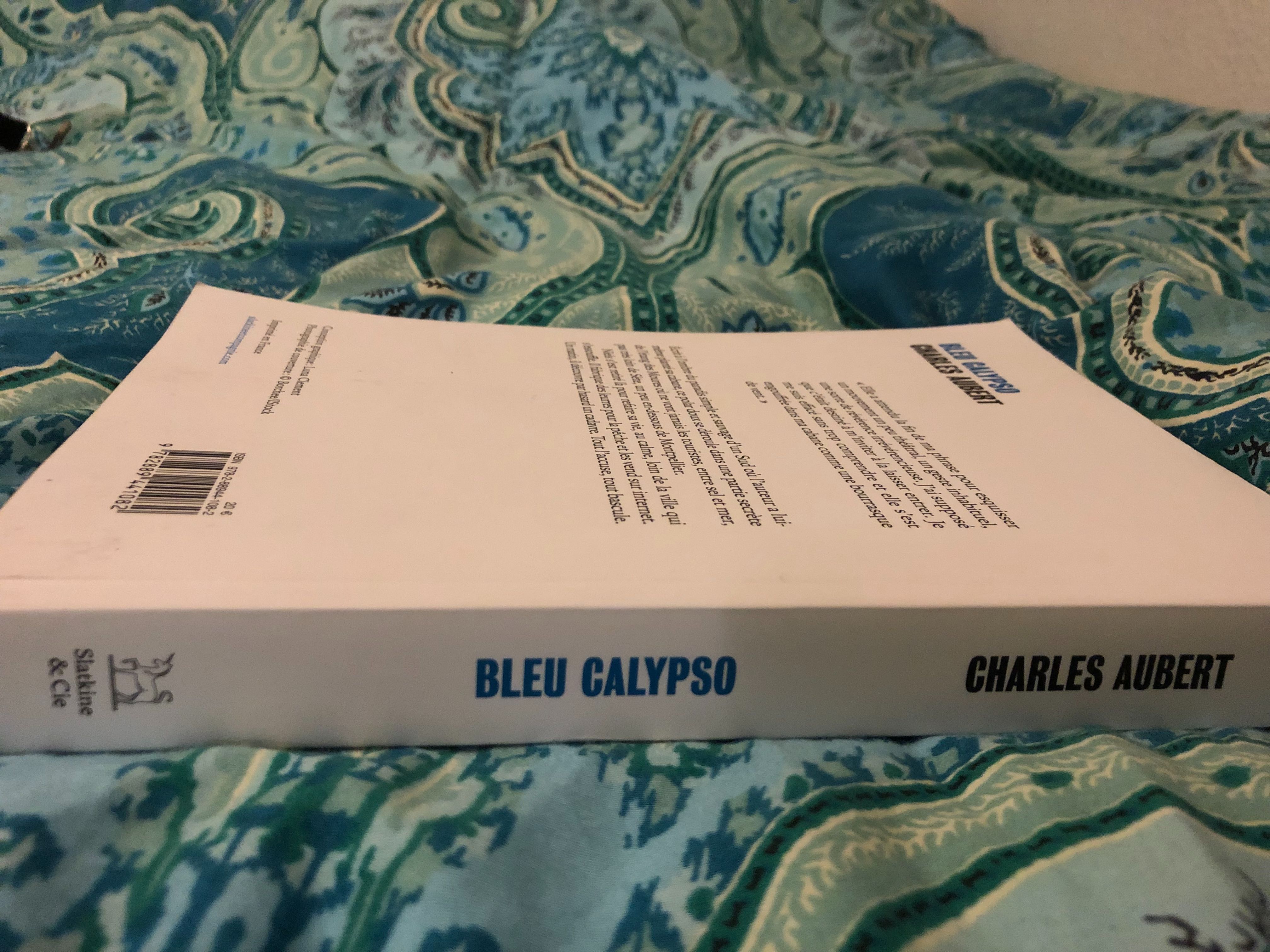
Tuesday's books - Lauriane Pipoz
Calypso Blue, a crime novel set in a cabin south of Montpellier, is a unique blend of delightful descriptions and plot twists. Combining the wilderness with a fast-paced investigation, it follows Niels, a fisherman, as he delves deep into an investigation of a series of murders. Partly against his will, and partly despite his character’s lack of subtlety.
«The kayak had perfect trim. The north wind was pushing it along at one or two knots, toward a vast bed of seaweed, right at the entrance to the channel. Without making a sound, I slipped the paddle under the canvas seat so it wouldn’t get in my way, then grabbed my fishing rod. I knew that sea bass were lurking in that clump of green seaweed, ready to leap into the light like jack-in-the-boxes springing from their boxes. It was early spring.»
From the very opening of this thriller, we’re plunged into Niels’s world. The author skillfully describes nature in a polished and soothing style. The wild life of his main character is recounted over several pages, which the reader will devour with pleasure. This delightful trait recurs throughout the novel: the world of fishing and life away from the clamor of the city seems to be a familiar melody to Charles Aubert’s ears.
So rest assured, lovers of beautiful descriptions and curiosity in general, that you’ll learn a lot about the catch and release – this practice of «ethical fishing,» which requires releasing the fish that are caught –, on the lives of fish after they’ve been injured by a hook, or even on Japanese green tea: judging by the accuracy of the various details contained in this story, the author seems to have shared some of his interests with his main character and possesses a definite talent for conveying them to us in turn.
A few redundancies
While these characteristics do give us the pleasant impression of listening to a story told in a direct and natural way, they may be taken a bit too far in certain passages. The conversational style—which is very welcome when skillfully woven in small touches throughout long passages, when the reader is deeply immersed in the vivid descriptions of this story—falls flat when it’s overused in the dialogue. Yes, the story’s setting does call for a particular register of language; but it stands in stark contrast to certain lines that are written in a register too formal to sound natural.
This brings us to what I believe is the story’s major flaw: perhaps in an effort to convey the main character’s thoughts as faithfully as possible, certain repetitions punctuate the narrative. First and foremost, the repeated expression of Niels’s unwillingness to participate in the investigation; we understood from the very beginning that he was taking part in this quest against his will… And secondly, for the sake of a journalist’s beautiful blue eyes—a fact that will prove to be a definite annoyance not only for the main character but also—and certainly even more so—for the reader.
The plot, while not incredibly surprising, is well-crafted and a pleasure to follow. The twists come at just the right moments and make for an enjoyable read. We’re thus fully immersed in Niels’s world: while it takes a while for the pieces to fall into place and we don’t fully grasp the stakes of the plot at first glance, it ultimately proves to be rich in carefully crafted twists and turns. It’s worth noting that while not all the details are revealed right away, the characters in the main character’s inner circle are described in meticulous detail: we’re able to follow the investigation alongside him—which will delight the most adventurous readers among us. Could Charles Aubert’s repetitive style—which may seem a bit clumsy in some respects—simply be a natural consequence of his desire to bring us as close as possible to his character?
Write to the author: [email protected]
Photo credit: © Lauriane Pipoz for Le Regard Libre

Charles Aubert
Calypso Blue
Slatkine & Cie
2018
315 pages
You'll also like





 French
  German
  English
Leave a comment