



A few tips for listening to Francis Cabrel's new album

Unpublished article - Jonas Follonier
The bard from Astaffort returns after five years with his fourteenth studio album. With A l'Aube revenant, Francis Cabrel's new album, released last month, is very much a "cabrélien" affair. Blending his trademark themes with his characteristic folk ambience, the French singer-songwriter presents us with thirteen refined tracks, where renewal is to be found in the finesse. An exquisite album, like all his others, even if we may regret the artist's new melodic habits. But they also have their good points. Analysis.
For Cabrel, beautiful moments have become too short. Fortunately, art is there to sublimate them. So goes the first song on his album At dawn returning, released on October 16, entitled Beautiful moments are too short. Surprising, because the rhythm and phrasing are unusual, as if the verses went on a little too long. Surprising, but in fact logical in the musical, textual and psychological evolution of the singer-craftsman. The aim is to develop the structure of the songs - harmony as well as melody - until a never-before-heard result is achieved, even if it means making the whole thing absolutely ineffective on first listen. This will be the case for almost the entire album, including the second song Looking like you which is the single currently playing on every radio station. This song tells the story of Cabrel's chosen path in life, totally opposed to that of his father:
The magic of this way of composing albums is that the less you get into a track the first time, the more you appreciate it the more you listen to it. This is often the mark of great songs, «great» musically speaking. And since Cabrel is one of the only ones to do so, it's bound to sound strange to our ears, which are accustomed to chord-melody patterns that require so little effort and so little variety. But since the lyrics are pure, beautiful and sophisticated, and we know we're listening to Cabrel after all, we hang on and let him take us away until we don't want the journey to end.
An album inspired by the troubadours
With Melted candles, the album's longest track (six minutes), one wonders whether the journey could not have been a little shorter. Especially since it's a very dense reverie with lots of images, mirages, melodic evolutions galore, «too many notes» as the other guy would say. Nonetheless, it's the favorite song of L'Obs, The magazine never misses an opportunity to point out that he's a snob, in art as in politics. But in general, At dawn returning obeys an excellence that is difficult to contest, giving rise to nuggets such as the song that gave the album its name and tells the story of that famous moment at the start of the day, dawn. The dawn that signals the end of forbidden loves, of lovers' loves; in short, of true and crazy loves.
This motif, omnipresent in the literature of the twelfthth and XIIIth centuries (just for that, thanks Cabrel), was inspired by the troubadours. These lyrical poets magnify the sensitivity of women and the sensitivity of men to this sensitivity. By dint of being described by others - and especially the press - as a troubadour, Cabrel went to read them up close, as he recounts in this interview for RTL, and «almost the whole album», he says, was inspired by the Cabrel of yesteryear. Because yes, the big story is that, with the distance in time that separates them from us, it's the troubadours who are old Cabrel more than Cabrel is a troubadour of the present. As a shy and humble person, he would blush at this remark; he would legitimize it by this attitude alone.
Ode to courtly love is obviously in this vein, but the very fresh and fantastic People of the fountains is even more convincing, with an opening theme we'd have liked to have found before it and the tender female choruses heard in several other tracks, including the first two Beautiful moments are too short and Looking like you. The song Fort Alamour, strongly reminiscent of Mandela, meanwhile from the previous album In extremis (2015), also relies on this female presence, but it's not the track we'll remember as a must-have, even after some twenty-seven listens. Instead, we'll refer you to Rockstars of the Middle Ages, a beautiful eulogy of the troubadours and transmission, sung half in Occitan and half in French. This, too, is new for him, but obvious.
James Taylor's incredible cover
And, and, and: I was listening Sweet Baby James, Francis Cabrel's new album is a great discovery. You don't have to be a fan of country to feel all the strength it takes to create such a cocoon of song, skin-deep and at the same time subtly overlaid with humor. british as the outside of the room is of snow in the scene we are told. The scene is that of a young man who, during a first act of love, lies and tells his sweetheart that he loves her, when what he has really experienced is listening to a song that was playing in the bedroom at the time: Sweet Baby James. Cabrel's song is in fact a French adaptation of this song, a James Taylor nugget. What genius it takes to have chosen the mise en abyme method, i.e., the integration of the song into the original. in the song! The same genius it took to transcribe I Want You by Bob Dylan on the divine I want you in 2012.
This is the essence of the troubadour: poetry. Poetry where there has never been any. Poetry not only as art, but as a way of addressing the beloved, and by extension, the world. In a interview for La Voix du Nord, Cabrel says: «Faced with reality, the real thing, brutal and violent, man has only the power of creation to escape. I've escaped a lot from painters, from Baudelaire... Poetry is nowhere, but everyone can create it to find refuge and get through life.» Here's something to get us over our current emotions - or lack of emotions, rather - linked to measures of confinement, semi-confinement, isolation... and the whole gamut.
Write to the author: jonas.follonier@leregardlibre.com
Photo credit: © Claude Gassian - Sony Music
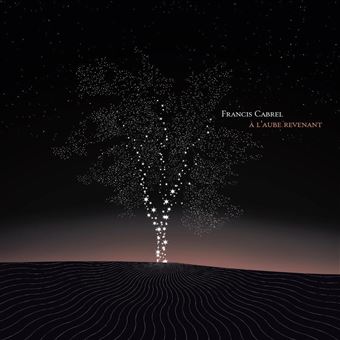
Francis Cabrel
At dawn returning
Chandelle Productions
2020
13 titles
-
 Le Regard Libre - Nº 67CHF10.00
 -
 Support subscriptionCHF200.00 / year
 -
Standard subscription (Switzerland)CHF100.00 / year
-
Digital subscriptionCHF50.00 / year
-
Youth passCHF25.00 / year

You'll also like



 French
  German
  English
Leave a comment