




«Laughing» with Philippe Val
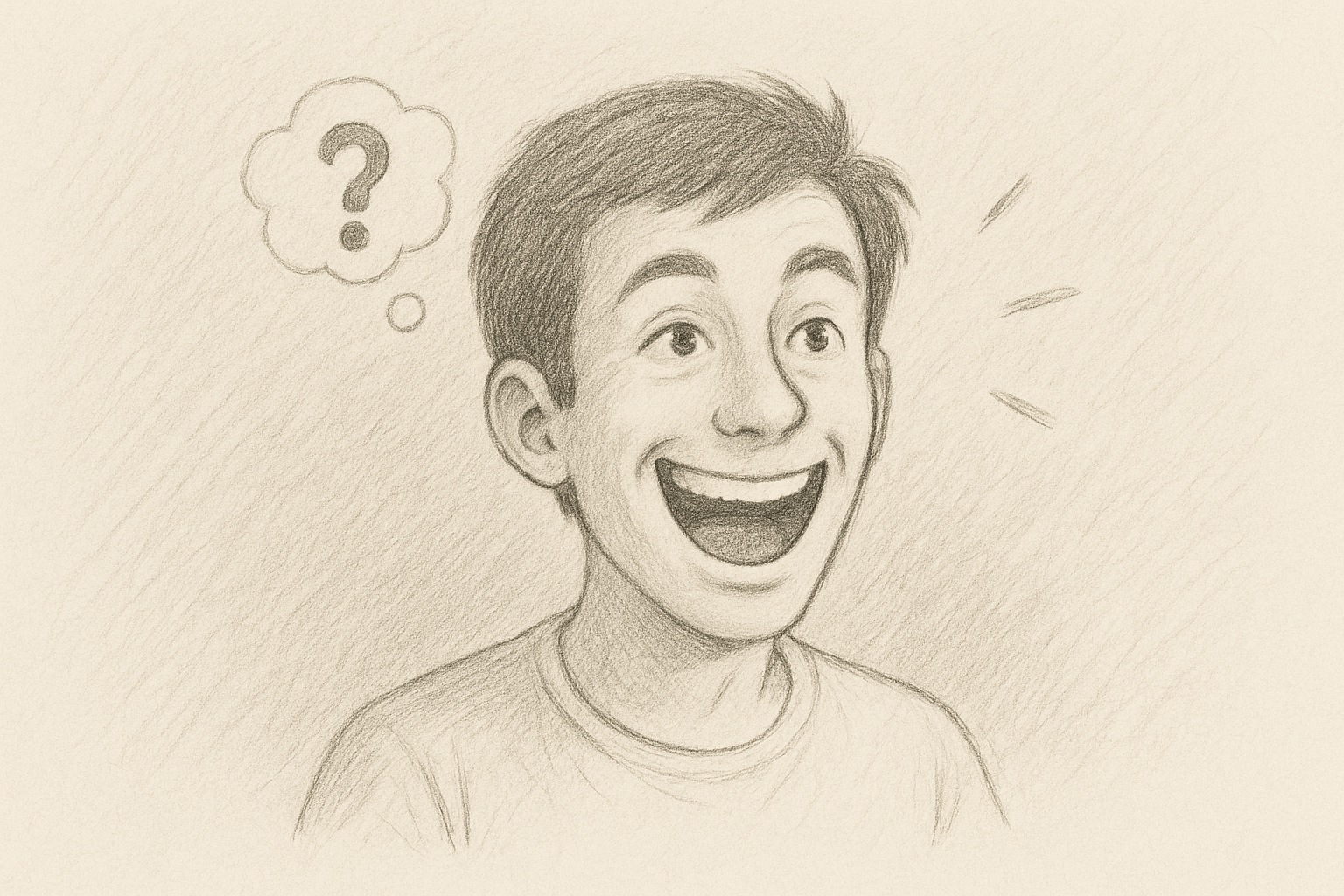
Image generated with the help of artificial intelligence (ChatGPT)
In his essay on laughter published by Editions de l'Observatoire, the former director of Charlie Hebdo and France Inter explore what this human art tells us about the value of amazement. For further reading.
It's like following Sylvain Tesson's description of the snow leopard when Philippe Val warns us in the preamble to his essay: «Laughter is not a domestic animal that comes when you call. It takes long hours of observation, patience, waiting and strategic approach to be lucky enough to catch a glimpse of its elusive beauty, and to marvel at its power and grace.» So the reader won't be surprised by the groping form of Laugh. As he turns the pages, he'll even recognize in this work, produced with small touches, a praise for astonishment.
There's nothing innocuous about laughter, for it has something to do with astonishment. Its falsely playful lightness is a reminder of the paradoxes and surprises of this world. According to Philippe Val, it's no coincidence that the funniest people are also the most intellectually humble - those who let themselves be surprised. Such is the case of «Churchill, the man who, in his time, had perhaps the greatest sense of fantasy, skepticism, tragedy and joke», notes the author.
Read also | Philippe Val: «Humor presupposes a sense of the tragic».»
The former director of Charlie Hebdo and France Inter goes one step further. Not only does it suggest that the personalities who laugh the least often turn out to be the least open-minded, but also - should we be astonished? - that it's among them that we find the most absurd, nonsensical and contradictory speeches. Val takes the example of Annie Ernaux:
«The daughter of a rural tobacconist, she studied brilliantly and produced a body of work that earned her international renown, social recognition and reasonably astronomical royalties. There's nothing wrong with that; she hasn't stolen from anyone, she's won over an audience with a personal body of work that brings her the highest esteem in her country's literary and academic circles. But, true to Bourdieu's Old Testament, all her work denounces the impossibility for her fellow human beings born into poverty to achieve success and social recognition. She's living proof of the opposite, but the more false it is, the more she likes it. Never smiling, never laughing, she recites her breviary of hatred for the wicked rich, with whom she has nothing in common but wealth.»
Absurdity is ridiculous. But ridicule does not kill. Therefore, and this is the book's most politically interesting passage, cultural hegemony - which has become communist and woke in liberal democracies, according to the columnist for Europe 1 and Léman Bleu - may be ridiculous, because it is dogmatic, harmful and incoherent, but it nonetheless prospers because of its very ridiculousness. Its success lies in its lack of open-mindedness, questioning and self-mockery. It's up to souls in search of truth, justice and beauty to wear the opposite humor:
«For the free spirit who is aware of the fragile line between decency and indecency, heroism and cowardice, goodness and wickedness, the Mona Lisa's smile is a smile of complicity: ‘The world you and I are contemplating is a joke, but hush!...‘ For if it is indeed she who hangs on the wall in a frame, the painting is us, and the spectator is her. If the whole world comes to the Louvre, it's not to see her, it's to be seen by her. Her smile is only enigmatic if we fail to grasp that we are observing someone observing us. For aristocratic souls capable of weeping and laughing at the same thing, this half-smile is a caress escaped from Leonardo's brush, and which travels through the centuries.’
Philosopher by training and journalist by profession, Jonas Follonier is the editor-in-chief of Regard Libre. Write to the author: jonas.follonier@leregardlibre.com
You have just read a review from our print edition (Le Regard Libre N°116).

Philippe Val
Laugh
The Observatory
April 2024
215 pages

You'll also like




 French
  German
  English
Leave a comment