




There can be no lie if there is no truth
It may sound like a trite phrase, like «there's no heat without cold», but remembering that there's no lie without truth has the merit of bringing back to the table a fact that has become too old-fashioned in certain intellectual spheres: truth exists. A statement that would make almost any sociologist of the moment leap to his or her feet, but one that is nonetheless true. real. Ah, the word is out!
If truth didn't exist, it wouldn't even be true that truth didn't exist. So it would be both true and false that truth doesn't exist. Here's the problem: such an idea violates the logical principle of non-contradiction.
Without truth, there would be no falsity either. Indeed, it would never be true that something is false, as Professor Emeritus of Philosophy Richard Glauser pointed out in his farewell lecture at the University of Neuchâtel in 2018. So, no more mistakes. No more police or journalistic investigations. Nor, you guessed it, lies. Our monthly feature would be pointless.
Without truth, there is no belief or knowledge
And there's more: without truth, not only could we no longer know anything false, we could no longer know anything... at all. This is for the simple reason that to know something is to know that it is true. is true. It wouldn't even be possible to believe in something or assume anything, since that would be believing or assuming that thing to be true. Ouch! As it happens, we spend a significant part of our time - cerebrally - believing that this or that. Or wondering whether something is real or not.
Without truth, there's no science either. Not because science produces knowledge, but more precisely because this knowledge is defined by refutabilityWe have to be able to refute a thesis for it to be scientific. That's how knowledge advances. It's absurd, then, to hear academics - some of them from disciplines that are supposed to be "scientific" - refute a thesis. sciences, The last thing we need is for him to declare, with an air no doubt intended to be witty, that «in any case, there is no truth».
There would be «truths». What does that mean?
Now, if you give them the kind of simple arguments we've just enumerated, they might reply that what they meant was that there is no a truth, but several truths. So one of two things: either there are several truths in the sense that more than one thing is true, or there are several truths in the sense that one thing could be true for one individual and false for another. In the first case, we won't have learned anything special: yes, there are several things that are true, truth being a property of many sentences, theses, ideas, statements... In the second case, we'll have to remember, with Aristotle, that a thing cannot be both true and false at the same time and in the same respect. Example: the rate at which Regard Libre is slow compared to a daily, but fast compared to a biannual. But to say that Regard Libre is both slow and fast «in the absolute» is to contradict oneself.
Read also | The strengths of a monthly magazine
Beware, then, of playing clever by snubbing the notion of truth: let's have the humility to recognize its basic importance in all mental activity. This does not mean that it is always easy to determine what is true and what is false. Skepticism is perhaps the second humility to have. Always be curious and critical. By the way, happy reading!
Write to the author: jonas.follonier@leregardlibre.com
You've just read an open-access editorial. Debates, analysis, cultural news: subscribe to support us and get access to all our content!
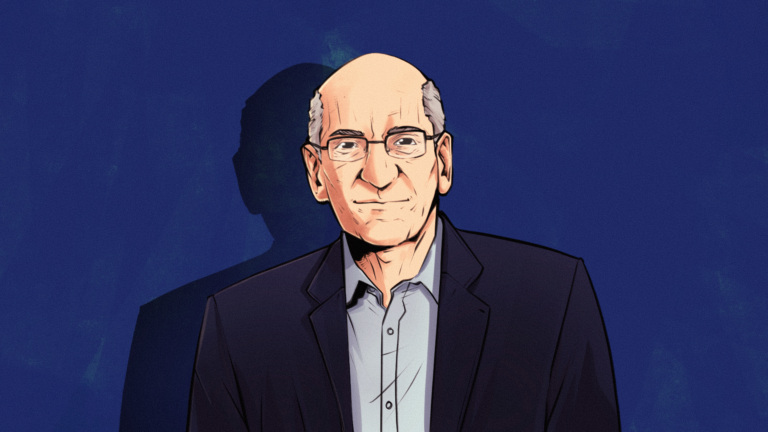
Image: © Drawing by Nathanaël Schmid for Le Regard Libre

You'll also like


 French
  German
  English
Leave a comment