




Associations are essential to democracy

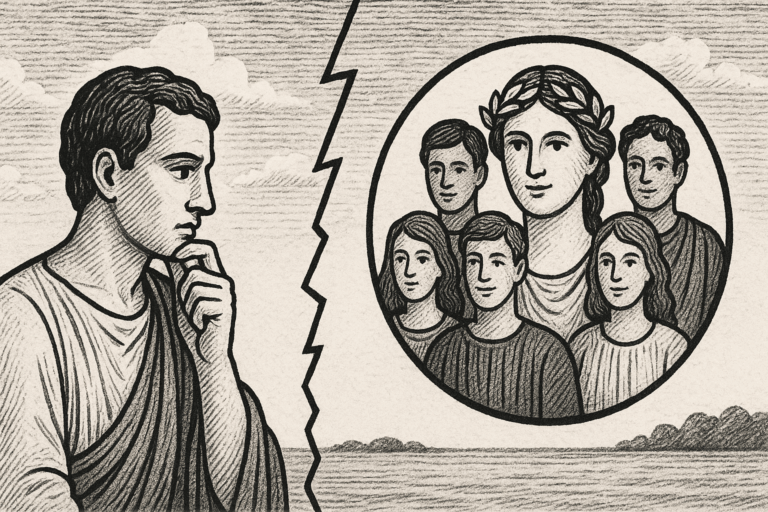
Drawing by Nathanaël Schmid for Le Regard Libre
The association is a remedy for the inward-looking nature of democratic regimes, where the dependence on others that prevailed in feudal regimes has been eroded. It also enables its members to commit themselves beyond their personal interests, without having to go through the State.
Associations have two advantages that make them a fundamental institution in a democracy. On the one hand, their very democratic functioning is decentralized, which brings decision-making closer to the reality of the members and reduces the risk of tyranny of the majority. On the other hand, it enables individuals to work beyond their own personal interests without going through the State, which limits the latter's powers. In fact, it is generally much simpler to join or leave an association than to change the state - all the more so as it is easy to be a member of no association at all, giving these structures both legitimacy and flexibility.
The association is basically the body par excellence that enshrines individual freedom. And while members are free, they also have responsibilities, just as they do in life. The General Assembly, made up of the members, is responsible for appointing the association's committee, deciding on its budget... The presidency, treasury and secretariat are all accountable. In return, the state guarantees freedom of association. The founders of such an adventure can thus give birth to it through statutes without the need for external validation.
The non-profit equivalent of the company, the association in its most common form gives both civic and initiatory value to individual freedom. More than the meeting of supply and demand, unpaid - and in this case formal - voluntary work is a gift of self in the service of a common goal. It enables the development of both the individual and society as a whole.
Association is a remedy for the inward-looking nature of universal suffrage regimes, where the dependence on others (suzerain or vassal) that prevailed in feudal regimes is eliminated. Based on his observations of America, Alexis de Tocqueville summed it up brilliantly in 1835: «For men to remain civilized or to become so, it is necessary that among them the art of association develop and perfect itself in the same ratio as equality of conditions increases.»
In many ways similar to the militia system - except that no-one is ever forced to take part in an association - the militia spirit is alive and well in countless parts of Switzerland, the country with the highest density of associations in the world. There are currently around 100 inhabitants for every 1 association. And in 2022, according to the Swiss Federal Statistical Office, more than half of the Swiss population aged 16 and over were involved in or passively supporting associative activities.
Thus, an association - as in the case of the Regard Libre - can give meaning to its members by enabling them to acquire skills, make contacts and diversify their experiences, all while offering something to the community. As far as this magazine is concerned, we strive to develop an editorial voice that differs from the rest of the media sphere, to become a meeting point for intellectuals from the French-speaking part of Switzerland, and more broadly from the French-speaking part of the world, to train the next generation, and to tackle certain current issues in depth, bringing disciplines into dialogue and bringing a little of the past into the present, in an attempt to imagine its future.
The militia system was the subject of our main reflections this month.. For once, we're dedicating a special section to a phenomenon we're happy to endorse, because we're part of it. Happy reading and long live the militia!
Write to the author: jonas.follonier@leregardlibre.com
You have just read an open-access editorial from our print edition (Le Regard Libre N°109). Debates, analyses, cultural news: subscribe to support us and get access to all our content!

You'll also like


 French
  German
  English
Leave a comment