



Macron: what if France had a date with history?

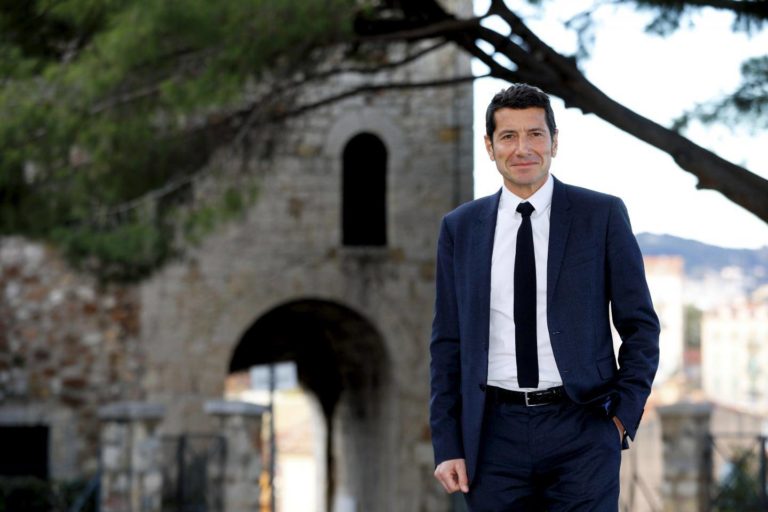
Following the Cabinet Meeting: Emmanuel Macron, Minister of the Economy, Industry, and Digital Affairs.
Le Regard Libre No. 22 – Nicolas Jutzet
In 2012, François Hollande promised us he would be a «ordinary» president». That simple statement should have been a warning to us: this man is out of his depth; he hasn’t prepared himself to govern; he seems lost. To claim that the role of president of the Vth The idea that a normal man could take on the role of president is simply terrifying.
La Vth The Republic, established at the initiative of General de Gaulle in 1958, was primarily intended to consolidate the authority of the head of state. It is worth noting that his political opponent at the time, François Mitterrand, denounced this reform, calling it a dictator’s maneuver. In addition to the General’s incisive retort—«Why would you want me, at sixty-seven, to begin a career as a dictator?»— history will remember that even the man who remains, to this day, the intellectual mentor of the current occupant of the Élysée Palace had clearly identified that the power granted to the country’s leader was too great for an ordinary individual.
The script was therefore written in advance. Hollande’s presidency has been a stinging failure that, in addition to proving right those who usually vote for the right side of the political spectrum, has driven away those who until then identified with the values championed by the Socialist Party. The record on the economy, security, and national identity is alarming, almost as much as the president’s frequent media revelations. As he leaves the Élysée Palace, François Hollande and his brand of «normality» will leave behind a France divided between its grassroots and its elite. As in 2002, the second round of the presidential election is likely to pit a candidate from the far end of the spectrum—the daughter following in her father’s footsteps—against a “republican” candidate in the broadest sense of the term. However, this rout has its silver lining. Not only does it rid us once and for all of the last Mitterrandists who refuse to admit that the world has changed and that France can no longer afford to run a chronic deficit, but it also clears the way for a new candidate who will be able to tell France a new story—one full of hope and truth. A 21st-century Michel Rocardth century.
This renewal will not come from the Socialist Party (Valls, Royal), much less from its dissidents (Hamon, Montebourg) or the dangerous Jean-Luc Mélenchon. No, it will come from one of the outgoing president’s successes: Emmanuel Macron, his now former Minister of the Economy, Industry, and Digital Affairs. At the helm of his «En Marche» movement (which takes its name from his initials), he set out, along with his «marcheurs,» questionnaires in hand, to meet with the French people. Success has followed. To date, the movement claims 88,000 members—a significant number compared to the Socialist Party’s 110,000 members. How can we explain this meteoric rise, this sudden surge in a politically paralyzed France? To understand it, we must look back at the career of its standard-bearer.
Born in Amiens to parents who were both doctors, Emmanuel Macron had a brilliant academic career that led him to attend the ENA. This trajectory—which is ultimately quite typical for a politician—masks the complexity of the man. It does not explain that, unlike many others, the young Macron had a background in the private sector, having enjoyed a successful career at Rothschild & Cie before ending up at the Élysée Palace. This man was not cut out for politics; his career in the private sector would have taken him far, but he is driven by a mission: to serve France.
Quickly frustrated by the system’s slowness, its dogmatic obstacles, its bureaucracy, and the difficulty a mere minister faced in bringing about change, he began to think about regaining his freedom. This was one of the reasons that led him to jump ship on August 30, 2016. «When a president appoints someone as a minister, he does so for the sake of his country, not to make that person indebted to him.».
Now he is free. Free to propose his own policies. That is what he is doing with his colleagues from En Marche, as they travel across France to deliver the message the French people have entrusted to them—a message of change, of modernizing a France that must equip itself to face the 21stth century. A France that puts an end to its gridlock, that stops viewing the economy with suspicion—a France where the state’s unnecessary powers are returned to the citizens and, by extension, to a free market. Still somewhat hesitant, not wishing to rush things, he refuses to say more or to announce his candidacy for the presidency of the Republic. For now, he is assembling his teams, building a network throughout France, and raising funds. The day of reckoning will come when this spirited man from Amiens will have to step forward and face history—or else step aside, return to anonymity, and continue his career in the business world.
France is paralyzed by political infighting that prevents genuine reforms. These reforms should have taken place after the Trente Glorieuses (1945–1975). Unlike the current state of the economy, that period allowed for the redistribution of a large portion of income by the government without hindering growth. Since 1975, not a single year has ended with a balanced budget. These successive public deficits are no longer sustainable. There’s just one small problem: no presidential candidate (except perhaps Fillon) seems to have grasped the full extent of the problem. No one is proposing a fundamental shift in policy, which is what France needs—not «band-aid solutions» that, at best, will allow the ailing nation to survive a few more years. The person who will save France from ruin will necessarily be someone different from those currently in the running. They must be able to understand the Fourth Industrial Revolution and its consequences for the labor market, for everyone’s lives, for the state—for everything. They must also come to terms with the fact that globalization, disintermediation, and various technological advancements are inexorably eroding the state’s influence.
Macron will be the man behind this renaissance, the one who will finally prove Mitterrand wrong when he said, «I am the last of the great presidents.» Well, I mean, the last in the line of De Gaulle. After me, there will be no others in France… Because of Europe… Because of globalization… Because of the necessary evolution of institutions. After me, there will be nothing but financiers and accountants.” Macron will be a great president, an intellectual with a philosophical backbone, a visionary attuned to the new economy. Paradoxically, it is the financier and accountant who will reignite the flame—that of a new world.
Write to the author: [email protected]
Photo credit: © cannesradio.com

You'll also like
 French
 German
 English
Leave a comment