




Poorly formulated questions undermine the quality of debate

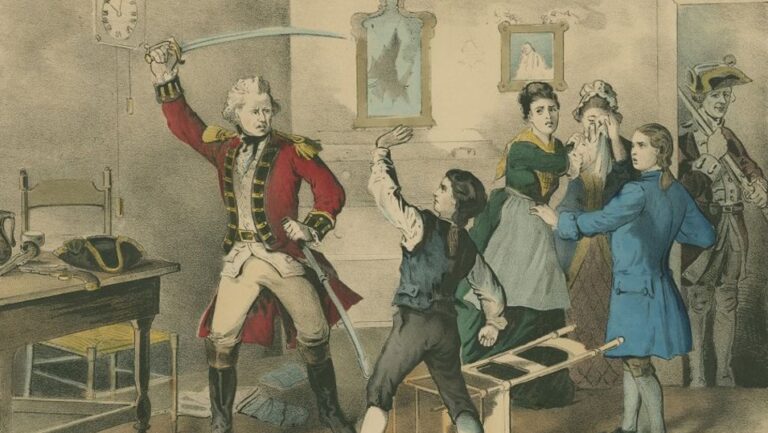
Drawing by Nathanaël Schmid for Le Regard Libre
The way a question is posed plays a major role in public debate. This underestimated dimension of contemporary discussions in particular explains many of its outcomes. Confusion has taken its toll on the debate of ideas in recent times.
Even if the question rules out certain options from the outset, not all options will be on the table. This is the notable difference between a so-called «open-ended» question—for example, «How should society be organized?»—and a closed-ended question—for example, «Is »soft’ socialism better than ‘hard’ socialism?” This example, which is obviously an exaggeration, applies to more cases than one might think. How many media reports discuss ways to improve prison conditions without the underlying assumption that must That improving prison conditions should even be a matter of debate! To believe that one can deduce, from certain facts—and from those facts alone—prescriptive statements such as «this is what must be done» is a mistake that the Scottish philosopher David Hume had already pointed out in the 18th centuryth century.
Another scenario: If the question isn't clear—if people understand it differently—the debate will be skewed as a result. A discussion that our editor Yann Costa initiated within our editorial team for this issue centered on the following question: Should companies make salaries public? To clear up any ambiguity surrounding this debate, my colleague clarified to our team that the question should be understood as follows: «Is it a good idea for a company to make salaries transparent internally?»—not «Is it a good idea for companies to make their salaries public, that is, externally?» With this clarification, Yann Costa also made another point: the question was whether it is good for a company to disclose its salaries internally, not whether companies should be required to do so.
This is a crucial point. Indeed, a liberal might view the disclosure of company salaries as a good measure, without necessarily wanting to politically compel companies to adopt it. Let’s imagine for a moment what it would mean to force everyone to do everything that is (deemed) good.
Confusion has done a great deal of harm to the debate of ideas in recent times. Consider the U.S. Supreme Court’s June 2022 decision to strike the right to abortion from the federal Constitution. Overturning this guarantee did not exactly amount to eliminating the right to abortion in the United States, much less banning the exercise of that right, but rather to giving the states complete latitude to legislate on the matter. The debate—which was entirely legitimate—therefore focused more on the decentralization of a right than on its denial. That’s not really how it was discussed, though.
Debating is rarely about convincing your opponent or conversation partner, Most of the time, it’s better to find common ground—that is, to define the scope of a disagreement, understand why there’s a sticking point, and then better articulate your own position. A debate is not simply a contest with a winner and a loser. If it is successful, a debate is a collaborative effort. It advances a discussion, or it may even have the simple merit of making it possible.
Clearly defining the issues is already a step toward understanding them better—philosophers know this all too well. Debating, therefore, begins with defining the terms. And while this activity may seem austere, it is, in fact, extremely stimulating. Finding the right words—that, too, is what a magazine like ours can help with. Thanks to a new project that we’ll unveil in a few months, this focus on concepts will take on a whole new dimension.
Write to the author: [email protected]
You have just read a free editorial in our paper edition (Le Regard Libre N°108). Debates, analyses, cultural news: subscribe to support us and get access to all our content!

You'll also like





 French
  German
  English
Leave a comment