

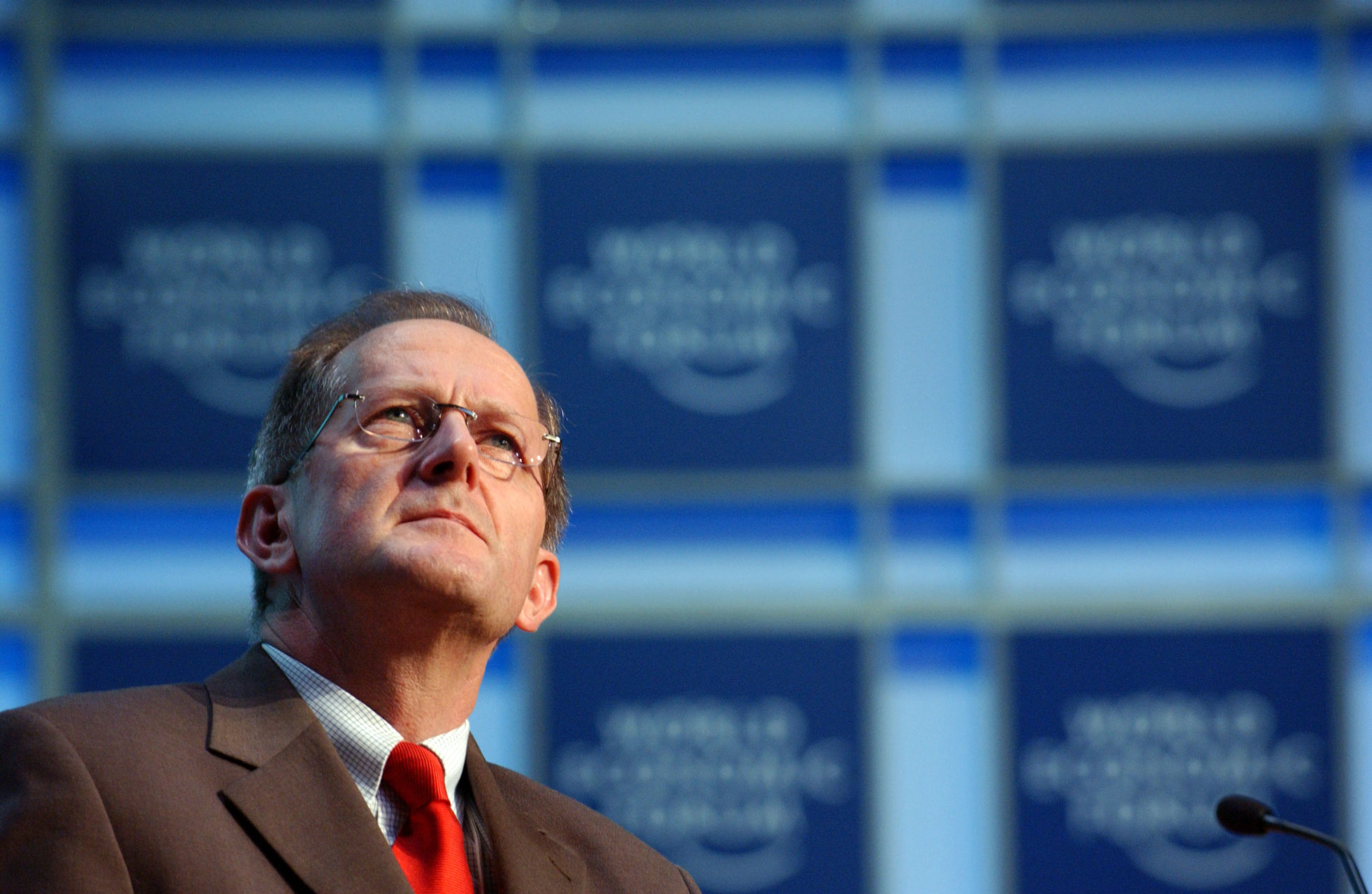
The book by former Federal Councillor Joseph Deiss When a sperm whale comes from starboard... Tales of a modern Switzerland published by Editions de l'Aire, is a gem for anyone with a political curiosity. It's packed with anecdotes, tasty reflections and reminders that put our country's recent history into context.
By allowing us to plunge into the heart of a career that is, to say the least, striking, he gives us a glimpse behind the scenes. What we don't see, or see so little of. The man who was Chairman of the Commission for the Revision of the Swiss Constitution, Dean of the Faculty of Economics at the University of Fribourg, Federal Councillor in charge of the Federal Department of Foreign Affairs and then the Federal Department of Economic Affairs, and finally President of the UN General Assembly, delivers a fascinating account. We have selected the best quotes from this book.
Politics and Switzerland
As a Federal Councillor, he had a front-row seat to see the SVP become a governing party. From this experience, he retains a clear mantra against simplistic solutions: «What I castigate is not ignorance, but bad faith: we know, but we pretend not to know.» All this while regretting the hegemony of the ideas of the country's largest party: inevitably, «the PLR and PDC are tetanized under the pressure of themes dictated by the UDC».».
But simplism has no label, «needless to say, I don't believe in collectivist regimes, or even in direct state intervention in economic matters. Because I know of no example of a state economic regime that has been able to guarantee sustainable growth in well-being. The state must create the framework conditions that allow the private economy to flourish».».
The European Union
A fervent supporter of extending our relationship with the European Union, he maintains his position in the afterword to Avenir Suisse's recent white paper on the subject. His book is in the same vein, in which he recalls his past and present commitment to joining the European Union. In passing, he regrets Switzerland's refusal to join the European Economic Area (EEA): «There is no doubt in my mind that the vote of December 6, 1992 was a historic mistake by the Swiss people. Never again will such an opportunity arise. Never again will we be offered full participation in the common market on such advantageous terms.»
It is fair to ask whether Switzerland is not currently experiencing a period of rapid change. bis repetita of this situation. If the framework agreement is rejected, which seems plausible to say the least, will we ever have an equivalent agreement with our main economic partner? To ask the question is almost to answer it. And yet, despite an ambient climate of skepticism, Deiss repeatedly dares to break this taboo: «One day, it will become clearer that it's time to take back the share of sovereignty we voluntarily gave up through our non-membership. For, let us not forget, in the face of history, the absent are always wrong.» Ironically, the left's dogmatic refusal to accept this proposed agreement, given the disastrous consequences of an eventual tug-of-war, may well push us in the longer term towards an adherence out of spite, out of simple calculation. The lesser evil.
Opening up to foreign markets
Through his work at university and then as head of the FDFA, Joseph Deiss has seen first-hand how important relations with other nations are for Switzerland, and what its capacities and realistic ambitions are in negotiations. Moreover, coming from a prosperous country that knows how to protect its institutions, the author leaves us with a clear vision: «For all nations that want to lift themselves out of poverty, it's not about aid programs, foreign investment or mineral resources. None of this is of any use if the country does not have functioning institutions in place. Democracy, the rule of law, private property and a market economy are prerequisites for the development of a country. sine qua non to get out of poverty.»
Visit leadership
In these stormy times, many are lamenting the absence of leader in the Federal Council, unable to make up its mind on a number of issues that are so important to the country's future. His example serves as a reminder of the importance of leadership: «The politician, like the sailor, must constantly know where he is, where he comes from, but above all tell those around him where he's going. My constant concern was to lead the way, to point the way and to be the first to absorb the backlash.» And let's not forget that Switzerland is above all a land of compromise, which requires a great ability to rally on all fronts. «Often regarded as a bridge builder, I'd like to appeal for bridges not only to be built, but above all to be crossed. For it's from the other side that you get the best view of your own shoreline.»
In this year of federal elections, it's also important to remember that courage in politics, if it doesn't pay, must be respected. Whether it was revising the Constitution, fighting for Switzerland's membership of the UN or winning election to both the Federal Council and the UN, Joseph Deiss proved that this maxim was more than just a hollow phrase in his mind. «What I found unacceptable for someone who wants to play the role of head of state was to hide behind the people. In a democracy, the leader must courageously state his opinion, his strategy. He must bow to the will of the people, possibly even stepping down, if the majority sees it otherwise.»
The rest of the article features an interview with JOSEPH DEISS, available only in our print edition by ordering here:
-
 Le Regard Libre - N° 48CHF10.00
Joseph Deiss
When a sperm whale comes from starboard... Tales of a modern, peaceful and happy Switzerland
Editions de l'Aire
2016
475 pages
 French
  German
  English