




Two young politicians chat over a drink
Le Regard Libre N° 17 - Jonas Follonier
Many young people are involved in politics. Le Regard Libre went to meet two of them in a Neuchâtel bar: Luc Bourquin, representative of the Jeunes Socialistes Neuchâtelois at Swiss level, and Michele Barone, vice-president of the Jeunes Libéraux-Radicaux Suisses. When starboard and port clash over a drink, interesting discussions ensue.
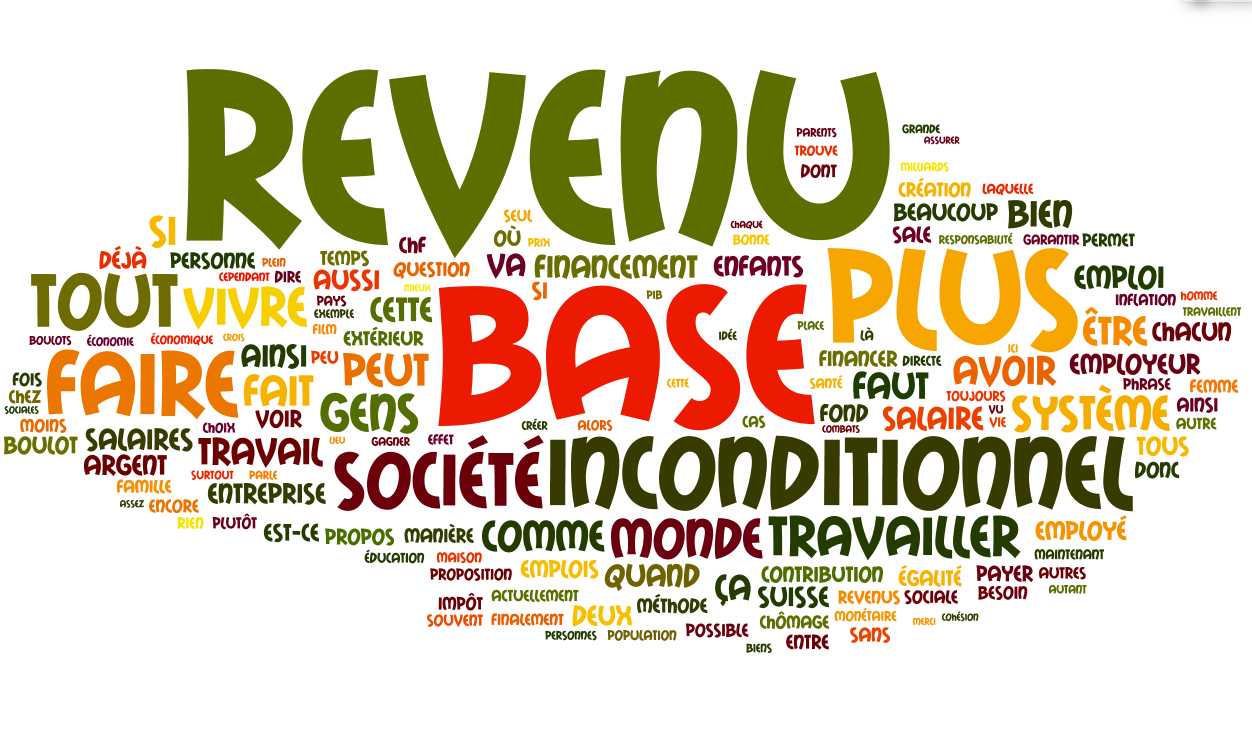
Jonas Follonier: On June 5, will you vote for or against the initiative calling for the introduction of an unconditional basic income (UBI), and why?
Luc Bourquin You have to realize that the UBI is a sensitive issue, because within the PS itself, there's a division. Both the Swiss Socialist Party and the Neuchâtel Socialist Party are against it, while the Young Socialists of Switzerland and Neuchâtel are for it. Personally, I think it's a very important issue, insofar as for once we have a vote that calls the system into question. What's really interesting about this proposal is that it seeks to separate work from subsistence. It's about saying that everyone has the right to a decent life, whatever their qualities or ambitions. Many people are afraid that people will stop working: a survey shows that, on the contrary, very few people would stop working. I also think that, economically, the UBI would be positive in the long term, as we're currently at a stage where we can no longer guarantee full employment. This is due to technological advances and the fourth industrial revolution. The UBI would be a solution to this phenomenon. To those who say that the UBI is against capitalism, I'd say no, the UBI saves capitalism!
Michele Barone I totally disagree with Luc. Before you can create support - a noble idea in itself - you have to create wealth. This is the principle of the social safety net. But here we're not talking about a social safety net at all, but a watering can, from which everyone (even minors) would benefit. In my opinion, creating a watering can is wasteful. Support should only be given to those who need it. Luc said that today we're moving towards automation... Well, this isn't the first revolution we've seen. The best thing we can do to counter automation is to get our brains into gear, innovate and create new trades.
Luc was saying that everyone has the right to a decent life. That's what the social safety net is all about! It's those who can't contribute who can receive.
L. B.: But there are still people who receive less money from their work than if they were unemployed! The UBI would solve this by providing a basic income and letting people work to achieve a better standard of living, personal satisfaction and so on.
MR B.: Autonomy, freedom and personal fulfillment cannot be achieved by relying on the work of others! What's more, the big problem with a UBI is that we'd have to find 150 billion francs outside social welfare. This would mean raising taxes, and we'd be entering a vicious circle.
L. B.We recognize that the UBI has a significant cost, but we believe that beyond that, the positive spin-offs of the UBI are as important as the costs incurred. Just think of the consumption boost it would provide.
What do you think of the amendment to the Asylum Act, also put to the vote?
L. B. : Initially, I was all for it, but I have to admit I'm more nuanced now. On reflection, I fear that this law will make asylum more expeditious, that the quality of asylum will deteriorate under the pretext of being efficient. While I understand the gains such as legal cover, I'm afraid that asylum seekers will be treated less well and sent back on lighter grounds than at present.
MR B. : The revision of the Asylum Act aims to combine two elements, namely Switzerland's humanitarian tradition and efficiency. The aim is to quickly resolve clear-cut cases, such as those where we know that a person is not in real danger in his or her own country. So there's everything to be gained from this law, which defends a humanist but firm asylum policy.
The SVP is opposed to this initiative. How do you respond to the free lawyers argument?
MR B.The SVP would have us believe that we are creating an advantage for asylum seekers over Swiss nationals. The fact is, however, that Swiss nationals can also benefit from legal assistance if they need it. Everyone has the right to know what's going on legally. What's more, these lawyers charge a flat fee, not 600 francs an hour!
L. B. The UDC's argument about expropriation also makes me laugh. This right has already existed for the army for 20 years, and it has never been used! It's a measure of last resort, and there's a public inquiry, as well as consultation with the cantons.
If you had to define Switzerland politically with just one adjective, what would it be?
MR B. : Unique. Switzerland's political structure is unique, as is the weight given to the people. We also have our own special features, such as being able to meet the head of state on a station platform, or having an injection room in Geneva.
L. B. Complex, in the positive sense of the word. Swiss politics is laborious, you have to grasp the role of Berne, the cantons, the communes, and so on. It's very special to have a country with four national languages, a strong Röstigraben, so many political parties with relatively different lines... Complexity means richness. That richness is diversity.
Do you feel that young people in French-speaking Switzerland have a sufficient say?
L. B. : I think the problem isn't the voice given to young people, it's beyond that: there's a problem of consi-deration. Young people are given a voice through youth parliaments, youth commissions and so on. But they are never really heard, because they are constantly referred to as utopians who are not pragmatic. I think there's work to be done on both sides: young people need to reach out to politics, and politics needs to reach out to young people. With the JSN, we have just proposed lowering the voting age to sixteen.
MR B. We note that it's still the 18-25 year-olds who vote the least, even though the age of majority was lowered to 18 20 years ago! We really need to tackle this problem, without passing it on to even younger people. Personally, I'd be more in favor of an emancipation right, as existed when the age of majority was still 20.
Finally, you're a bit of a cliché: a young socialist studying literature and a young liberal-radical lawyer...
MR B.: The cliché is that young people involved in politics, whatever their party, are often students.
L. B.: Yes, absolutely, and I'm sure that's due to the social context. I fear that the system is closing in on itself. At the moment, we're not in the same situation as France, so we have to keep things in perspective.
Thank you very much for this exchange!
Write to the author: [email protected]

You'll also like



 French
  German
  English
Leave a comment