




The Olympic mirage
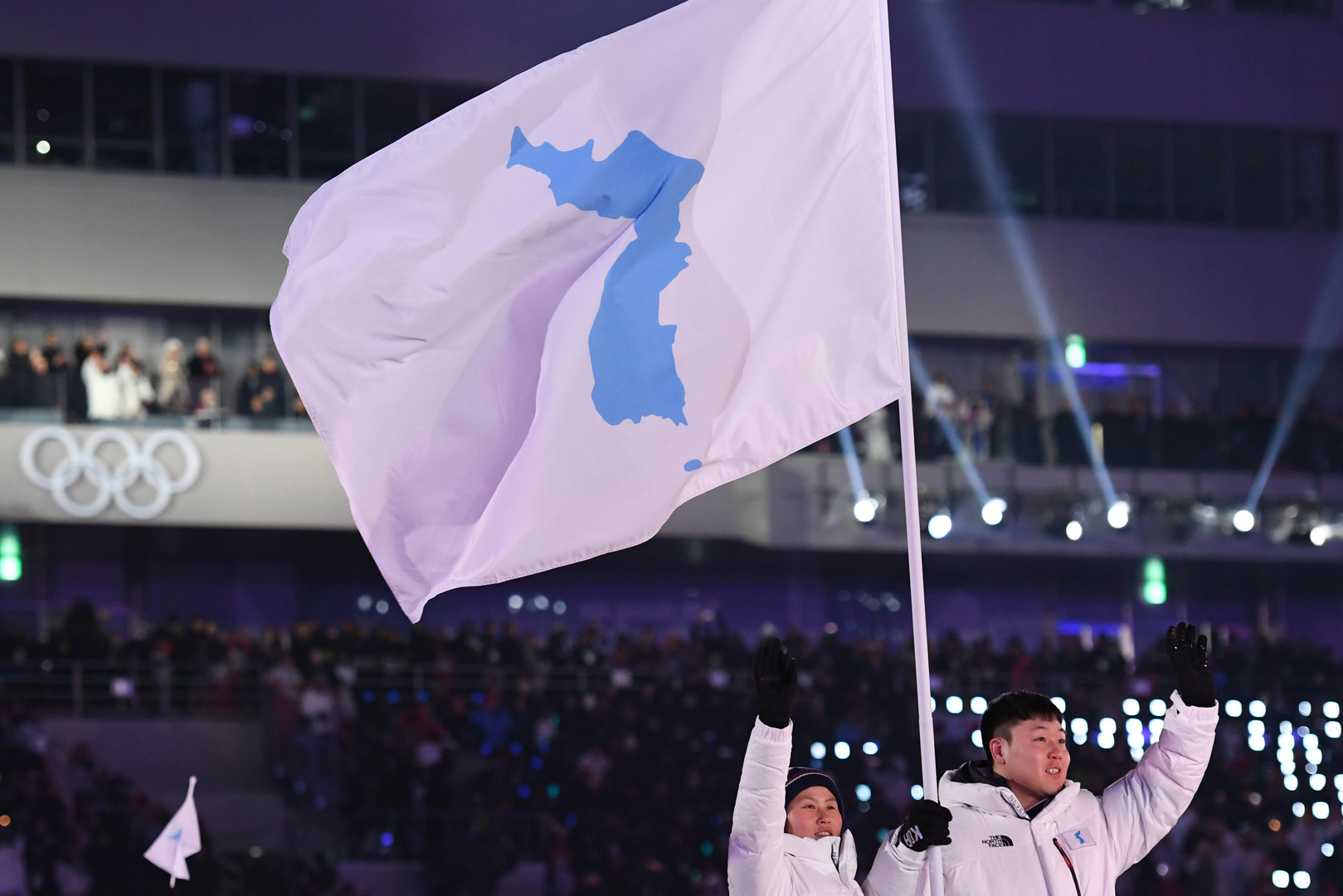
Unified Korea's flag bearer Hwang Chung Gum (L) and Won Yun-jong lead the delegation parade during the opening ceremony of the 2018 Pyeongchang Winter Olympic Games at Pyeongchang Stadium on February 9, 2018. / AFP PHOTO / Kirill KUDRYAVTSEV
News Mondays - Clément Guntern
The Pyeongchang Olympic Games were once again an opportunity for North Korea to highlight the peace process with its southern neighbor. A certain rapprochement had already been initiated shortly before the sporting event, with a meeting between North and South Korean officials not far from the demarcation line.
A thaw in inter-Korean relations seemed to be beginning at that time. Notably, the reunified Korean women’s ice hockey team took part in the Olympic tournament. In addition, the sister of dictator Kim Jong Un even attended the opening ceremony, sending a strong message to the rest of the world. Finally, a North Korean general stood alongside Ivanka Trump, the president’s daughter and advisor, at the closing ceremony of the Pyeongchang Games. That was all it took for the media to seize upon the symbolic gestures made right before their eyes by the Korean leaders and begin praising sports as a venue for reconciliation and peace.
Yet all this diplomatic turmoil surrounding the Olympic Games comes at just the right time for North Korea, and the coincidence seems all the more troubling. Indeed, how can we forget the verbal escalation between Pyongyang and Washington at the end of last year? Tensions surrounding the North Korean regime’s ballistic and nuclear tests had reached a peak when President Trump threatened to destroy his enemy. Against the backdrop of this escalation, the Olympic Games served to ease all tensions in the region.
This is precisely where Kim Jong Un’s regime has a head start over all its enemies. By its very dictatorial nature, it holds a significant strategic advantage over democracies such as the United States and South Korea. While these countries regularly change their strategies as a result of changes in government, North Korea, on the other hand, can afford to draw up plans spanning decades to achieve its goals.
In this context, the upcoming Winter Olympics had certainly been planned well in advance, and the best way to use them to advance North Korea’s cause had undoubtedly been considered. After a sudden escalation of tensions following missile tests—which likely allowed Pyongyang to take advantage of a lull—both sides called for talks. Thus, North Korea is moving ever closer to its ultimate goal of possessing nuclear weapons and being able to strike anywhere in the world with them.
For decades, the northern dictatorship has pressed ahead with its nuclear program, even as it engaged in talks with the international community. Even during Bill Clinton’s presidency, while pretending to want to abandon their nuclear ambitions, the communist leaders in reality did nothing but develop their arsenal. These Olympic Games in their southern neighbor’s country provided a golden opportunity to continue their work undisturbed while dangling the prospect of a possible reconciliation. Pyongyang’s sole and only concern is its own survival. Kim Jong Un knows that the United States and many others dream only of the downfall of his totalitarian communist regime. To survive, the most radical option is nuclear deterrence. It is not a sporting event—no matter how important it may be—that will one day bring about the reunification of the two Koreas and the downfall of this terrible regime.
Write to the author : [email protected]
Photo credit: © Reuteurs
You'll also like




 French
  German
  English
Leave a comment