The frontier, increasingly decried in Western countries over the past sixty decades, is now making a comeback. Talk of a world without borders is no longer so appealing, for a number of reasons. Russia's invasion of Ukraine is a powerful demonstration of the absurdity of talking about independence without territory. What's more, it's clear that the idea of a united Europe in the face of the many challenges of our times (war, terrorism, immigration...) requires recognition of its external borders, which are extensions of the internal borders of the countries that make it up. Borders are the markers of a country's history: they define its contours, not only geographically, but also culturally. At least, that's the idea behind Régis Debray's Eloge des frontières.
The relationship between Switzerland and the European Union has never been worse. On that, our two debaters agree. But beyond that, their views are diametrically opposed. Félicien Monnier, a self-styled conservative and sovereignist, is a lawyer and has been President of the Ligue vaudoise since last year. Julien Rilliet, a member of the Socialist Party and the Mouvement européen suisse (NOMES), runs his own political consulting firm. Here are our ten questions to these two young observers of the French-speaking world, who are interested in the fate of Switzerland and the continent.
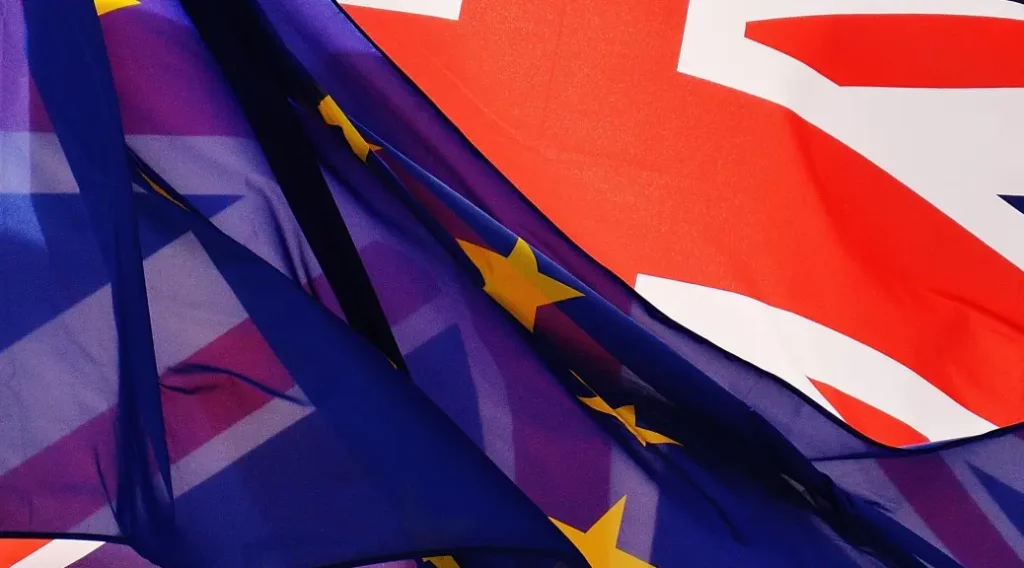
Despite its turbulent history within the European family since 1973, the United Kingdom has nonetheless been...
Alexandre del Valle, whose analyses often stand in stark contrast to the traditional media narrative, has agreed to take stock of the European geopolitical situation, in eight points.









 French
  German
  English