Tuesday Books – Quentin Perissinotto If there’s one thing even more fleeting and volatile than success, it’s our...
Le Regard Libre N° 82 – Elliot Mazzella Chaque mois, Le Regard Libre publie le roman inédit Le retour du jeune auteur suisse Elliot...
NEW | Every month, the young Swiss author Elliot Mazzella publishes his novel «Le retour» exclusively in the pages of *Le Regard Libre*, in fifteen installments. A return to fiction in these pages, a return to the time-honored tradition of the serialized novel.
Les bouquins du mardi - Aude Robert-Tissot Un été avec Rimbaud is a book of movement and poetry, the work and...
LONG-FORM INTERVIEW, Jonas Follonier | Moix is a free spirit. Above all, he is driven by «novelistic truth»—which he conveys with the flair of a genius, using phrases that are as sensitive as they are harsh, and as tragic as they are funny. Who else but a master of premeditated improvisation is capable of this? A former panelist on the show «On n’est pas couché,» hosted by Laurent Ruquier on France 2, and former host of his own show «Chez Moix» on Paris Première, Yann Moix is also a child of television, who loves to put his verbal wit to work in the intimate and demanding exploration of people, books, and the world. I had been warned: «He’s a bit of an oddball.» This experience was confirmed during this interview, which very nearly didn’t happen. The writer, director, and television commentator opens up to *Le Regard Libre* about his «horrible years» in his twenties, the city of Reims in the 1980s, and the anti-Semitism he became entangled in during that time. And one of the best contemporary French authors explains to us exactly what he means by «novelistic truth,» two years after being the subject of controversies related to his family—a family he no longer refers to as such.
«Belladonna is one of those books that just slams.
ARTICLE LONG FORMAT, Eugène Praz | One of the invigorating features of contemporary literature is that its novels bring together places, eras, generations, peoples and social classes - if that term is still valid - in a pleasing variety of forms and plots. The latter, sometimes very fanciful, are often deliciously comic; think, for example, of the novels, aimed above all at a female audience, by the meritoriously popular Isabel Wolff. This variety could be seen as a way of comforting each individual in his or her place or «path». Everyone? Perhaps not. On the contrary, it would seem that while the field of unexpected human interaction has certainly expanded in literature, its internal influence, through the depth of its characters and the quality of its descriptions, has diminished. As a result, its appeal to the public has lost some of its force. A brief review of some serious shortcomings, without any personal attacks - we're past that.
The art of literary victimization
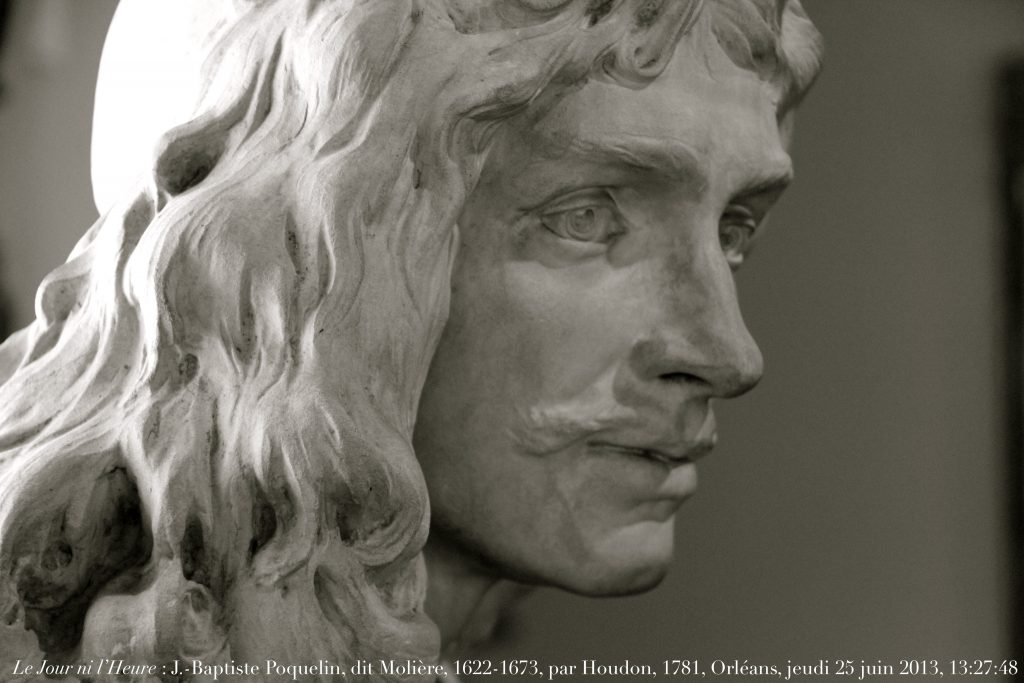
Reflections on Molière after Me too











 French
  German
  English