Religious education, public funding of churches, crucifixes in classrooms and parliaments... In Switzerland, the boundary between faith and state remains fluid, depending on the canton. Should there be a clear dividing line between state and church?
Switzerland's image abroad is a strategic asset, both diplomatically and economically. Presence Switzerland, the Confederation's communications agency, works daily to strengthen this reputation. Interview with its director.
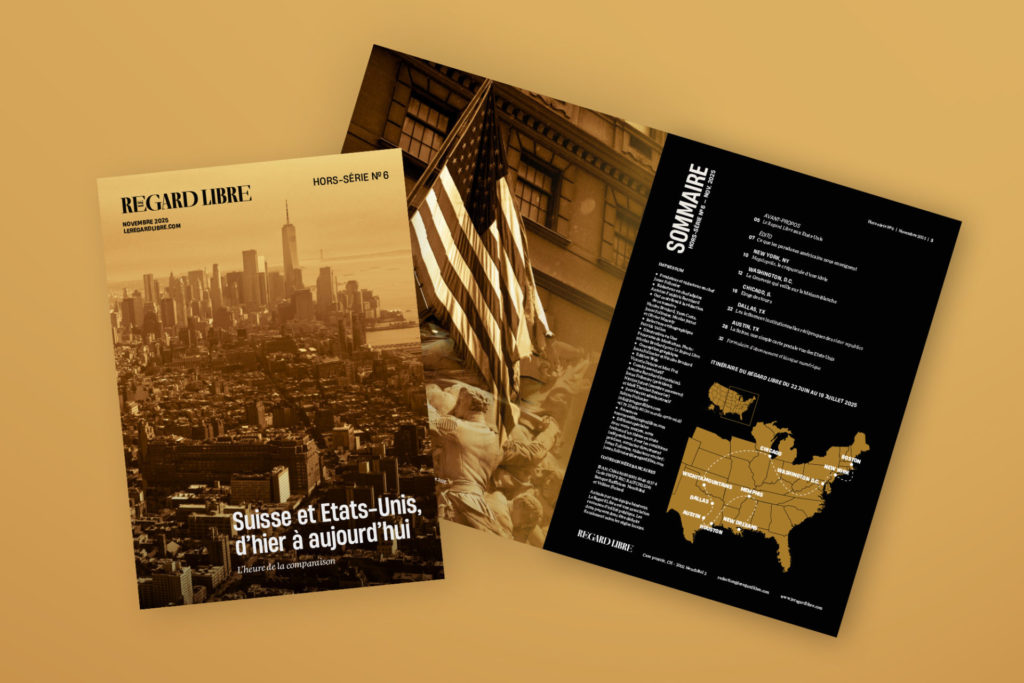
Traveling through eight American states, four of our media editors explored what the USA and Switzerland, sister republics with cross-fertilizing democratic influences, still have to say to each other at a time of trade war launched by Donald Trump
Journalist Marianne Grosjean sends out a message in each of her columns. This month, she praises the usefulness of civil service, also for women.
Ferréol Delmas, who criss-crosses France with his Ecologie Responsable think-tank, is convinced that ecology can and must be rooted in the regions and based on entrepreneurship. In short, right-wing. Interview.
In this open letter to the former Federal Councillor, writer Nadine Richon expresses her concern at the one-sided discourse on Israel and Palestine promoted by the Socialist Party, and calls for greater nuance within this political family.
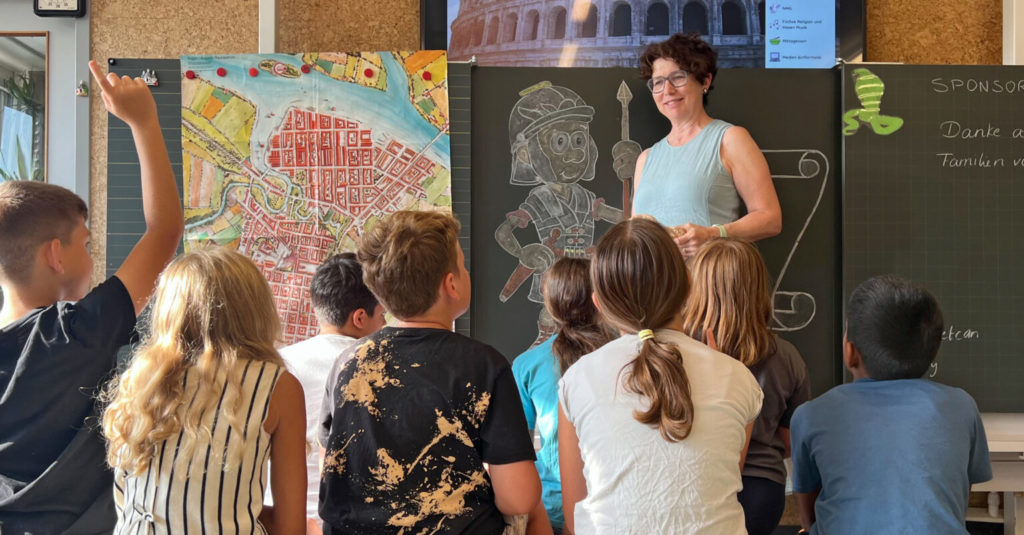
When children from a migrant background stand out at school, many feel that the responsibility lies with the school....
In the light of François Heisbourg's hard-hitting essay, former Federal Councillor Pascal Couchepin ponders the future of the United States and of a world deprived of its tutelary power.
What if modernity's Achilles' heel wasn't so much economic or social as demographic? British essayist Louise Perry shows how the declining birth rate in the West could precipitate the end of the model that has shaped two centuries of progress.






 French
  German
  English